The natural world is a tapestry of intricate connections, constantly shifting and evolving. Managing our impact on these vital ecosystems, from sprawling forests to delicate wetlands, is a monumental task often fraught with uncertainty. How do we make the best decisions when we do not have all the answers? The answer lies in a powerful, iterative approach known as Adaptive Management.
Adaptive Management is not simply about reacting to environmental changes; it is a systematic process of learning from our actions and continuously improving our management strategies. Think of it as a scientific experiment applied to real-world conservation and resource management. Instead of assuming we know the perfect solution from the outset, adaptive management acknowledges our limited understanding and designs interventions as opportunities to learn.
The Core Principle: Learning by Doing
At its heart, adaptive management embraces the idea that environmental systems are complex and unpredictable. Therefore, management actions should be treated as hypotheses to be tested. By carefully monitoring the outcomes of these actions, we gain new knowledge that informs and refines future decisions. This creates a continuous feedback loop, making our management practices more effective and resilient over time.
The Adaptive Management Cycle: A Roadmap for Resilience
Adaptive management is typically described as a cyclical process, often involving six key steps. These steps ensure that learning is integrated into every phase of a project, from initial planning to ongoing adjustments.
- Problem Assessment and Objective Setting: This initial phase involves clearly defining the problem, identifying the desired outcomes, and establishing measurable objectives. What exactly are we trying to achieve, and how will we know if we have succeeded?
- Designing Management Actions: Based on our current understanding, we develop a range of potential management strategies. These strategies are often designed to test specific hypotheses about how the ecosystem will respond.
- Implementation: The chosen management actions are put into practice. This is where the “doing” part of “learning by doing” truly begins.
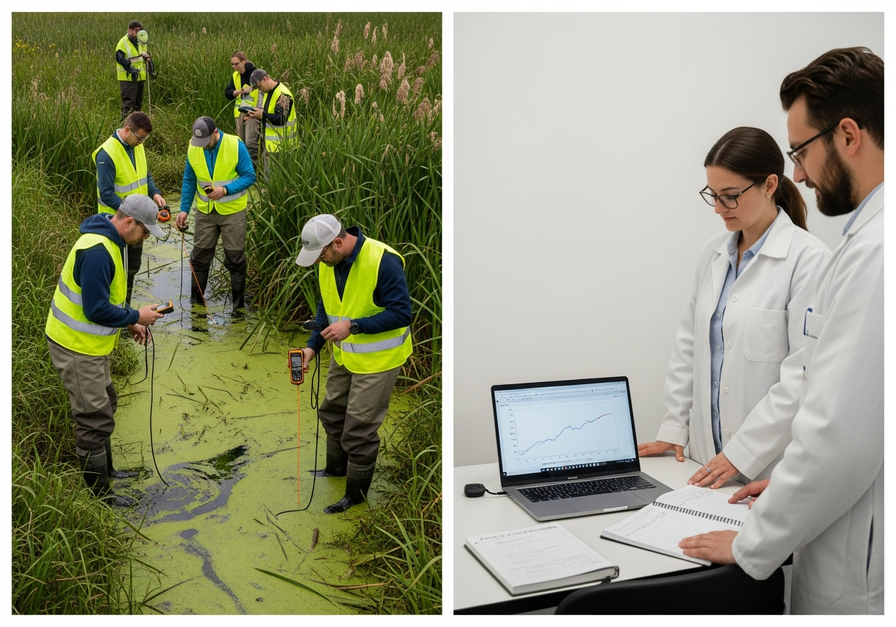
- Monitoring: Crucial to the entire process, monitoring involves systematically collecting data on the environmental responses to our management actions. This data helps us understand if our actions are having the intended effects.
- Evaluation and Analysis: The collected monitoring data is rigorously analyzed to determine whether objectives are being met and to identify any unexpected outcomes. This step helps us understand what worked, what did not, and why.
- Adjustment and Adaptation: Based on the evaluation, management strategies are refined, modified, or even completely changed. This new understanding then feeds back into the first step, initiating a new cycle of assessment and action.
This iterative cycle ensures that management is not a static plan but a dynamic process that evolves with new knowledge.
Why Adaptive Management is Indispensable
In a world facing rapid environmental change, adaptive management offers several compelling advantages:
- Manages Uncertainty: It acknowledges that perfect knowledge is rarely available and provides a framework for making decisions despite uncertainty.
- Promotes Learning: It explicitly builds learning into the management process, leading to a deeper understanding of complex ecological systems.
- Increases Effectiveness: By continually refining strategies, it improves the likelihood of achieving long-term conservation and resource management goals.
- Fosters Collaboration: It often requires collaboration among scientists, managers, policymakers, and local communities, leading to more robust and accepted solutions.
- Enhances Resilience: It helps systems become more resilient to unforeseen changes by allowing for flexible responses.
Adaptive Management in Action: Real-World Examples
The principles of adaptive management are applied across a wide spectrum of environmental challenges. Here are a few examples:
Forest Management and Wildlife Conservation
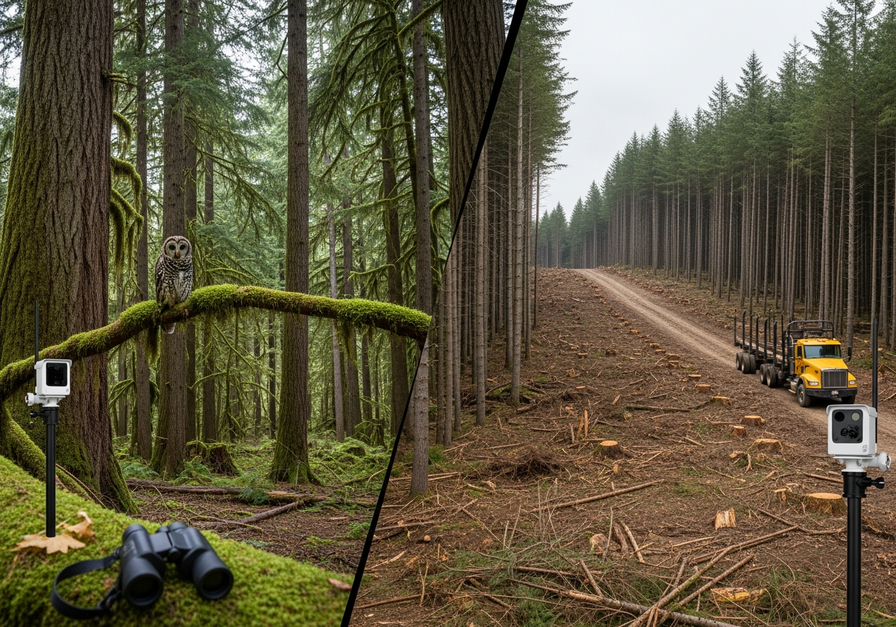
Consider the challenge of managing forests for timber production while also protecting endangered species, such as the spotted owl in the Pacific Northwest. Different logging practices might have varying impacts on owl habitat. An adaptive management approach would involve:
- Hypothesis: Certain logging methods (e.g., selective logging) are less detrimental to owl populations than others (e.g., clear-cutting).
- Action: Implement different logging strategies in various forest parcels.
- Monitoring: Track owl populations, nesting success, and habitat quality in each area using remote cameras and field surveys.
- Evaluation: Compare the outcomes across the different management zones.
- Adaptation: Adjust future logging prescriptions based on which strategies proved most effective in maintaining owl populations while still allowing for some timber harvest.
Fisheries Management
Managing fish stocks is notoriously difficult due to fluctuating environmental conditions and fishing pressures. Adaptive management helps by:
- Setting Harvest Quotas: Initial quotas are set based on current scientific understanding.
- Monitoring: Fish populations, catch rates, and environmental factors (like water temperature) are continuously monitored.
- Adjusting Quotas: If monitoring reveals that fish stocks are declining faster than expected, quotas can be reduced in subsequent seasons. Conversely, if stocks are robust, quotas might be cautiously increased. This prevents overfishing and promotes long-term sustainability.
Wetland Restoration
Restoring degraded wetlands often involves experimenting with different water flow regimes, planting strategies, or invasive species removal techniques. Adaptive management allows practitioners to:
- Implement varied approaches: Apply different restoration methods to distinct sections of a wetland.
- Monitor ecological indicators: Track water quality, native plant growth, bird populations, and amphibian presence.
- Learn and refine: Identify which techniques are most successful in promoting biodiversity and ecological function, then scale up or modify those methods for future restoration efforts.
Challenges and Considerations in Adaptive Management
While powerful, adaptive management is not without its challenges:
- Time and Resources: It requires a significant commitment of time, funding, and personnel for monitoring and evaluation over extended periods.
- Stakeholder Engagement: Involving diverse stakeholders with potentially conflicting interests can be complex and time-consuming.
- Political Will: The willingness of decision-makers to embrace uncertainty and potentially change course based on new evidence is crucial.
- Scale and Complexity: Applying adaptive management to very large or extremely complex systems can be logistically challenging.
- Defining Success: Clearly defining measurable objectives and indicators of success is vital but can be difficult in dynamic ecosystems.
Beyond the Basics: Advanced Concepts in Adaptive Management
For those delving deeper into the practice, several advanced concepts enhance the rigor and effectiveness of adaptive management.
Passive Versus Active Adaptive Management
- Passive Adaptive Management: This approach involves implementing a single “best guess” management strategy and then monitoring its outcomes to learn and adjust. It is less experimental in its initial design.
- Active Adaptive Management: This is a more rigorous, experimental approach where management actions are deliberately designed to test competing hypotheses. Multiple management strategies might be implemented simultaneously in different areas (as in the spotted owl example) to maximize learning. While potentially more costly and complex, active adaptive management yields more robust scientific insights.
Structured Decision Making (SDM)
SDM is a formal, systematic process for making decisions in complex situations, particularly those involving multiple objectives, uncertainties, and stakeholders. It often precedes and informs the adaptive management cycle, helping to clarify objectives, identify alternatives, and evaluate trade-offs before implementation. SDM provides a clear, transparent pathway for decision-making, which is invaluable when dealing with contentious environmental issues.
Bayesian Networks and Robust Decision Making (RDM)
When uncertainty is particularly high, advanced tools can be employed:
- Bayesian Networks: These are probabilistic graphical models that represent relationships between different variables in an ecosystem. They allow managers to visualize and quantify how changes in one variable (e.g., rainfall) might affect others (e.g., plant growth, animal populations). Bayesian networks are powerful for exploring multiple scenarios and understanding the likelihood of different outcomes, helping to inform more robust management designs.
- Robust Decision Making (RDM): RDM focuses on identifying strategies that perform “well enough” across a wide range of plausible future conditions, rather than optimizing for a single predicted future. It is particularly useful when there is deep uncertainty about future environmental conditions or societal changes. RDM helps managers develop flexible strategies that are resilient to surprises.

The Future of Environmental Stewardship
Adaptive management represents a paradigm shift in how we approach environmental stewardship. It moves us away from rigid, static plans towards a dynamic, learning-based approach that is better suited to the complexities of our natural world. By embracing uncertainty, fostering collaboration, and committing to continuous learning, adaptive management empowers us to make more informed decisions, build more resilient ecosystems, and secure a healthier future for both nature and humanity. It is not just a methodology; it is a philosophy for navigating the intricate dance between human actions and ecological responses, ensuring that our efforts to protect and manage the environment are as effective and sustainable as possible.