Imagine a garden that largely takes care of itself, a vibrant ecosystem teeming with life, producing an abundance of food, medicine, and useful materials year after year. This is not a utopian dream, but the practical reality of forest gardening, an ancient practice revitalized for modern sustainable living. Forest gardening, often referred to as a food forest, is a method of creating a low maintenance, sustainable, and productive food production system based on woodland ecosystems. It mimics the patterns and relationships found in natural forests, harnessing their inherent efficiency and resilience to grow a diverse array of edible plants.
What is Forest Gardening?
At its core, forest gardening is about working with nature, not against it. Instead of monocultures that demand constant intervention, a forest garden establishes a polyculture, a diverse community of plants that support each other. This approach fosters a healthy, self-regulating ecosystem where plants, fungi, and beneficial insects coexist, contributing to soil fertility, pest control, and overall garden vitality. The goal is to create a perennial system, meaning once established, it continues to yield without annual replanting, significantly reducing labor and resource input over time.
The Layers of a Forest Garden
One of the most distinguishing features of a forest garden is its vertical structure, mirroring the multiple layers found in a natural forest. By utilizing these distinct layers, gardeners can maximize space and productivity, growing a greater diversity of plants in a smaller area. Each layer plays a crucial role, contributing to the overall health and yield of the system.
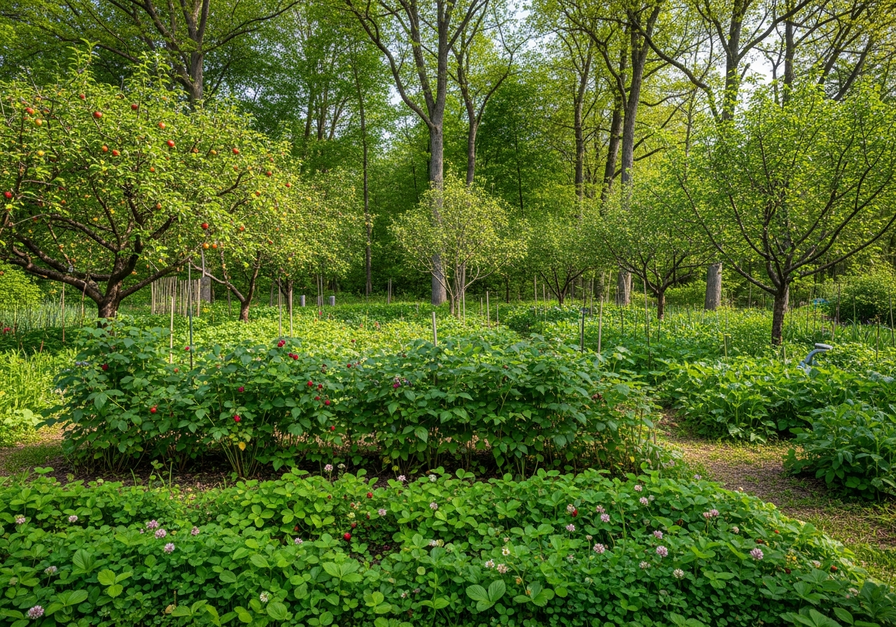
A thriving forest garden exemplifies the power of vertical layering, where each plant finds its niche and contributes to the collective abundance.
- Canopy Layer: This uppermost layer consists of the tallest trees, typically large fruit and nut trees such as apples, pears, walnuts, and chestnuts. They provide shade for lower layers, produce significant yields, and draw nutrients from deep within the soil.
- Understory Layer: Below the canopy, smaller fruit trees and large shrubs thrive. Examples include serviceberries, pawpaws, persimmons, and smaller varieties of apples or cherries. These plants tolerate partial shade and add another dimension of fruit production.
- Shrub Layer: This layer is composed of berry bushes and other medium-sized woody plants. Blueberries, raspberries, currants, gooseberries, and elderberries are common choices, offering a bounty of nutritious fruits.
- Herbaceous Layer: Non-woody perennial plants, including culinary herbs, perennial vegetables, and dynamic accumulators, make up this layer. Asparagus, rhubarb, comfrey, mint, and various medicinal herbs are excellent additions, providing continuous harvests and supporting soil health.
- Groundcover Layer: Spreading low across the garden floor, this layer includes plants that suppress weeds, retain soil moisture, and often fix nitrogen. Strawberries, clover, creeping thyme, and various edible groundcovers are popular choices, offering additional yields and ecological benefits.
- Rhizosphere (Root Layer): This hidden layer beneath the soil surface is home to root crops like potatoes, sunchokes, and various edible tubers. It is also where the intricate network of fungal mycelia and beneficial microorganisms thrives, crucial for nutrient cycling and plant health.
- Vertical Layer (Climbers): Vines and climbing plants utilize vertical space, often growing up trees or trellises. Grapes, hardy kiwis, climbing beans, and passionfruit are examples that add another dimension of productivity without taking up much ground space.
Designing with Nature: Plant Guilds
Beyond simply stacking layers, forest gardening employs the concept of “plant guilds.” A guild is a synergistic grouping of plants that mutually benefit each other, mimicking the cooperative relationships found in natural ecosystems. By carefully selecting plants that fulfill different functions, a gardener can create a mini-ecosystem around a central “keystone” plant, often a fruit tree.
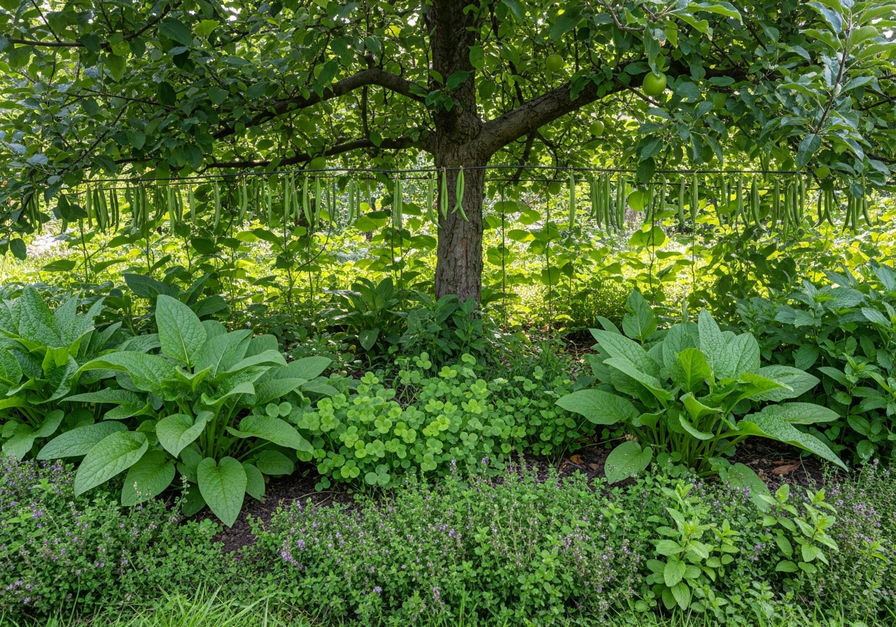
An apple tree guild beautifully illustrates how diverse plants can work together, enhancing soil health and increasing overall yield in a compact space.
Consider an apple tree guild, for instance. Around the apple tree, one might plant:
- Comfrey: A dynamic accumulator with deep taproots that brings up nutrients from the subsoil, making them available to other plants. Its large leaves also serve as an excellent mulch.
- Clover or Vetch: Nitrogen-fixing legumes that enrich the soil, providing essential nutrients for the apple tree and surrounding plants.
- Chives or Garlic: These deter pests with their strong scent and can also be harvested for culinary use.
- Strawberries or Thyme: Groundcovers that suppress weeds, retain soil moisture, and offer an additional edible yield.
- Daffodils or Nasturtiums: Pest deterrents or trap crops that protect the main tree.
This thoughtful combination creates a resilient, productive, and largely self-sustaining system, reducing the need for external inputs like fertilizers or pesticides.
Beyond the Basics: Advanced Techniques for Resilience
For those looking to deepen their forest gardening practice, several advanced techniques can further enhance the sustainability and productivity of these systems. These methods often involve integrating elements that address water management, nutrient cycling, and biodiversity in innovative ways.
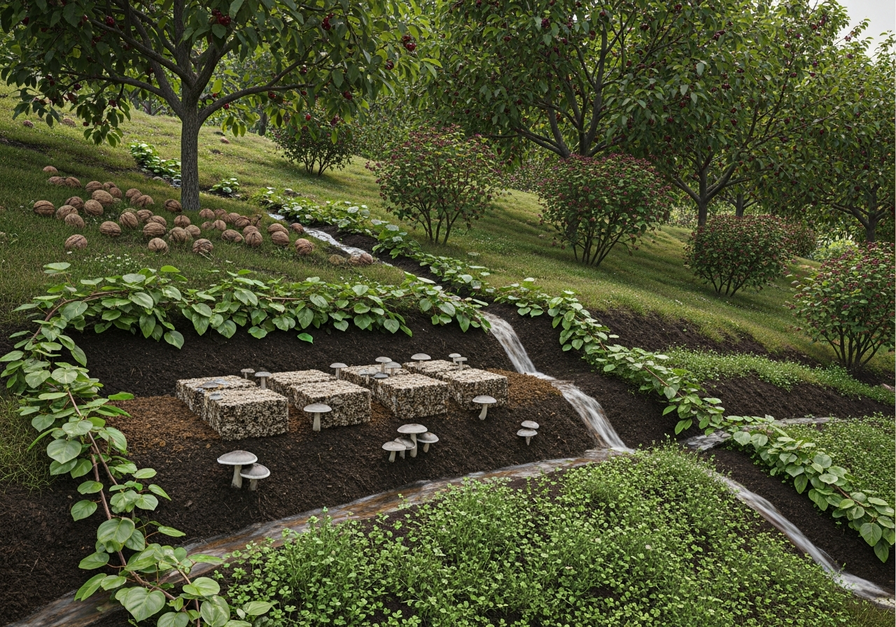
Advanced forest gardening techniques, such as integrating rainwater harvesting swales and mushroom cultivation, significantly boost sustainability and resilience.
- Water Harvesting with Swales: On sloping land, swales are level ditches dug along contours, designed to capture and slowly infiltrate rainwater into the landscape. This passive irrigation system ensures that plants receive consistent moisture, even during dry spells, reducing the need for supplemental watering. The excavated soil can be mounded on the downhill side, creating a berm that can be planted with trees and shrubs, benefiting from the stored water.
- Mushroom Cultivation: Integrating edible and beneficial fungi into a forest garden adds another productive layer, often utilizing wood debris or specific substrates. Mushrooms play a vital role in breaking down organic matter, cycling nutrients, and enhancing soil structure. Species like Wine Cap mushrooms can be grown directly in wood chip paths or garden beds, providing a delicious harvest while improving the ecosystem.
- Enhanced Biodiversity and Pest Management: A diverse forest garden naturally attracts a wide array of beneficial insects, birds, and other wildlife. By planting a variety of flowering plants, herbs, and native species, gardeners create habitats for pollinators and natural predators, reducing pest outbreaks without chemical intervention. This ecological balance is a cornerstone of forest garden resilience.
- Building Soil Health: Continuous mulching with organic materials, such as wood chips, leaves, and chopped plant matter, is fundamental. This practice mimics the forest floor, building rich, living soil that retains moisture, provides nutrients, and supports a thriving microbial community. The use of dynamic accumulators and nitrogen fixers further enhances soil fertility naturally.
Benefits of Forest Gardening
The advantages of adopting a forest gardening approach are manifold, extending from ecological restoration to personal well-being and food security.
- Ecological Restoration: Forest gardens enhance biodiversity, create habitat for wildlife, improve soil health, and sequester carbon, actively contributing to environmental regeneration.
- Increased Productivity: By utilizing vertical space and synergistic plant relationships, these systems can produce a greater quantity and variety of food than conventional gardens, often with less effort.
- Sustainability and Resilience: Once established, forest gardens require minimal external inputs, relying on natural processes for fertility and pest control. They are inherently resilient to climate fluctuations and provide a stable food source.
- Reduced Labor: While initial establishment requires effort, a mature forest garden becomes largely self-maintaining, significantly reducing the need for weeding, watering, and replanting.
- Food Security and Health: Providing a diverse array of fresh, organic fruits, nuts, vegetables, and herbs, forest gardens contribute to a healthy diet and local food security.
Conclusion
Forest gardening offers a compelling vision for a more sustainable and abundant future. It is an invitation to observe, learn from, and collaborate with nature, transforming landscapes into thriving, productive ecosystems. By embracing the principles of layering, guilds, and ecological design, anyone can begin to cultivate a resilient food forest, fostering not only a bountiful harvest but also a deeper connection to the living world. This approach is more than just a gardening technique, it is a philosophy for living in harmony with the planet, demonstrating that human needs can be met in ways that regenerate, rather than deplete, our natural resources.