The natural world is a tapestry woven with movement, a constant ebb and flow of life across landscapes and oceans. Among the most awe-inspiring of these phenomena is species migration, a journey undertaken by countless creatures, from the smallest insects to the largest mammals, often spanning continents and hemispheres. Far from a random wander, migration is a precisely timed and energetically demanding endeavor, a fundamental survival strategy shaped by millennia of evolution.
At its core, species migration is the seasonal movement of animals from one region to another. These journeys are not merely about changing location; they are about tapping into vital resources, finding safe havens, and ensuring the continuation of life itself. Understanding the intricate dance of migration offers profound insights into ecological interconnectedness and the delicate balance of ecosystems.
The Driving Forces Behind Epic Journeys
Why do animals embark on such perilous voyages? The reasons are as diverse as the species themselves, but they generally boil down to a few critical needs: food, reproduction, and favorable environmental conditions.
Following the Feast: The Quest for Sustenance
Perhaps the most common driver of migration is the pursuit of food. As seasons change, so does the availability of sustenance. Many species migrate to areas where food is abundant, following the cycles of plant growth or the movements of prey.
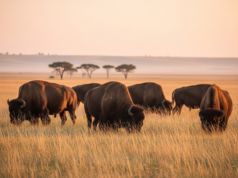
Consider the iconic wildebeest of the Serengeti. Each year, over a million wildebeest, accompanied by zebras and gazelles, undertake a circular migration across the vast plains of East Africa. This epic journey, often called the Great Migration, is a continuous search for fresh grazing pastures and water, directly linked to the seasonal rainfall patterns.
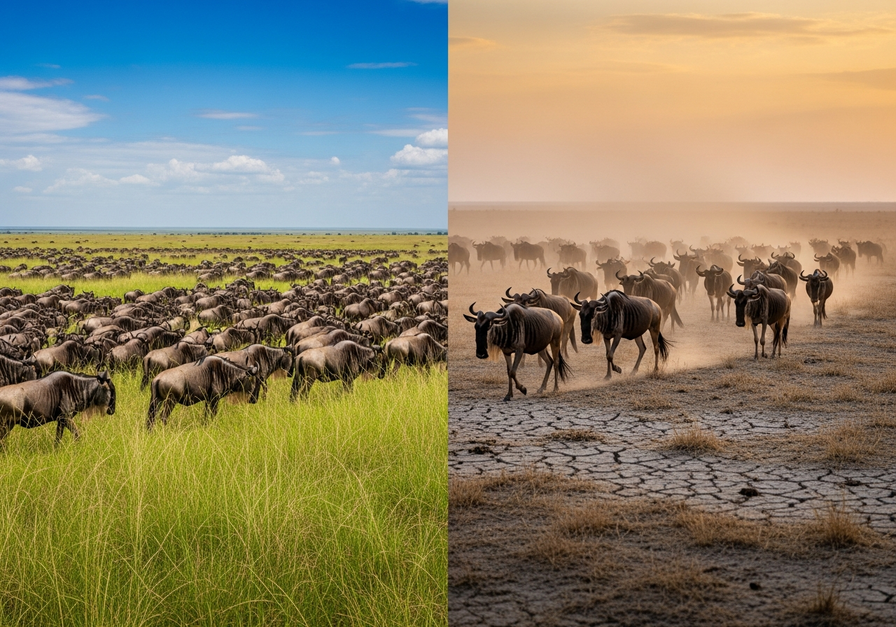
This image illustrates the article’s discussion of food availability as a key driver of species migration, showing how the wildebeest follow the growth of fresh grasses after the rains in the Serengeti.
When the short rains arrive, the southern plains burst with nutritious grasses, attracting the herds. As these plains dry out, the wildebeest move north and west, following the long rains and the subsequent flush of new growth. This relentless pursuit of green pastures ensures their survival and fuels the entire Serengeti ecosystem.
The Call to Create: Breeding and Reproduction
Another powerful impetus for migration is the need to find suitable breeding and birthing grounds. For many species, the ideal conditions for raising young are different from their feeding grounds, often requiring warmer temperatures, fewer predators, or specific habitats for nesting or calving.
Gray whales provide a magnificent example of this reproductive migration. These gentle giants spend their summers feeding in the nutrient-rich, cold waters of the Arctic. However, when winter approaches, they undertake one of the longest migrations of any mammal, traveling thousands of miles south to the warm, shallow lagoons of Baja California, Mexico.
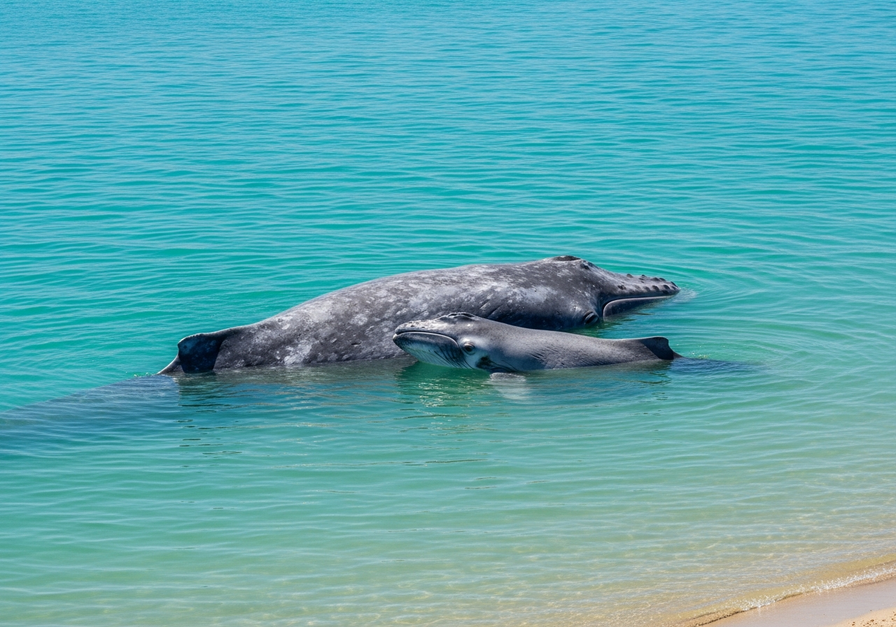
This image ties to the article’s section on breeding and reproduction, visually depicting the grizzly migration of gray whales to safe, warm lagoons for giving birth.
These protected lagoons offer a safe haven for mothers to give birth and for their calves to grow strong enough to survive the arduous journey back to the Arctic. The warm waters also provide a refuge from predatory killer whales, ensuring the next generation has the best possible start in life.
Escaping Extremes: Climate and Temperature
Many species migrate simply to avoid harsh environmental conditions, such as extreme cold or heat, or to find areas with more stable climates. Birds, for instance, are renowned for their seasonal flights between summer breeding grounds and wintering grounds, often crossing continents to escape freezing temperatures and dwindling food supplies.
Monarch butterflies undertake an astonishing multi-generational migration, traveling thousands of miles from Canada and the northern United States to overwintering sites in Mexico and California. This journey allows them to escape the freezing temperatures that would kill them, ensuring the survival of the species.
Navigating the World: How Animals Find Their Way
The precision with which migratory animals navigate is one of nature’s most enduring mysteries. How do they find their way across vast, featureless oceans or through complex landscapes, often returning to the exact same breeding or feeding sites year after year? Scientists have uncovered several remarkable navigational strategies:
- The Sun and Stars: Many diurnal migrants use the position of the sun as a compass, while nocturnal migrants orient themselves by the patterns of stars in the night sky.
- Earth’s Magnetic Field: A growing body of evidence suggests that many animals, including birds, sea turtles, and salmon, can detect and use the Earth’s magnetic field to orient themselves, acting like an internal GPS.
- Olfactory Cues: Some species, particularly salmon, use their sense of smell to navigate back to their natal rivers to spawn, detecting unique chemical signatures in the water.
- Learned Routes and Landmarks: Older, experienced individuals often lead younger ones along established migratory routes, passing down knowledge of landmarks, prevailing winds, and ocean currents.
The Perils of the Journey: Challenges to Migration
Migration is inherently risky. It demands immense energy, exposes animals to new predators, and requires overcoming formidable natural obstacles. However, in recent times, human activities have introduced unprecedented challenges, threatening the very existence of many migratory pathways.
Artificial Barriers: Fragmenting Ancient Paths
Human infrastructure, such as roads, fences, and especially dams, can create impenetrable barriers for migrating species, fragmenting their habitats and blocking access to critical resources. Rivers, once highways for aquatic migrants, are now often interrupted by concrete walls.
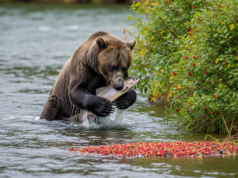
Salmon, for example, are anadromous fish, meaning they are born in freshwater, migrate to the ocean to grow, and then return to their natal rivers to spawn. This incredible journey is essential for their life cycle, but dams can completely block their upstream migration, preventing them from reaching their spawning grounds.
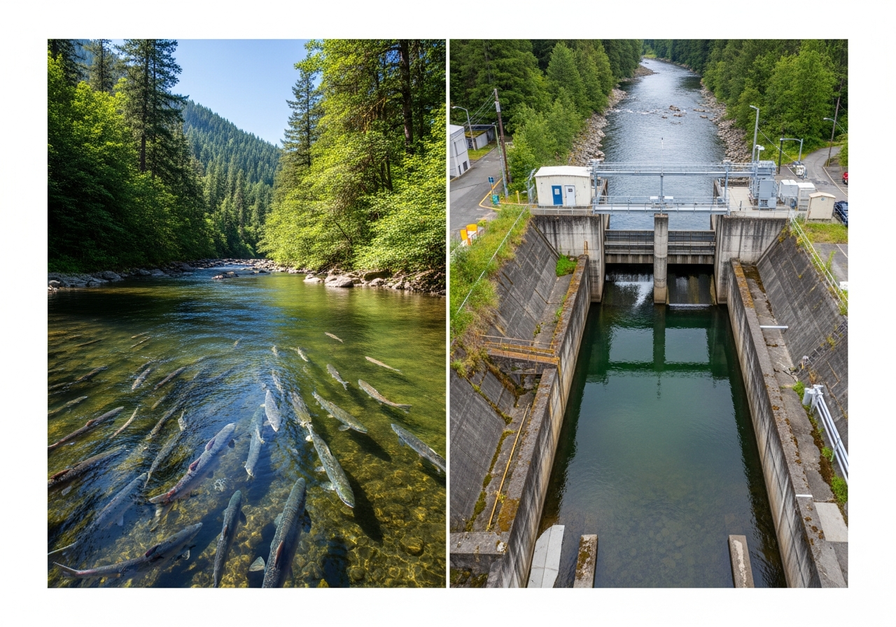
This image illustrates the article’s discussion of artificial barriers as a major threat to migrating species, using salmon and dams to visually convey the impact of human infrastructure on natural migratory routes.
While fish ladders and other mitigation efforts can help, they are often insufficient to fully compensate for the disruption caused by large dams, leading to significant declines in salmon populations.
Climate Change: Shifting the Rhythms of Life
Global climate change is altering the timing and availability of resources, disrupting the finely tuned schedules of migration. Warmer temperatures can cause plants to bloom earlier or insects to emerge sooner, creating a mismatch with the arrival of migratory animals that rely on these resources. This phenological mismatch can lead to starvation and reproductive failure.
Changes in weather patterns, such as altered rainfall or increased frequency of extreme storms, can also make migratory journeys more hazardous or render traditional breeding and feeding grounds unsuitable.
Habitat Loss and Degradation
Beyond direct barriers, the loss and degradation of habitats along migratory routes and at stopover sites pose significant threats. Development, agriculture, and pollution can destroy critical resting, feeding, and breeding areas, leaving migrants with nowhere to go.
The Ecological Significance of Migration
Migration is not just about individual species survival; it plays a crucial role in maintaining the health and functioning of entire ecosystems. Migratory species act as ecological engineers, connecting disparate habitats and facilitating vital processes:
- Nutrient Cycling: Migrating animals transport nutrients across vast distances. For instance, salmon bring marine-derived nutrients into freshwater and terrestrial ecosystems when they return to spawn and eventually die.
- Pollination and Seed Dispersal: Migratory birds, bats, and insects are essential pollinators and seed dispersers, helping plants reproduce and spread their ranges.
- Predator-Prey Dynamics: The arrival and departure of migratory herds or flocks significantly influence local predator populations, shaping food webs and maintaining ecological balance.
- Ecosystem Health Indicators: The success or failure of migratory populations can serve as a powerful indicator of the overall health of the environments they traverse, highlighting areas of concern for conservation.
Conserving the Wonders of Movement
Protecting migratory species requires a global perspective and collaborative effort. Since these animals cross multiple jurisdictions, their conservation demands international cooperation and coordinated strategies. Key conservation approaches include:
- Protecting Migratory Corridors: Establishing and safeguarding continuous pathways, or “flyways” and “swimways,” that animals use during their journeys. This often involves creating protected areas, reducing human disturbance, and mitigating barriers.
- Addressing Climate Change: Reducing greenhouse gas emissions is paramount to stabilizing global climates and preventing further disruption to migratory patterns.
- International Agreements: Treaties and conventions, such as the Convention on Migratory Species (CMS), facilitate cooperation among nations to protect shared migratory populations.
- Habitat Restoration: Restoring degraded habitats at critical stopover sites and breeding grounds ensures that migrants have the resources they need throughout their journey.
The phenomenon of species migration is a testament to the resilience and adaptability of life on Earth. It is a powerful reminder of the interconnectedness of our planet and the profound impact that human actions can have on natural processes. By understanding, appreciating, and actively working to protect these incredible journeys, humanity can ensure that the epic migrations continue to enrich our world for generations to come.