The Shifting Map of Life: Understanding Range Shifts
Imagine a world where the familiar boundaries of nature are constantly redrawing themselves. Where forests climb higher up mountainsides, fish venture into previously uninhabitable waters, and butterflies appear in places they have never been seen before. This dynamic reshaping of species distributions is not a futuristic fantasy; it is a profound ecological phenomenon happening right now, known as a “range shift.”
A range shift refers to the geographical redistribution of a species, where its entire population or a significant portion moves to a new area, expanding its historical range in one direction while potentially contracting it in another. This movement can be subtle, occurring over decades, or surprisingly rapid, driven by powerful environmental changes.
What Exactly is a Range Shift?
At its core, a range shift describes the change in the geographical area where a particular species lives and reproduces. Every species has a specific set of environmental conditions it can tolerate, defining its “climatic niche.” When these conditions change, species must either adapt, move, or face decline. For many, moving is the most viable option, leading to observable shifts in their distribution.
These shifts are not random wanderings. They are often directional, typically towards poles (northward in the Northern Hemisphere, southward in the Southern Hemisphere) or towards higher altitudes, following the retreating isotherms of their preferred temperature ranges. However, shifts can also occur in response to changes in precipitation, ocean currents, or even the availability of new resources.
The Driving Forces Behind the Movement
While natural range fluctuations have always been a part of Earth’s history, the current wave of range shifts is largely accelerated and amplified by human-induced environmental changes. The most significant driver is undoubtedly climate change, particularly rising global temperatures.
- Global Warming: As average temperatures increase, many species find their historical habitats becoming too warm. They are compelled to seek cooler environments, pushing them towards higher latitudes or elevations.
- Habitat Alteration: Human activities like deforestation, urbanization, and agriculture can fragment habitats, forcing species to relocate or creating new pathways for dispersal.
- Ocean Acidification: Changes in ocean chemistry can impact marine life, prompting some species to move to areas with more favorable pH levels.
- Changes in Precipitation Patterns: Shifts in rainfall can alter vegetation zones, impacting herbivores and, consequently, their predators.
- Extreme Weather Events: More frequent and intense heatwaves, droughts, or floods can directly displace populations, initiating new range expansions.
Visualizing the Shift: Examples from Around the Globe
To truly grasp the concept of range shifts, it helps to see them in action. From towering trees to tiny insects, life across all ecosystems is responding to a changing planet.
Mountainsides on the Move: The Advancing Tree Line
One of the most visually striking examples of a range shift occurs in mountainous regions. As temperatures warm, the conditions at higher altitudes become more hospitable for species that previously could not survive there. This is particularly evident with tree lines.
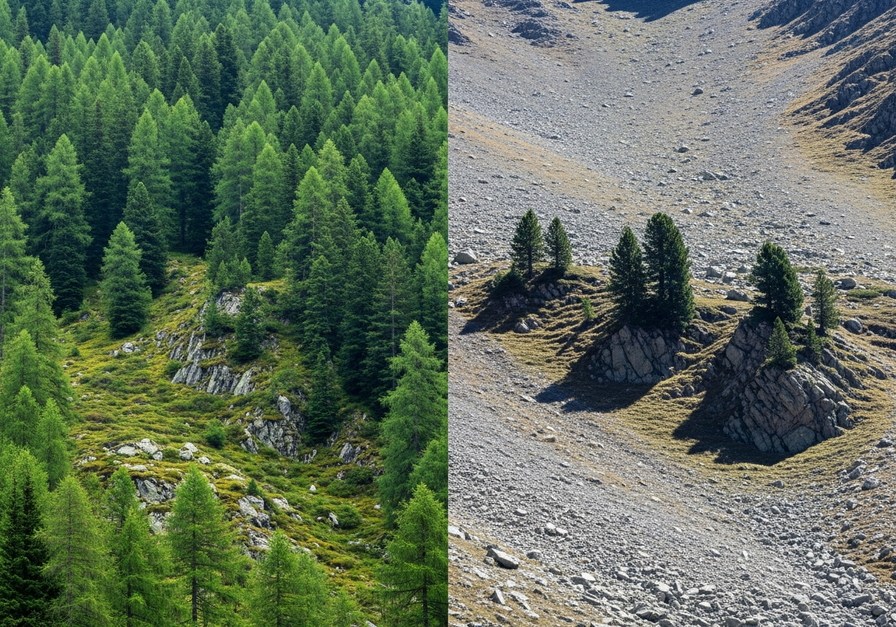
This image visually demonstrates the advancement of the tree line toward higher elevations in response to rising temperatures, a key example of a range shift affecting alpine ecosystems. The left side shows a traditional, lower tree line, while the right side reveals pioneering trees establishing themselves in what was once a barren, high-altitude scree field. This slow, upward march of forests can dramatically alter alpine habitats, impacting everything from soil composition to the availability of resources for high-altitude specialists.
Oceans in Flux: Fish Following Cooler Waters
The oceans, too, are experiencing profound shifts. Marine species are highly sensitive to water temperature, and as ocean temperatures rise, many fish populations are moving towards cooler, deeper waters or higher latitudes.
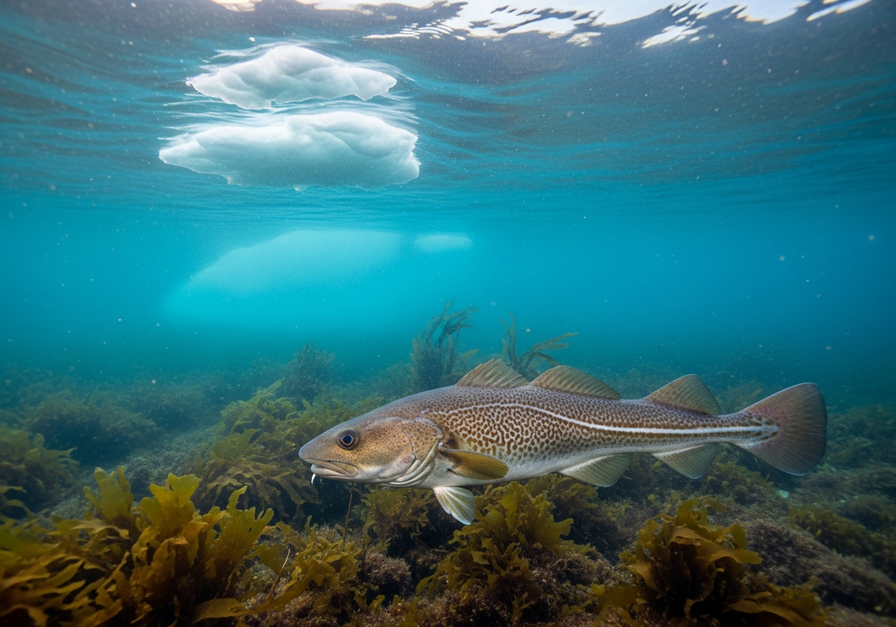
This photo illustrates the northward shift of marine fish species such as cod as ocean temperatures rise, highlighting how species track cooler habitats. The presence of Atlantic cod in waters near Iceland, where icebergs are visible, signifies a significant northward expansion of its traditional range. Such movements have substantial implications for global fisheries, potentially altering the distribution of economically important species and creating new challenges for fishing communities.
Winged Wonders: Butterflies Claiming New Territories
Insects, with their shorter lifecycles and high reproductive rates, can often respond quickly to environmental changes. Butterflies, in particular, are excellent indicators of range shifts, as their distribution is closely tied to temperature and the availability of specific host plants.
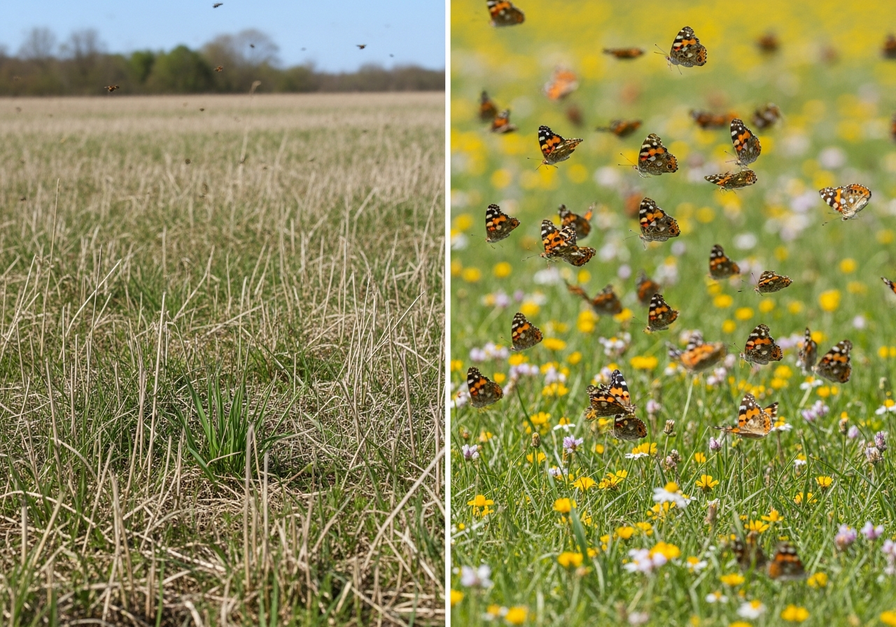
This image conveys the expansion of butterfly ranges into new northern areas, an example of phenological and geographic shifts that can alter local ecological interactions. The vivid contrast between a less populated meadow and one bustling with butterflies, like the Painted Lady, illustrates how these insects are pushing into new territories as northern climates become more suitable. This can introduce new pollinators to ecosystems or create competition with existing species.
Deeper Dive: Ecological Ripple Effects and Broader Implications
Range shifts are not isolated events; they trigger a cascade of ecological consequences that can reshape entire ecosystems. Understanding these ripple effects is crucial for predicting future environmental changes and developing effective conservation strategies.
Ecosystem Upheaval: Winners, Losers, and New Neighbors
When species shift their ranges, they inevitably encounter new environments and new species. This can lead to a complex web of interactions:
- Novel Species Interactions: Previously separated species may now come into contact, leading to new predator-prey relationships, competition for resources, or even hybridization. Some species may benefit from new food sources, while others may face increased predation or competition.
- Disrupted Food Webs: The timing of species movements, known as phenological shifts, can become mismatched. For example, if an insect emerges earlier due to warming temperatures, but the birds that feed on it do not adjust their breeding cycles, there can be a critical food shortage for the birds’ chicks.
- Spread of Diseases and Pests: As vectors like mosquitoes and ticks expand their ranges into new areas, they can introduce diseases to naive populations of wildlife and humans that lack immunity. Similarly, agricultural pests can move into new farming regions.
- Loss of Specialist Species: Species that are highly specialized to particular habitats or food sources, especially those at the poles or on mountaintops, may have nowhere left to go as their preferred conditions disappear. These “climate refugees” are particularly vulnerable to extinction.
Conservation Challenges in a Dynamic World
The dynamic nature of range shifts presents significant challenges for conservation efforts. Traditional conservation often focuses on protecting static areas, but a world where species are constantly on the move requires a more flexible approach.
- Protected Area Effectiveness: Existing protected areas may become less effective if the species they were designed to protect shift out of their boundaries, or if new, invasive species shift in.
- Connectivity and Corridors: Ensuring habitat connectivity, through ecological corridors, becomes even more vital to allow species to move safely and effectively across landscapes.
- Adaptive Management: Conservation strategies need to be adaptive, regularly monitored, and adjusted based on observed species movements and ecological changes. This might involve assisted migration in some extreme cases, though this is a controversial approach.
Human Connections: From Food to Health
The ecological consequences of range shifts extend directly to human societies, impacting vital sectors and daily life.
- Agriculture and Fisheries: Shifts in fish stocks can disrupt traditional fishing grounds and livelihoods. Changes in temperature and precipitation can alter crop yields, introduce new agricultural pests, or make certain regions unsuitable for traditional farming.
- Human Health: The expansion of disease vectors, such as mosquitoes carrying malaria or dengue, into new regions poses significant public health challenges, requiring new surveillance and prevention strategies.
- Resource Management: Forest management, water resource planning, and even urban planning must consider how ecosystems are changing and how these shifts will affect the availability of natural resources.
Conclusion: Adapting to a World in Motion
Range shifts are a powerful testament to the interconnectedness of life on Earth and the profound impact of environmental change. They are not merely an academic curiosity but a tangible reality shaping our planet’s biodiversity and human societies. Understanding these movements, their drivers, and their consequences is paramount.
As species continue their great migration in response to a warming world, humanity faces the critical task of adapting alongside them. This requires not only mitigating the causes of climate change but also developing innovative conservation strategies, fostering resilient ecosystems, and preparing our communities for a future where the map of life is perpetually redrawing itself.