The natural world is a tapestry of interconnected ecosystems, where every species plays a role and every habitat provides essential resources. Yet, this intricate web is increasingly being torn apart, not always by outright destruction, but by a more insidious process known as landscape fragmentation. This phenomenon is a critical concern for ecologists and conservationists worldwide, fundamentally altering how species survive and thrive.
Understanding Landscape Fragmentation: A Fundamental Shift
At its core, landscape fragmentation refers to the process by which a large, continuous area of habitat is broken into smaller, isolated patches. Imagine a vast, unbroken forest. Fragmentation transforms this single, expansive woodland into a collection of smaller groves, separated by roads, agricultural fields, urban developments, or other human-altered landscapes. It is crucial to distinguish this from simple habitat loss. While habitat loss reduces the total amount of available habitat, fragmentation specifically describes the spatial arrangement of what remains, often creating a mosaic of small, disconnected pieces.
The primary drivers of landscape fragmentation are human activities. Agricultural expansion, urbanization, infrastructure development like roads and railways, and resource extraction such as logging and mining all contribute to this process. These activities carve up natural areas, creating barriers and isolating populations of plants and animals.
The Visual Reality of Fragmentation
To truly grasp the concept, consider a typical scene in many parts of the world. A once-continuous forest might now appear as a series of green islands in a sea of cultivated land. These isolated patches, though still containing trees, function very differently from their original, expansive form.
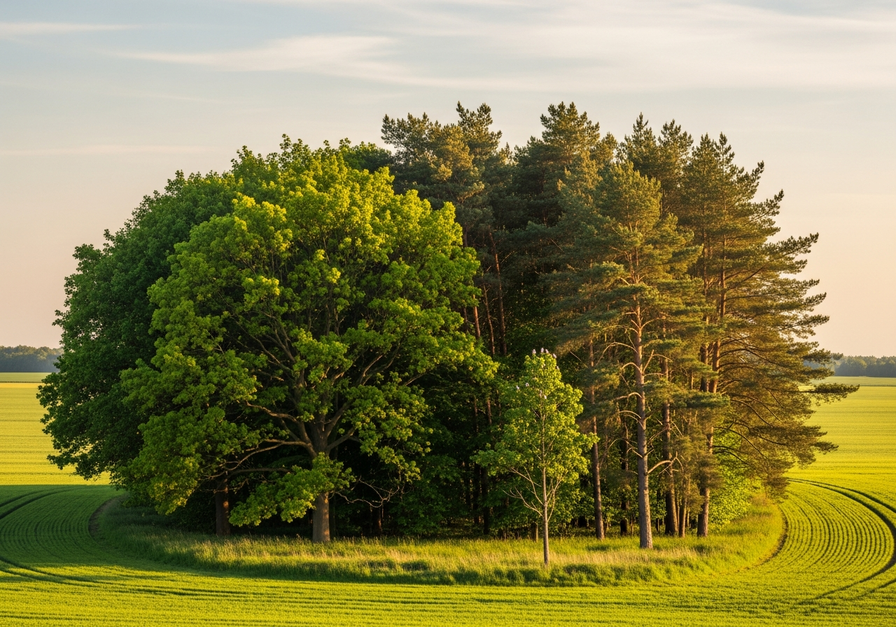
This image vividly illustrates the core concept of landscape fragmentation. A small, isolated forest patch stands surrounded by cultivated farmland, emphasizing the edge effects and isolation that are central to this ecological challenge. Such a scene is a common sight, highlighting how natural habitats are often reduced to mere remnants within a human-dominated landscape.
The Ecological Consequences: More Than Just Less Space
The impacts of landscape fragmentation extend far beyond simply reducing the amount of available habitat. It triggers a cascade of ecological changes that can severely threaten biodiversity and ecosystem health.
Reduced Habitat Area and Increased Isolation
- Smaller Populations: Smaller habitat patches can support fewer individuals of a given species. This makes populations more vulnerable to random events like disease outbreaks, natural disasters, or even normal fluctuations in birth and death rates.
- Genetic Bottlenecks: With fewer individuals, the genetic diversity within a population can decline. This reduces the species’ ability to adapt to environmental changes, making them more susceptible to extinction.
- Difficulty in Dispersal: Animals and plants often need to move between different areas to find food, mates, or new territories. Fragmented landscapes create significant barriers to this movement, leading to increased isolation.
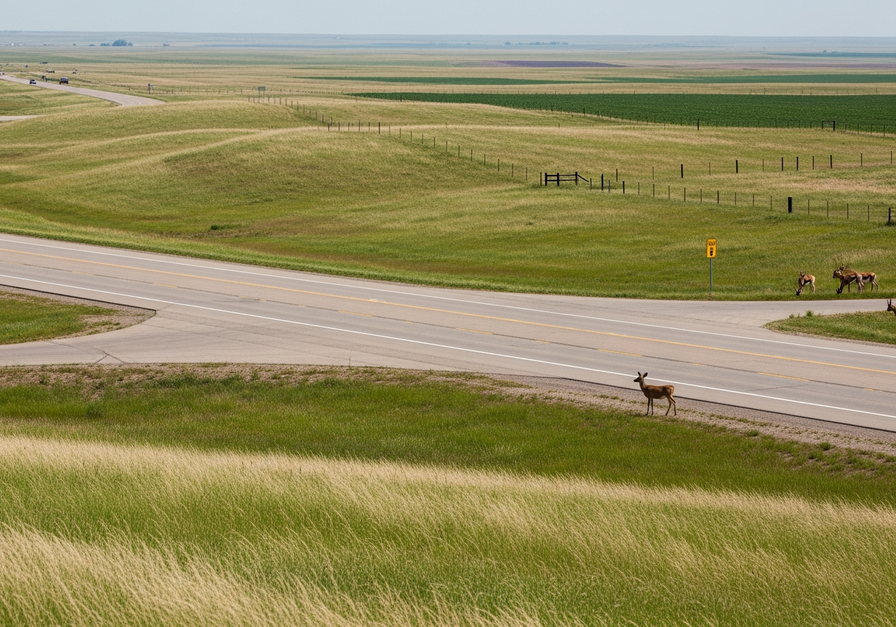
This photograph powerfully depicts how human infrastructure, such as a wide highway, fragments habitats and creates impenetrable barriers for wildlife movement. A lone deer at the highway’s edge, looking across, symbolizes the disrupted species movement that is a critical consequence of fragmentation, preventing animals from accessing vital resources or breeding grounds.
The Pervasive Influence of Edge Effects
One of the most significant consequences of fragmentation is the increase in “edge effects.” When a large habitat is broken into smaller pieces, the proportion of its area that is close to an edge increases dramatically. Edges are the boundaries between two different habitat types, for example, a forest and an agricultural field. These transitional zones experience different environmental conditions compared to the interior of a habitat.
- Altered Microclimates: Edges are often hotter, drier, and windier than forest interiors. This can negatively impact species that require stable, humid conditions.
- Increased Predation: Predators often use edges as hunting grounds, making species living near the boundary more vulnerable.
- Invasive Species: Edges provide pathways for invasive plants and animals to enter and colonize natural habitats, outcompeting native species.
- Light and Noise Pollution: Human activities along edges introduce light and noise, which can disrupt the behavior and reproductive cycles of wildlife.
Disrupted Ecological Processes
Fragmentation can also interfere with fundamental ecological processes:
- Pollination and Seed Dispersal: Many plants rely on animals for pollination and seed dispersal. If these animals cannot move between fragments, plant reproduction can suffer.
- Nutrient Cycling: Changes in vegetation and soil conditions at edges can alter nutrient cycling, impacting the overall health of the ecosystem.
- Water Flow: Roads and clearings can change drainage patterns, affecting water availability and quality within fragments.
Visualizing the Transformation: Before and After
Sometimes, the best way to understand the impact of fragmentation is to see the stark contrast between an intact ecosystem and one that has been altered. The transformation from a continuous, thriving habitat to a patchwork of isolated remnants is a powerful visual lesson.

This split-screen composite visually contrasts a continuous habitat with fragmented patches, reinforcing the article’s explanation of fragmentation’s spatial impact. On one side, a lush, unbroken tropical rainforest canopy thrives; on the other, the same region shows scattered forest patches separated by cleared land, starkly illustrating the difference between an intact and a fragmented landscape.
Advanced Perspectives: Metapopulations and Conservation Strategies
For a deeper understanding, ecologists often view fragmented landscapes through the lens of “metapopulation theory.” A metapopulation is a group of spatially separated populations of the same species which interact at some level. In a fragmented landscape, each isolated patch might host a subpopulation. The survival of the overall metapopulation depends on the balance between local extinctions in some patches and recolonization from other patches.
- Source-Sink Dynamics: Some patches might be “source” populations, producing a surplus of individuals that can disperse to other areas. Other “sink” patches might have higher mortality rates and rely on immigration from source patches to persist. Fragmentation can disrupt these vital connections.
- Extinction Debt: Even if a habitat is fragmented, species may not go extinct immediately. There can be a time lag, known as “extinction debt,” where the long-term consequences of fragmentation are only realized years or decades later. This makes early intervention crucial.
Mitigation and Conservation: Reconnecting the Pieces
Addressing landscape fragmentation requires a multi-faceted approach, moving beyond simply protecting individual patches to thinking about connectivity and landscape-scale planning.
- Habitat Corridors: These are strips of habitat that connect isolated patches, allowing wildlife to move safely between them. Examples include riparian zones along rivers, underpasses beneath highways, or restored forest strips.
- Restoration Ecology: Efforts to restore degraded habitats or create new ones can help increase the size and connectivity of existing fragments. This might involve reforestation, wetland creation, or grassland restoration.
- Land-Use Planning: Strategic planning that considers ecological connectivity when designing new developments, agricultural zones, or infrastructure projects can minimize future fragmentation.
- Protected Area Networks: Establishing networks of protected areas, rather than isolated reserves, can help maintain larger, more resilient populations and facilitate gene flow.
- Sustainable Practices: Promoting sustainable agriculture, forestry, and urban development practices reduces the pressure on natural habitats, slowing down the rate of fragmentation.
Conclusion: A Call for Connected Landscapes
Landscape fragmentation is a silent crisis, often overlooked but with profound implications for the health of our planet. It diminishes biodiversity, disrupts ecological processes, and weakens the resilience of ecosystems in the face of environmental change. Understanding this complex phenomenon is the first step towards effective conservation. By recognizing the value of connected landscapes and implementing strategies to mitigate fragmentation, humanity can work towards a future where nature’s intricate tapestry remains whole, vibrant, and capable of supporting life in all its magnificent forms.