The Unseen Hand: How Population Density Shapes Life on Earth
Imagine a bustling city street versus a quiet country lane. The way people interact, the resources available, and even the spread of a common cold are vastly different in these two scenarios. Nature operates with similar principles, especially when it comes to regulating the populations of plants and animals. This intricate dance is often orchestrated by what ecologists call density-dependent factors, powerful forces whose impact intensifies as a population grows larger and more crowded.
These factors are nature’s way of putting the brakes on runaway population growth, ensuring that no single species overwhelms its environment. They are the hidden mechanisms that maintain ecological balance, constantly adjusting the birth rates, death rates, and movement of individuals in response to how many neighbors they have. Understanding these forces is fundamental to grasping the dynamics of ecosystems, from the smallest bacterial colony to the largest herds of mammals.
What Makes a Factor “Density-Dependent”?
At its core, a density-dependent factor is any influence on a population that changes in severity based on the population’s size or density. When a population is small and scattered, these factors might have a minimal effect. However, as the population swells and individuals become more numerous and closer together, the impact of these factors becomes significantly more pronounced, often leading to a decrease in population growth or even a decline. This creates a crucial feedback loop, where high density triggers factors that reduce density, and low density lessens these pressures, allowing for growth.
The Primary Players: Key Density-Dependent Factors
Several major forces act as density-dependent regulators in the natural world. Each plays a unique role in shaping the fate of populations.
Competition for Resources
One of the most intuitive density-dependent factors is competition. As a population grows, more individuals vie for the same limited resources within their habitat. This can include food, water, shelter, nesting sites, or even mates. When resources are abundant, competition is low. But when a population reaches a high density, the scramble for necessities intensifies. Individuals may spend more energy searching for food, fight more frequently, or have less successful breeding attempts. This increased competition can lead to reduced survival rates, lower reproductive success, and ultimately, a slower or declining population growth rate.
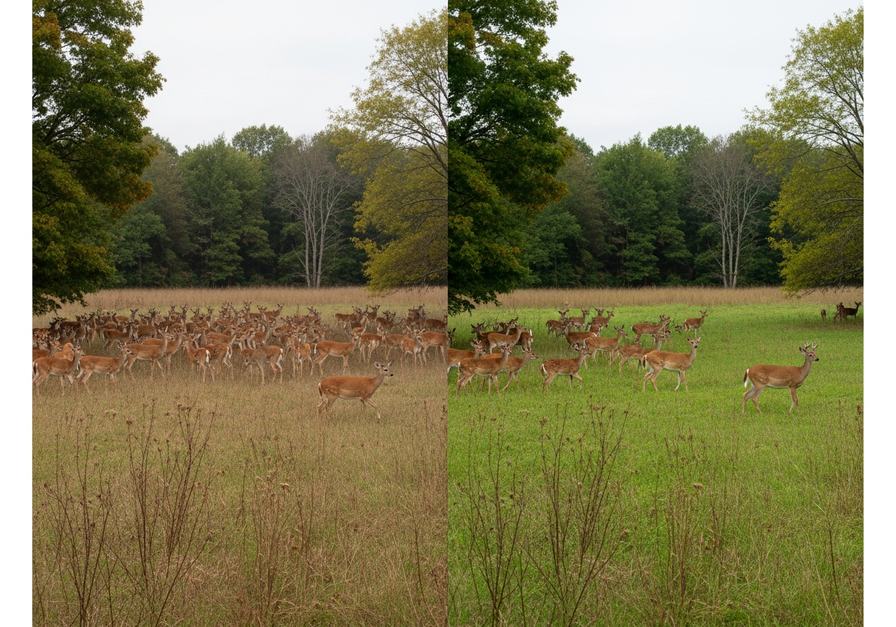
Consider a herd of deer in a forest. If the herd is small, there is plenty of grass, leaves, and browse for everyone. However, as the deer population expands, the available vegetation diminishes. The deer must compete more fiercely for food, leading to malnutrition, weaker individuals, and fewer successful births. The environment literally cannot sustain an ever-growing number of animals, and competition acts as the natural governor.
Predation
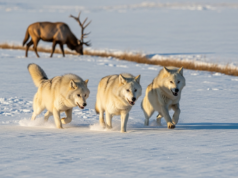
Predation is another powerful density-dependent factor. The relationship between predators and their prey is often a classic example of how population sizes influence each other. When a prey population is small, predators may struggle to find food, leading to a decline in predator numbers. However, when the prey population booms, it becomes easier for predators to locate and catch their meals. This abundance of food allows predator populations to increase, which in turn puts greater pressure on the prey population, causing it to decline.
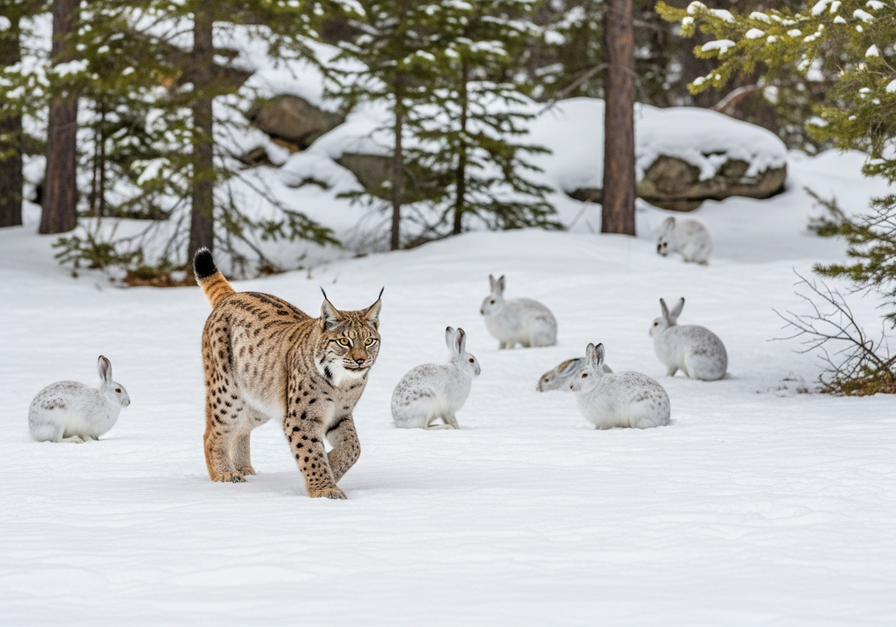
A classic illustration of this dynamic is the interaction between lynx and snowshoe hares. As hare numbers increase, lynx have more food, allowing their population to grow. More lynx then hunt more hares, causing the hare population to drop. This decline in hares then leads to a decline in lynx, and the cycle continues, demonstrating a clear density-dependent relationship where the impact of predation intensifies with prey density.
Disease and Parasitism
The spread of disease and parasites is profoundly influenced by population density. In sparsely populated areas, individuals have less contact with one another, making it harder for pathogens to jump from host to host. But in dense populations, where individuals are in close proximity, disease transmission becomes much more efficient. A single infected individual can quickly become the source of an epidemic, impacting a large portion of the population.

Think of a bat colony packed tightly into a cave. If a virus enters this dense population, it can spread like wildfire due to the constant physical contact between individuals. Similarly, parasites like fleas or ticks can move more easily between hosts in crowded conditions, weakening the population and making it more susceptible to other stressors. This increased vulnerability to disease and parasites at high densities acts as a significant check on population growth.
Waste Accumulation and Toxicity
While less commonly discussed for large animals, waste accumulation can be a critical density-dependent factor, particularly for microorganisms and aquatic species. In a confined environment, the metabolic waste products of a dense population can build up to toxic levels. For example, yeast producing alcohol during fermentation will eventually be inhibited or killed by the very alcohol they produce once its concentration becomes too high. Similarly, bacteria in a petri dish can poison themselves with their own waste products if their population becomes too dense and the waste cannot be dispersed.
Stress and Social Behavior
High population density can also lead to increased stress levels within a population. Overcrowding can trigger aggressive interactions, disrupt normal social structures, and lead to physiological stress responses. These responses can manifest as reduced reproductive rates, weakened immune systems, increased susceptibility to disease, and even infanticide or cannibalism in some species. The psychological and physiological toll of living in a highly crowded environment can significantly impact an individual’s fitness and the population’s overall health and growth.
The Intricate Dance: Density-Dependent Factors and Carrying Capacity
For the more seasoned ecological observer, understanding density-dependent factors is key to comprehending the concept of carrying capacity. Carrying capacity, often denoted as ‘K’, is the maximum population size of a biological species that can be sustained indefinitely by a given environment, given the available food, habitat, water, and other necessities.
Density-dependent factors are the primary mechanisms that push a population towards its carrying capacity. As a population approaches K, the impact of competition, predation, disease, and stress intensifies, slowing the population’s growth rate. If a population overshoots its carrying capacity, these factors become even more severe, often leading to a population crash until resources can recover or the population stabilizes at a lower, more sustainable level. This creates a natural negative feedback loop, where the population size itself dictates the strength of the forces that regulate it.
The classic predator-prey cycles, like that of the lynx and snowshoe hare, are vivid demonstrations of this dynamic interplay. The fluctuations are not random; they are a direct consequence of density-dependent forces acting on both populations, creating a rhythmic ebb and flow that maintains a long-term balance, albeit with dramatic short-term changes.
Ecological and Conservation Insights
For ecologists and conservationists, recognizing and understanding density-dependent factors is not merely an academic exercise; it is crucial for effective wildlife management and conservation strategies.
- Wildlife Management: When managing game populations, for instance, understanding how competition for food or increased disease transmission impacts a dense herd can inform decisions about hunting quotas or habitat restoration efforts. Reducing density through controlled means can sometimes prevent more severe, natural population crashes caused by these factors.
- Conservation of Endangered Species: For endangered species, maintaining a healthy population often means ensuring that density-dependent factors do not become overly detrimental. This might involve providing supplemental resources, managing disease outbreaks, or protecting critical habitats to reduce competition.
- Human Impact: Human activities can profoundly alter density-dependent dynamics. Habitat fragmentation, for example, can artificially increase the density of a species in remaining patches, intensifying competition and disease spread. Climate change can also shift resource availability, altering carrying capacities and the severity of density-dependent pressures.
In conclusion, density-dependent factors are the invisible architects of ecological balance, constantly at work to ensure that life’s populations remain in harmony with their environment. From the fierce competition for resources to the silent spread of disease, these forces remind us that every living thing is part of an interconnected web, where numbers truly matter. By appreciating these intricate mechanisms, we gain a deeper understanding of the resilience and complexity of the natural world.