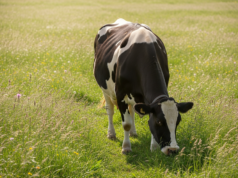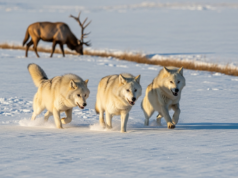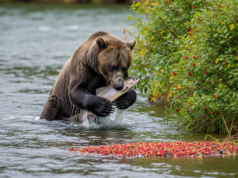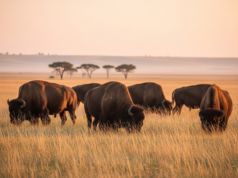
Life on Earth is an intricate tapestry, woven from countless species interacting within diverse environments. When we talk about the sheer variety of life, we are discussing biodiversity, a concept fundamental to the health and stability of our planet. While many are familiar with the idea of species richness in a local park or a specific forest, the broader picture, the total biodiversity across an entire region or landscape, is often overlooked. This comprehensive view is precisely what ecologists refer to as gamma diversity.
Gamma diversity represents the total number of species found within a larger geographical area, encompassing multiple ecosystems and habitats. Think of it as the grand sum of all the different life forms that call a particular region home, from the smallest microbes to the largest mammals, spanning mountains, valleys, forests, and wetlands. Understanding gamma diversity is crucial for appreciating the full scope of life and for crafting effective conservation strategies.
Unveiling the Richness of a Region: What is Gamma Diversity?
At its core, gamma diversity is a measure of the total species richness of a landscape or region. Unlike local diversity, which focuses on a single habitat, or the difference between habitats, gamma diversity takes a panoramic view. It quantifies the cumulative number of species present across a collection of different ecosystems within a defined geographical boundary. This could be a mountain range, a river basin, an island, or even an entire continent.
Consider a vast mountain ecosystem. At its base, you might find a sprawling deciduous forest teeming with specific types of trees, birds, and insects. As you ascend, this transitions into a coniferous forest, home to a different set of species adapted to cooler temperatures. Higher still, alpine meadows host unique wildflowers and hardy animals. Gamma diversity accounts for all these species, from every single one of these distinct zones, providing a holistic picture of the region’s biological wealth.
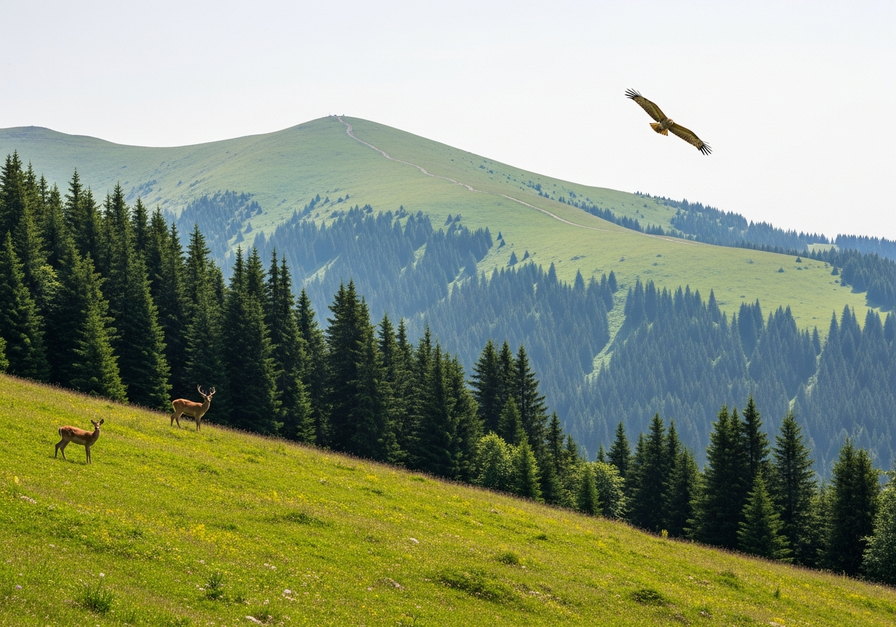
This panorama visually represents gamma diversity as the total species richness across a heterogeneous landscape, illustrating how multiple distinct habitats within a single region contribute to overall biodiversity.
The Significance of Regional Species Richness
Why is this regional perspective so important? Gamma diversity offers several critical insights:
- Ecosystem Resilience: A region with high gamma diversity is often more resilient to environmental changes, such as climate shifts or disease outbreaks. The presence of a wide array of species means there are more functional redundancies and alternative pathways for ecosystem processes to continue, even if some species decline.
- Ecosystem Services: Diverse regions provide a broader range of ecosystem services, including pollination, water purification, soil formation, and climate regulation. Each species plays a role, and a greater variety often translates to more robust and varied services.
- Conservation Planning: Understanding gamma diversity helps conservationists identify biodiversity hotspots, prioritize areas for protection, and design interconnected networks of protected areas that capture the full spectrum of a region’s life.
- Evolutionary Potential: A rich regional species pool provides the raw material for evolution, allowing species to adapt and new species to emerge over long periods.
Placing Gamma Diversity in Context: Alpha, Beta, and Gamma
To fully grasp gamma diversity, it is helpful to understand its relationship with two other key measures of biodiversity: alpha diversity and beta diversity. These three concepts form a hierarchical framework for understanding biodiversity at different spatial scales.
- Alpha Diversity: This refers to the species richness within a particular, relatively homogeneous habitat or ecosystem. Imagine counting all the different species of plants and animals in a single forest patch or a specific pond. That count represents its alpha diversity. It is a local measure.
- Beta Diversity: This measures the difference or turnover in species composition between two different habitats or ecosystems within a larger region. For example, if you compare the species found in a forest with those in a nearby grassland, the unique species found in each, and the species shared, contribute to beta diversity. It tells us how much species composition changes as we move from one habitat to another.
- Gamma Diversity: As discussed, this is the total species richness across the entire region or landscape, encompassing all the alpha diversity within its various habitats and the beta diversity that differentiates them. It is the sum total of all life forms in the broader area.
Think of it this way: Alpha diversity is like the variety of dishes on one table at a buffet. Beta diversity is the difference in dishes between two different tables. Gamma diversity is the total variety of all dishes available at the entire buffet restaurant.
Illustrating Regional Richness: Contrasting Habitats
The concept of gamma diversity becomes particularly vivid when considering regions that encompass vastly different ecological zones. Imagine a large geographical area that includes both a dense, humid rainforest and an expansive, arid desert. While each of these environments boasts its own unique alpha diversity, their combined species richness contributes to the region’s overall gamma diversity.

By juxtaposing two ecologically distinct habitats in a single frame, the image emphasizes that gamma diversity encompasses all species across varied ecosystems, highlighting the breadth of biodiversity in a regional landscape.
In the rainforest, you might find an incredible array of tree species, vibrant birds, countless insects, and elusive mammals, all adapted to high humidity and abundant rainfall. In the desert, the species are entirely different: drought-resistant plants, reptiles, burrowing mammals, and birds that can withstand extreme temperatures and scarce water. The fact that a single region can harbor such contrasting life forms underscores the immense scale of gamma diversity.
Measuring Gamma Diversity: A Field Ecologist’s Challenge
Quantifying gamma diversity is a complex undertaking, often requiring extensive field research and sophisticated analytical techniques. Ecologists cannot simply count every single organism in a vast region. Instead, they employ systematic sampling methods.
Typically, researchers will identify different habitat types within the region and conduct intensive surveys within representative plots or transects in each habitat. They might use various tools, such as nets for insects, traps for small mammals, acoustic recorders for birds and bats, and visual surveys for plants and larger animals. The data collected from these individual sampling efforts are then combined and extrapolated to estimate the total species richness for the entire region.
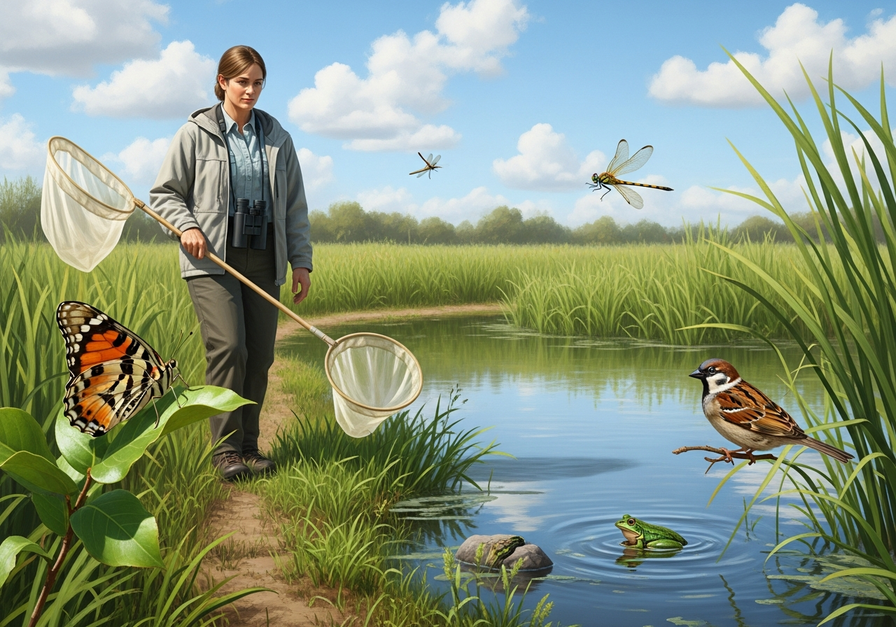
The image demonstrates the practical aspect of gamma diversity measurement, field sampling across multiple microhabitats. It illustrates how diverse species are collected and recorded to estimate the total richness of a landscape.
Challenges in measurement include:
- Sampling Effort: Ensuring sufficient sampling across all habitat types and seasons to capture rare or elusive species.
- Taxonomic Expertise: Identifying all species accurately, which requires specialized knowledge for different groups of organisms.
- Defining Boundaries: Clearly delineating the geographical boundaries of the “region” being studied.
- Data Extrapolation: Using statistical models to estimate total richness from sampled data, acknowledging that some species may remain undetected.
Factors Influencing Gamma Diversity
Several key factors shape the gamma diversity of a region:
- Geographical Size and Heterogeneity: Larger regions with a greater variety of landscapes, such as mountains, rivers, forests, and grasslands, tend to have higher gamma diversity because they offer more niches for different species.
- Climate and Environmental Gradients: Regions with diverse climatic zones, from warm lowlands to cold highlands, or areas with significant rainfall gradients, often support a wider range of species adapted to these varying conditions.
- Evolutionary History: The geological history of a region, including past glaciations, volcanic activity, or continental drift, can influence the patterns of speciation and extinction, thereby affecting current diversity.
- Connectivity: The degree to which different habitats within a region are connected allows for species movement and gene flow, which can maintain higher diversity. Fragmentation of habitats can reduce gamma diversity over time.
- Human Impact: Human activities, including habitat destruction, pollution, climate change, and the introduction of invasive species, are significant drivers of biodiversity loss and can severely diminish gamma diversity. Conversely, effective conservation efforts can help preserve and restore it.
The Imperative of Conserving Gamma Diversity
For conservationists and policymakers, gamma diversity is a critical metric. It moves beyond local snapshots to provide a comprehensive understanding of the biological wealth that needs protection. Conservation efforts that focus solely on alpha diversity in isolated patches may miss the bigger picture and fail to protect the full range of species and ecological processes within a region.
Strategies informed by gamma diversity include:
- Establishing Large Protected Areas: Creating national parks or reserves that encompass multiple habitat types and ecological gradients.
- Creating Ecological Corridors: Linking existing protected areas to facilitate species movement and maintain genetic exchange across the landscape.
- Prioritizing Biodiversity Hotspots: Identifying regions with exceptionally high gamma diversity and a significant threat of habitat loss for urgent conservation action.
- Landscape-Level Planning: Integrating conservation goals into regional land-use planning, considering the needs of diverse species across the entire landscape, not just in isolated pockets.
Understanding and preserving gamma diversity is not merely an academic exercise, it is a fundamental requirement for maintaining the intricate web of life that sustains our planet. By appreciating the total species richness of our regions, we can better safeguard the natural heritage that provides us with essential resources, inspires wonder, and ensures a stable future for all life on Earth.