The Earth’s climate has always been in flux, a dynamic system shaped by natural forces over millennia. However, a profound and rapid transformation is now underway, driven primarily by human activities. This phenomenon, known as climate change, represents one of the most significant challenges facing our planet and its inhabitants. Understanding its mechanisms, impacts, and potential solutions is crucial for navigating the future.
What is Climate Change? The Basics Explained
At its core, climate change refers to long-term shifts in temperatures and weather patterns. While natural processes like volcanic eruptions and variations in solar radiation can influence climate, the current changes are largely attributed to the emission of greenhouse gases from human activities. It is important to distinguish climate from weather: weather describes atmospheric conditions over short periods, such as a sunny day or a thunderstorm, while climate represents the average weather patterns over decades or centuries.
The Greenhouse Effect: Earth’s Natural Blanket
Our planet maintains a habitable temperature thanks to a natural process called the greenhouse effect. Certain gases in the Earth’s atmosphere, known as greenhouse gases, trap some of the heat radiated from the Earth’s surface, preventing it from escaping into space. This natural blanket keeps our world warm enough to support life. The primary natural greenhouse gases include water vapor, carbon dioxide (CO₂), methane (CH₄), and nitrous oxide (N₂O).
However, human activities have significantly increased the concentration of these gases, particularly carbon dioxide, in the atmosphere. This intensification of the greenhouse effect leads to an excess of trapped heat, causing global temperatures to rise. Think of it like adding extra blankets to your bed; the more blankets, the warmer you become.
Key Indicators and Evidence of a Warming World
The scientific community has amassed overwhelming evidence demonstrating that the Earth’s climate is warming at an unprecedented rate. These indicators are observed across various natural systems:
- Rising Global Temperatures: Global average temperatures have been steadily increasing, with the past decade being the warmest on record. This warming trend is observed on land and in the oceans.
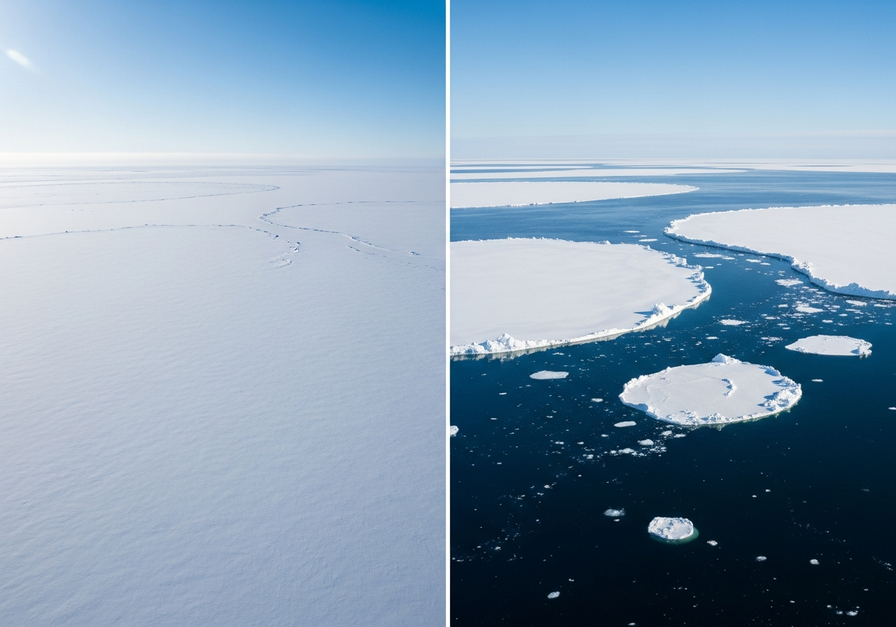
- Melting Ice and Glaciers: Ice sheets in Greenland and Antarctica are losing mass at an accelerating pace. Glaciers worldwide are retreating, and Arctic sea ice is shrinking dramatically.
This image visually demonstrates the rapid loss of Arctic ice described in the article’s evidence section, highlighting the melting trend that contributes to sea level rise and climate feedback loops.
- Sea Level Rise: As glaciers and ice sheets melt, they add water to the oceans. Additionally, as ocean water warms, it expands, a phenomenon known as thermal expansion. Both factors contribute to a measurable rise in global sea levels.
This illustration underscores the article’s discussion of sea level rise and its immediate impacts on coastal communities and infrastructure.

- Ocean Acidification: The oceans absorb a significant portion of the excess carbon dioxide from the atmosphere. When CO₂ dissolves in seawater, it forms carbonic acid, increasing the acidity of the oceans. This change threatens marine life, particularly organisms with shells or skeletons made of calcium carbonate, such as corals and shellfish.
- Extreme Weather Events: A warming climate can intensify certain weather patterns, leading to more frequent and severe heatwaves, prolonged droughts, heavier rainfall events, and more intense tropical storms.
The Human Fingerprint: Causes of Climate Change
While natural factors have influenced climate in the past, the rapid warming observed since the Industrial Revolution is overwhelmingly linked to human activities. The primary drivers include:
- Burning Fossil Fuels: The combustion of coal, oil, and natural gas for energy production, transportation, and industrial processes releases vast amounts of carbon dioxide into the atmosphere. This is the single largest contributor to anthropogenic greenhouse gas emissions.
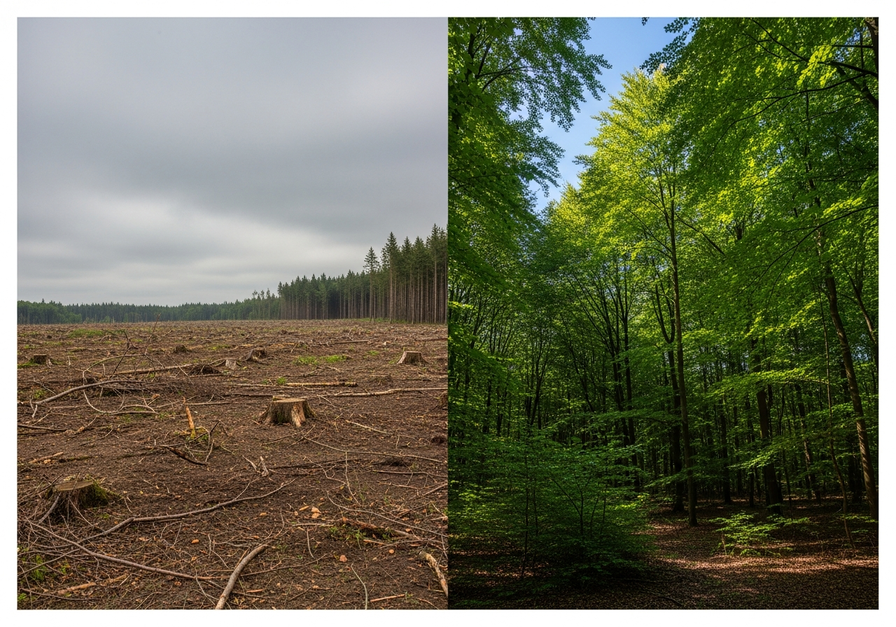
- Deforestation and Land Use Change: Forests play a vital role in absorbing carbon dioxide from the atmosphere through photosynthesis. When forests are cleared for agriculture, logging, or urban development, this carbon sink is lost, and the stored carbon is often released back into the atmosphere through burning or decomposition.
This photo illustrates the article’s explanation of how deforestation reduces carbon sequestration and increases atmospheric CO₂, while reforestation can help mitigate climate change by absorbing CO₂.
- Agriculture: Certain agricultural practices contribute significantly to greenhouse gas emissions. Livestock farming, particularly cattle, produces methane through digestive processes. The use of synthetic fertilizers releases nitrous oxide, another potent greenhouse gas. Rice cultivation in flooded paddies also produces methane.
- Industrial Processes: Manufacturing cement, steel, and other materials involves processes that release greenhouse gases. For example, cement production alone accounts for a substantial percentage of global CO₂ emissions.
- Waste Management: Landfills produce methane as organic waste decomposes in anaerobic conditions.
Far-Reaching Impacts and Consequences
The consequences of climate change are multifaceted and affect every aspect of life on Earth:
- Ecosystem Disruption and Biodiversity Loss: Changes in temperature and precipitation patterns alter habitats, forcing species to migrate, adapt, or face extinction. Coral reefs, for example, are highly vulnerable to ocean warming and acidification, leading to widespread bleaching events.
- Human Health Impacts: Heatwaves pose direct health risks, particularly to vulnerable populations. Changes in climate can expand the geographical range of disease vectors like mosquitoes, leading to increased incidence of diseases such as malaria and dengue fever. Air pollution, exacerbated by fossil fuel combustion, also contributes to respiratory illnesses.
- Food and Water Security: Altered rainfall patterns, increased droughts, and extreme weather events can severely impact agricultural yields, threatening food security. Melting glaciers, which act as natural water reservoirs, can disrupt water supplies for millions of people.
- Economic Impacts: Climate change imposes significant economic costs through damage to infrastructure from extreme weather, losses in agriculture and fisheries, increased healthcare expenses, and the costs of adaptation measures.
- Social Displacement and Conflict: Rising sea levels and extreme weather events can displace communities, particularly in low-lying coastal areas and regions prone to drought. This can lead to internal migration and, in some cases, contribute to social instability and conflict over dwindling resources.
Beyond the Basics: Feedback Loops and Tipping Points
For a deeper understanding of climate change, it is essential to consider the concept of feedback loops. These are processes that can either amplify or diminish the initial warming trend, making the climate system incredibly complex and sometimes unpredictable.
- Positive Feedback Loops (Amplifying Warming):
- Ice-Albedo Feedback: Ice and snow are highly reflective, bouncing sunlight back into space. As global temperatures rise, ice melts, exposing darker land or ocean surfaces. These darker surfaces absorb more solar radiation, leading to further warming and more ice melt, creating a vicious cycle.
- Permafrost Thaw: Vast areas of the Arctic are covered by permafrost, frozen ground containing enormous amounts of trapped organic matter. As temperatures rise, permafrost thaws, and this organic matter decomposes, releasing potent greenhouse gases like methane and carbon dioxide into the atmosphere, further accelerating warming.
- Forest Dieback: Increased temperatures and prolonged droughts can stress forests, making them more susceptible to pests and wildfires. Large-scale forest dieback releases stored carbon and reduces the Earth’s capacity to absorb CO₂, creating another positive feedback.
- Negative Feedback Loops (Diminishing Warming):
- While less dominant in the current climate crisis, some natural processes can counteract warming. For example, increased CO₂ can initially boost plant growth, leading to more carbon absorption. However, this effect is often limited by other factors like water availability and nutrient limitations.
The concern with positive feedback loops is the potential for “tipping points.” These are thresholds beyond which a small change can lead to large, often irreversible, shifts in the climate system. Examples include the collapse of major ice sheets, leading to rapid sea level rise, or the widespread dieback of the Amazon rainforest, transforming it into a savanna.
Mitigation and Adaptation: Charting a Sustainable Future
Addressing climate change requires a two-pronged approach: mitigation and adaptation.
Mitigation Strategies: Reducing Emissions
Mitigation involves reducing the emissions of greenhouse gases and enhancing the Earth’s capacity to absorb them. Key strategies include:
- Transition to Renewable Energy: Shifting away from fossil fuels towards clean energy sources like solar, wind, hydropower, and geothermal power.
- Energy Efficiency and Conservation: Improving the efficiency of buildings, transportation, and industrial processes to reduce energy consumption.
- Sustainable Transportation: Promoting electric vehicles, public transport, cycling, and walking to reduce emissions from the transport sector.
- Carbon Capture and Storage (CCS): Technologies that capture CO₂ emissions from industrial sources or directly from the atmosphere and store them underground.
- Reforestation and Afforestation: Planting new trees and restoring degraded forests to enhance natural carbon sequestration.
- Sustainable Agriculture: Implementing practices that reduce methane and nitrous oxide emissions, improve soil health, and increase carbon sequestration in agricultural lands.
Adaptation Strategies: Living with Change
Adaptation involves adjusting to the actual or expected future climate. Since some degree of warming is already unavoidable, adaptation is crucial to minimize the negative impacts. Examples include:
- Coastal Protection: Building sea walls, restoring mangroves, and creating artificial reefs to protect coastal communities from rising sea levels and storm surges.
- Water Management: Developing drought-resistant crops, improving irrigation efficiency, and investing in water recycling technologies to cope with altered water availability.
- Infrastructure Upgrades: Designing and constructing infrastructure, such as roads, bridges, and power grids, to withstand more extreme weather events.
- Early Warning Systems: Implementing systems for heatwaves, floods, and storms to protect lives and property.
- Climate-Resilient Agriculture: Developing crop varieties that can tolerate higher temperatures, droughts, or floods.
A Collective Endeavor for a Resilient Planet
Climate change is a global challenge that transcends borders and demands collective action. While the scale of the problem can seem daunting, understanding the science behind it empowers individuals, communities, and nations to make informed decisions. From adopting sustainable practices in daily life to advocating for policy changes and investing in green technologies, every effort contributes to building a more resilient and sustainable future. The journey towards a stable climate is long, but with concerted effort and innovation, it is a future within our grasp.