Detritus: The Unsung Architect of Life’s Cycles
In the grand theater of nature, where vibrant life flourishes and complex ecosystems thrive, there exists an often overlooked yet profoundly essential component: detritus. Far from being mere waste, this collection of dead organic material is the very foundation upon which much of life’s intricate web is built. From the rustling leaves on a forest floor to the mysterious depths of the ocean, detritus orchestrates the recycling of nutrients, fuels hidden food webs, and sustains countless organisms.
What Exactly is Detritus?
At its simplest, detritus is any dead organic material. This broad definition encompasses a vast array of biological remnants. Think of the fallen leaves that blanket a forest in autumn, the decaying branches that crumble underfoot, the shed skin of an insect, or the waste products of animals. Even microscopic particles of dead plankton drifting in the ocean are forms of detritus. It is the biological legacy of life, waiting to be repurposed.
This material is not inert; it is teeming with potential energy and locked-up nutrients. Its presence signals the continuous cycle of life and death, a fundamental rhythm in every ecosystem. Without the breakdown and recycling of detritus, essential nutrients would remain trapped, unavailable for new growth, and ecosystems would quickly grind to a halt.
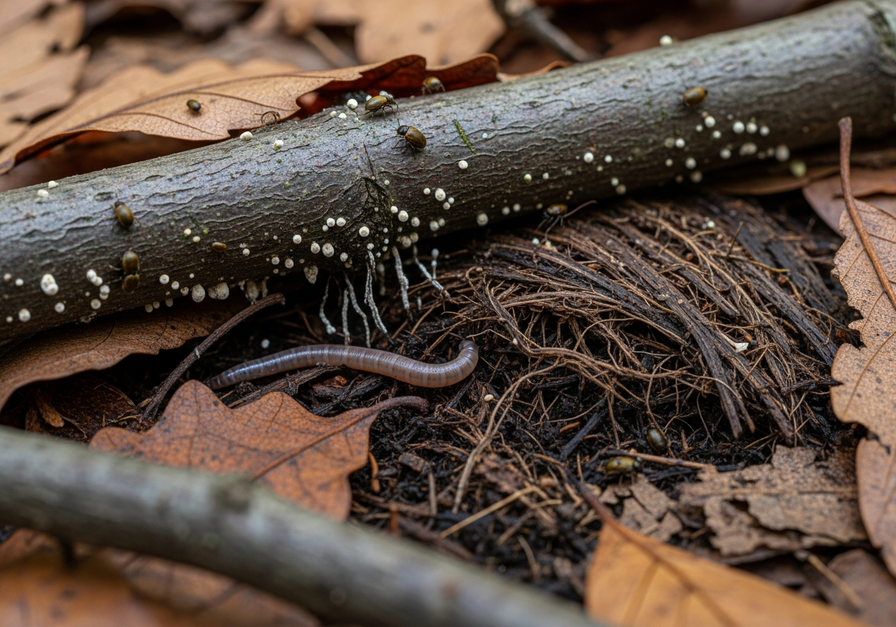
This image visually introduces detritus as the ‘dead organic material’ described in the article, illustrating the range from leaves to decomposed wood and the presence of decomposers such as earthworms and fungi. It grounds readers in the tangible, physical reality of the detrital layer.
The Ubiquity of Detritus: A Global Phenomenon
Detritus is not confined to a single habitat; it is a universal constant across virtually all ecosystems on Earth. Its forms and functions may vary, but its fundamental role remains consistent.
- Terrestrial Ecosystems: In forests, grasslands, and deserts, detritus primarily consists of plant litter such as leaves, twigs, bark, and dead roots, along with animal carcasses and waste. This layer, often called the litter layer or humus, is a bustling hub of activity for a diverse community of organisms.
- Aquatic Ecosystems: In freshwater lakes and rivers, detritus includes fallen leaves from riparian vegetation, dead aquatic plants, and the remains of aquatic animals. In the vastness of the oceans, detritus takes on a unique form known as “marine snow.”
Whether it is a decaying log providing shelter and sustenance in a woodland or microscopic particles raining down through the ocean depths, detritus is a pervasive and critical component of environmental health.
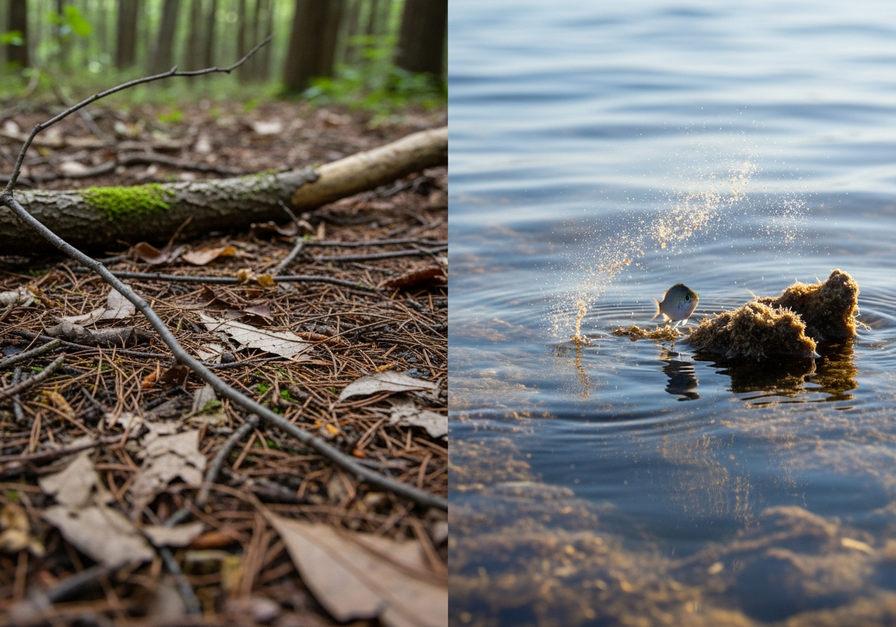
This side-by-side image demonstrates the universality of detritus, highlighting its presence in both forest and marine ecosystems as discussed in the article. It visually reinforces the concept that detrital material, whether fallen leaves or marine snow, underpins nutrient cycles across diverse habitats.
The Vital Role of Detritus in Ecosystems
The importance of detritus extends far beyond simply being dead material. It plays several critical roles that are indispensable for the functioning and health of ecosystems:
- Nutrient Cycling: This is arguably the most crucial function. Detritus acts as a reservoir of essential nutrients like nitrogen, phosphorus, and carbon. Decomposers break down the complex organic molecules in detritus, releasing these nutrients back into the soil or water in forms that can be absorbed by living plants and microorganisms. This continuous recycling prevents nutrients from being permanently locked away and ensures the ongoing productivity of ecosystems.
- Energy Flow: While primary producers like plants capture energy from the sun, detritus represents a significant energy source for a vast array of organisms. The energy stored in dead organic matter is transferred through detrital food webs, supporting communities that might otherwise struggle in environments with limited primary production.
- Soil Formation and Structure: In terrestrial environments, the decomposition of detritus contributes directly to the formation of rich, fertile soil. Humus, the stable organic matter resulting from decomposition, improves soil structure, water retention, and aeration, creating a healthier environment for plant roots.
- Carbon Sequestration: Detritus, particularly in its partially decomposed forms like peat or deep-sea sediments, plays a vital role in storing carbon. This process helps regulate atmospheric carbon dioxide levels, influencing global climate patterns.
- Habitat Provision: Decaying logs, leaf litter, and other forms of detritus provide shelter, breeding grounds, and microhabitats for countless invertebrates, fungi, and microorganisms. These structures offer protection from predators and the elements, fostering biodiversity.
The Detrital Food Web: A Hidden World of Life
While most people are familiar with grazing food webs, where herbivores eat living plants, the detrital food web is equally, if not more, important. It is a complex network of organisms that derive their energy from detritus.
The primary players in this hidden world are the decomposers and detritivores:
- Decomposers: These are mainly bacteria and fungi. They secrete enzymes that break down complex organic molecules in detritus into simpler compounds, which they then absorb. This process is crucial for nutrient release.
- Detritivores: These organisms physically consume detritus. Examples include:
- Invertebrates: Earthworms, millipedes, springtails, woodlice, slugs, and many insect larvae chew, shred, and ingest detritus, breaking it into smaller pieces and increasing its surface area for microbial action.
- Scavengers: Larger animals like vultures or crabs might consume larger pieces of dead organic matter, though their role often overlaps with other categories.
The detrital food web is not a simple linear chain. It is a highly interconnected web where detritivores consume detritus, and then those detritivores are consumed by predators, linking the detrital pathway to the grazing food web. For instance, a beetle larva feeding on decaying wood might be eaten by a bird, thus transferring energy from the detrital base to a higher trophic level.
Detritus in Aquatic Environments: The Marine Snow Phenomenon
In the vastness of the world’s oceans, detritus takes on a particularly fascinating form known as “marine snow.” This refers to a continuous shower of mostly organic detritus falling from the upper layers of the ocean to the deep sea. Marine snow consists of a diverse mix of dead or dying plankton, fecal pellets from zooplankton, dust, and other inorganic particles, all clumped together by sticky mucus produced by various organisms.
Marine snow is a lifeline for deep-sea ecosystems. In the sunless depths, where photosynthesis is impossible, marine snow is the primary source of food and energy. Organisms ranging from bacteria and fungi to specialized deep-sea invertebrates and fish rely entirely on this falling organic matter for survival. It represents a crucial biological pump, transporting carbon from the surface waters to the deep ocean, playing a significant role in global carbon cycles.
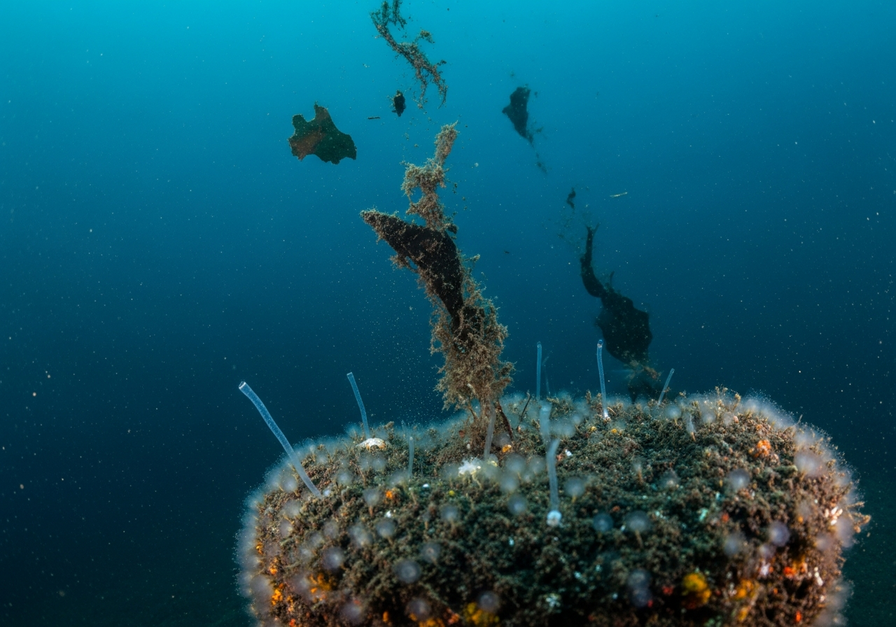
This image brings to life the deep-sea detrital food web mentioned in the article. By showing the direct link between sinking detritus and the specialized organisms that feed on it, the photograph underscores detritus as a primary energy source even in environments where sunlight does not penetrate.
Ecological Significance and Human Impact
Understanding detritus and its cycles is fundamental to ecological science and conservation. Healthy detrital cycles are indicators of robust ecosystems. Disruptions to these cycles can have far-reaching consequences:
- Pollution: Contaminants in soil or water can inhibit the activity of decomposers and detritivores, slowing down decomposition and nutrient recycling.
- Deforestation and Land Use Change: Altering natural landscapes can drastically change the quantity and quality of detritus input, impacting soil health and nutrient availability.
- Climate Change: Changes in temperature and moisture regimes can affect decomposition rates, potentially altering carbon sequestration and nutrient release patterns.
Recognizing the importance of detritus encourages sustainable practices that support natural decomposition processes, such as composting in agriculture or protecting the integrity of forest floors and marine environments.
Conclusion: Celebrating the Cycle of Life
Detritus, often perceived as mere waste, is in fact a cornerstone of ecological stability and productivity. It is the silent, tireless worker that ensures the continuous flow of energy and nutrients, transforming death into new life. From the microscopic world beneath our feet to the abyssal plains of the ocean, detritus sustains complex food webs, builds fertile soils, and regulates global cycles. By appreciating this unsung hero of ecosystems, we gain a deeper understanding of the interconnectedness of life and the profound beauty of nature’s endless recycling processes.