Unveiling the Pulse of Life: Everything You Need to Know About Populations
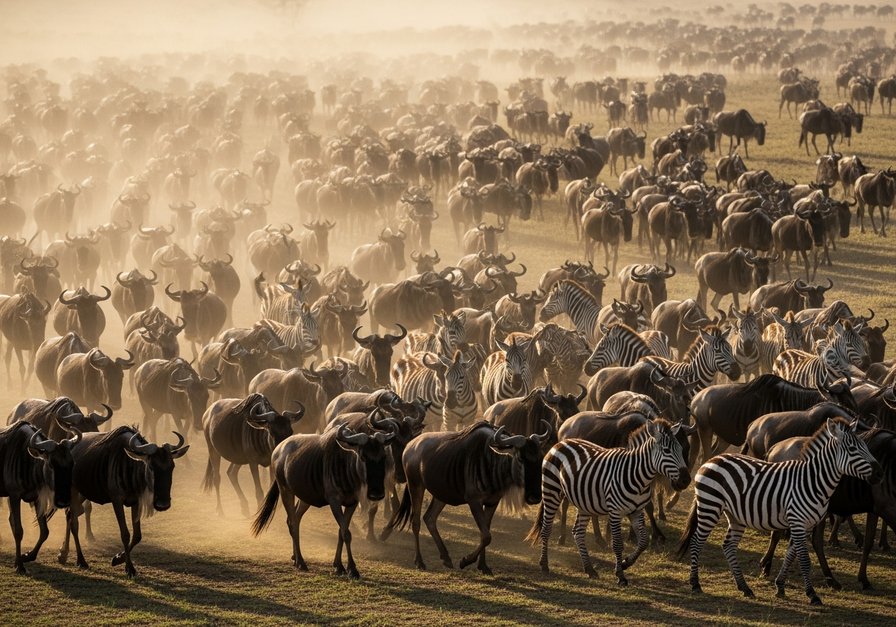
Imagine gazing out at a vast savanna, teeming with wildebeest. Or perhaps you are observing a bustling ant colony, a dense stand of ancient redwoods, or even the vibrant coral reef beneath the waves. What connects these diverse scenes? It is the fundamental concept of a population. Far more than just a group of individuals, a population is a dynamic, living entity, constantly shifting and evolving. Understanding populations is not just for scientists in labs; it is key to comprehending the intricate web of life on Earth, from the smallest microbe to the largest whale, and even our own human story.
As an ecologist who has spent years deciphering nature’s secrets, the concept of a population has always fascinated me. It is the bedrock upon which all larger ecological structures are built. Let us embark on a journey to explore this vital concept, starting with the basics and gradually delving into its more complex and captivating nuances.
What Exactly is a Population?
At its core, a population is defined as a group of individuals of the same species living in the same geographical area at the same time. Think of it as a biological club with very specific membership rules: you must be the same species, and you must share the same neighborhood. This shared space and time allow for interaction, particularly for reproduction, which is crucial for the population’s survival and evolution.
- Species Specificity: A population of white-tailed deer will not include black bears, even if they share the same forest. They are different species.
- Geographical Area: The population of oak trees in a specific national park is distinct from a population of oak trees in a different park, even if they are the same species.
- Temporal Aspect: We are talking about individuals existing concurrently, allowing for interaction and gene flow.
Why is this definition so important? Because it allows ecologists to study how these groups interact with their environment and with each other, how they grow or decline, and what factors influence their fate.
The Vital Statistics: Key Characteristics of a Population
Just like a doctor checks your vital signs, ecologists examine several key characteristics to understand the health and trajectory of a population. These “vital statistics” provide a snapshot and reveal trends over time.
- Population Size: This is simply the total number of individuals in the population. It is the most basic measure, but incredibly important. A population of 100 pandas is very different from a population of 100 million ants.
- Population Density: This tells us how crowded a population is. It is the number of individuals per unit area or volume.
- Imagine a vast ocean with a few scattered blue whales: low density.
- Now picture a bustling school of sardines in a small patch of water: high density.
Density influences resource availability, competition, and disease transmission.
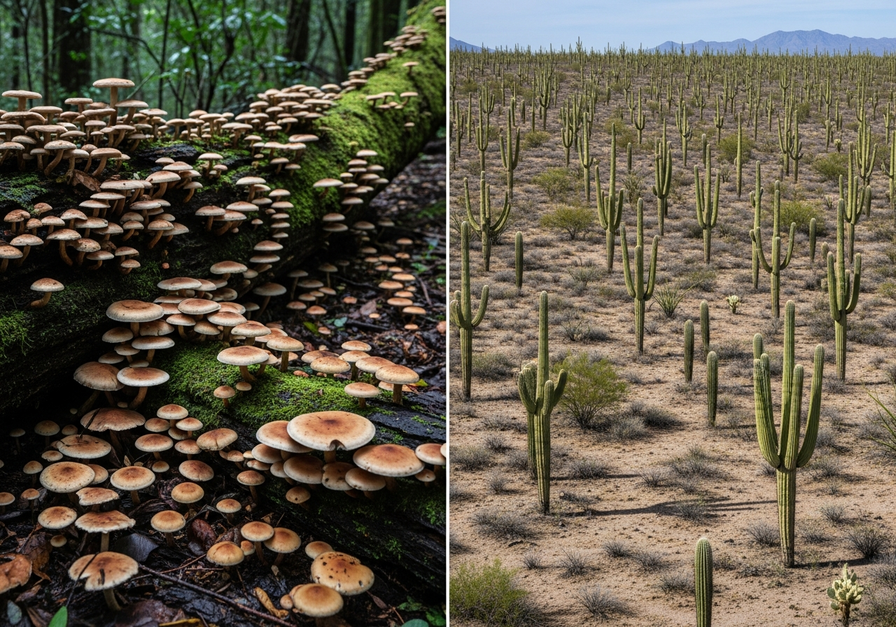
- Population Distribution (or Dispersion): This describes how individuals are spaced within their geographical area. There are three main patterns:
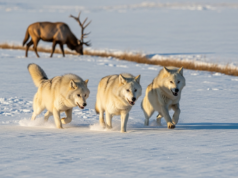
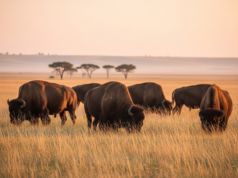
- Clumped: The most common pattern, where individuals gather in groups. Think of wolf packs, elephant herds, or clusters of fungi around a food source. This often occurs due to patchy resources, social behavior, or limited dispersal.
- Uniform (or Regular): Individuals are evenly spaced. This is less common in nature and often results from direct competition or territoriality. Think of creosote bushes in a desert, each maintaining a specific distance from its neighbors to access scarce water, or nesting penguins on a crowded rookery, each defending its small territory.
- Random: Individuals are positioned without any predictable pattern. This occurs when resources are uniformly distributed and there are no strong attractions or repulsions between individuals. Dandelions scattered by wind in a uniform field might exhibit this pattern.
- Age Structure: This refers to the proportion of individuals in different age groups within a population (e.g., pre-reproductive, reproductive, post-reproductive).
- A population with a large proportion of young individuals suggests potential for rapid growth, like a rapidly expanding human population in a developing country or a forest after a fire with many young saplings.
- A population with many older individuals and few young ones might be in decline, like an aging population of a long-lived species facing habitat loss.
Ecologists often use age pyramids to visualize this.
- Sex Ratio: The proportion of males to females in a population. This is crucial for sexually reproducing species, as it directly impacts the reproductive potential. An imbalance, such as too few females, can severely limit population growth.
- Birth Rate (Natality): The number of new individuals produced per unit of time. A high birth rate fuels population growth.
- Death Rate (Mortality): The number of individuals dying per unit of time. A high death rate can lead to population decline.
- Growth Rate: The net change in population size over time, determined by the balance between birth rates and death rates, as well as immigration and emigration.
The Dynamic Dance: How Populations Change Over Time
Populations are rarely static. They are constantly in flux, growing, shrinking, or holding steady. This fascinating process is known as population dynamics. Four fundamental processes drive these changes:
- Births (Natality): New individuals are added through reproduction.
- Deaths (Mortality): Individuals are lost from the population.
- Immigration: Individuals move into the population from elsewhere.
- Emigration: Individuals move out of the population to another area.
The interplay of these four factors determines whether a population expands, contracts, or remains stable. Think of a pond with a frog population: new tadpoles hatch (births), some frogs are eaten by herons (deaths), new frogs might hop in from a nearby marsh (immigration), and some might leave to find new ponds (emigration).
Growth Models: Predicting Population Trajectories
Ecologists use mathematical models to understand and predict how populations might grow under different conditions. Two primary models stand out:
Exponential Growth: The Sky’s the Limit (Initially)
Imagine a population with unlimited resources, no predators, and ideal conditions. It would grow at an ever-increasing rate, doubling in size over regular time intervals. This is exponential growth, often depicted as a J-shaped curve. Bacteria in a petri dish with ample nutrients will exhibit exponential growth until resources run out. A species introduced to a new, favorable habitat with no natural enemies might also show this rapid initial increase.
Example: A small colony of rabbits introduced to an island with abundant vegetation and no predators could initially experience exponential growth, rapidly increasing their numbers year after year.
However, exponential growth cannot continue indefinitely in the real world.
Logistic Growth: The Reality Check
In reality, resources are finite, and environmental resistance eventually kicks in. This leads to logistic growth, characterized by an S-shaped curve. The population initially grows exponentially, but as it approaches the environment’s limits, the growth rate slows down and eventually stabilizes around a certain level. This stable level is known as the carrying capacity.
Carrying Capacity (K): Nature’s Speed Limit
The carrying capacity (K) is the maximum population size that a particular environment can sustain indefinitely, given the available resources, space, and other limiting factors. Once a population reaches its carrying capacity, birth rates tend to equal death rates, and the population size fluctuates around K.
Example: A deer population in a forest will grow until it consumes too much vegetation, leading to food scarcity. This scarcity increases competition, reduces birth rates, and potentially increases death rates due to starvation or disease, eventually stabilizing the population around the forest’s carrying capacity for deer.
The Brakes on Growth: Limiting Factors
What prevents populations from growing exponentially forever? Limiting factors. These are environmental conditions that restrict population growth. They can be broadly categorized into two types:
- Density-Dependent Factors: These factors have a greater impact as population density increases. They are often biological in nature.
- Competition: Individuals of the same species vying for the same limited resources. This is a powerful density-dependent limiting factor.
- Predation: One species (predator) consumes another (prey). This creates classic boom-and-bust cycles in predator and prey populations.
- Disease: Diseases spread more easily and rapidly in dense populations.
- Waste Accumulation: High densities can lead to a buildup of toxic waste products.
Example: A dense population of fish in a small pond might experience increased spread of parasites and competition for oxygen, leading to higher mortality.
- Density-Independent Factors: These factors affect a population regardless of its density. They are often abiotic (non-living) and include natural disasters or extreme weather events.
- Floods, Fires, Earthquakes: These events can decimate populations regardless of how sparse or dense they are.
- Extreme Temperatures: A sudden, severe cold snap can kill off a significant portion of an insect population, whether it is large or small.
- Pollution: Chemical spills can harm populations irrespective of their size.
Example: A sudden, unseasonal frost can wipe out a significant portion of a plant population, whether it is a small patch or a widespread field.

Beyond the Basics: Advanced Population Concepts
For those eager to delve deeper, population ecology offers even more fascinating insights into the complexities of life.
Interspecific vs. Intraspecific Interactions
Individuals within a population interact with each other (intraspecific interactions) and with individuals of other species (interspecific interactions). These interactions are crucial drivers of population dynamics.
- Intraspecific:
- Competition: Individuals of the same species vying for the same limited resources. This is a powerful density-dependent limiting factor.
- Cooperation: Social behaviors like group hunting (wolves), communal care of young (meerkats), or alarm calls can benefit the population.
- Interspecific:
- Predation: One species (predator) consumes another (prey). This creates classic boom-and-bust cycles in predator and prey populations.
- Competition: Different species competing for the same resources.
- Symbiosis: Close, long-term interactions between different species (e.g., mutualism, commensalism, parasitism).
Metapopulations: Patches of Life
In today’s fragmented landscapes, many species do not exist as one large, continuous population. Instead, they live in a network of smaller, spatially separated populations that are connected by occasional dispersal of individuals. This is known as a metapopulation.
Imagine several small ponds, each with its own population of frogs. If one pond dries up, that local population might go extinct. However, if frogs from a nearby pond can colonize the empty pond or reinforce declining populations, the overall metapopulation can persist. Understanding metapopulations is vital for conservation efforts, especially for species living in fragmented habitats.
Population Viability Analysis (PVA): A Conservation Tool
For endangered species, ecologists often conduct a Population Viability Analysis (PVA). This is a sophisticated modeling approach that uses demographic data (birth rates, death rates, age structure, etc.) and environmental factors to estimate the probability of a population persisting for a certain period into the future. PVA helps conservationists identify critical threats, set recovery targets, and prioritize management actions.
Example: A PVA for the Florida panther might consider factors like habitat loss, road mortality, genetic diversity, and prey availability to predict its long-term survival chances and recommend specific conservation strategies, such as creating wildlife corridors.
The Human Population: A Unique Case Study
While all the principles of population ecology apply to humans, our species presents a unique and complex case. Our ability to modify our environment, develop technology, and overcome many traditional limiting factors has allowed our population to grow exponentially for centuries. However, we are not immune to carrying capacity. Understanding human population dynamics, resource consumption, and environmental impact is arguably the most critical ecological challenge of our time.
Why Does Understanding Populations Matter?
The study of populations is not an abstract academic exercise. It has profound real-world implications:
- Conservation: Identifying endangered species, understanding threats, and designing effective recovery plans.
- Resource Management: Managing fish stocks, timber harvests, and agricultural pests sustainably.
- Disease Control: Understanding how pathogen populations spread and how host populations respond.
- Urban Planning: Predicting growth and resource needs for human settlements.
- Climate Change: Assessing how changing environmental conditions impact species populations globally.
Every time you hear about a species on the brink of extinction, a booming insect pest, or a debate about sustainable fishing, you are hearing about population ecology in action.
The Unseen Forces Shaping Our World
From the smallest bacterial colony to the global human family, populations are the fundamental units of life’s intricate tapestry. They are dynamic, responsive, and constantly engaged in a delicate dance with their environment. By understanding their characteristics, growth patterns, and the factors that limit them, we gain invaluable insights into the health of our planet and our place within it.
The next time you observe a flock of birds, a patch of wildflowers, or even the crowd in a city square, remember the powerful ecological concept of the population. It is a lens through which we can better appreciate the pulse of life and become more informed stewards of our shared world.