The relentless march of urbanization often conjures images of concrete, steel, and bustling human activity, seemingly devoid of nature. Yet, beneath this veneer of human dominance, a vibrant and complex ecological drama unfolds daily. This is the realm of urban ecology, a fascinating field that challenges our traditional notions of where nature belongs and how it thrives.
Urban ecology is not just about finding pockets of green in the city, it is about understanding the intricate web of interactions between living organisms, including humans, and their built environment. It recognizes cities not as ecological voids, but as dynamic ecosystems in their own right, shaped by human design and natural processes alike.
The City as an Ecosystem: Understanding Urban Ecology
Beyond Concrete Jungles: Defining Urban Ecology
At its core, urban ecology is the scientific study of the relationship of living organisms with each other and with their urban environment. It is an inherently interdisciplinary field, drawing insights from biology, sociology, geography, planning, and engineering. Unlike traditional ecology, which often focuses on pristine or minimally disturbed natural areas, urban ecology embraces the human element as a fundamental component of the ecosystem. It examines how species adapt to urban conditions, how urban design impacts ecological processes, and how nature can be harnessed to improve city life.
Consider a city park, a rooftop garden, or even the cracks in a sidewalk where tenacious plants sprout. These are not merely isolated features; they are interconnected parts of a larger urban ecosystem, influencing everything from local climate to biodiversity. Understanding these connections is crucial for building more resilient and livable cities.
Key Characteristics of Urban Ecosystems
Urban ecosystems possess several distinguishing features that set them apart from their rural counterparts:
- High Human Population Density: Humans are the dominant species, profoundly altering the landscape and driving many ecological processes.
- Altered Physical Environment: Extensive impervious surfaces like roads and buildings change water flow and heat absorption. Artificial light disrupts nocturnal cycles, and noise pollution impacts animal communication.
- Unique Species Assemblages: Cities host a mix of species. Some are “synanthropic,” thriving alongside humans, like pigeons, rats, and many insects. Others are introduced species, brought intentionally or accidentally. Remnant native species may persist in parks or undeveloped areas.
- Resource Consumption and Waste Generation: Cities are massive consumers of resources, from water and food to energy, and producers of significant waste, all of which have ecological consequences both locally and globally.
Life Thrives: Biodiversity in the Urban Fabric
Despite the concrete and commotion, cities are far from sterile. They are often surprisingly rich in biodiversity, hosting a diverse array of plant and animal life that has adapted to, and even specialized in, urban conditions.
Adapting to the Urban Environment
Many species demonstrate remarkable ingenuity in navigating the urban landscape. Peregrine falcons, once rare, now nest on skyscrapers, using them as artificial cliffs to hunt pigeons. Raccoons and foxes have become adept at foraging in human refuse, while various bird species learn to navigate traffic and find food in parks and gardens. Plants, too, show incredible resilience, with “spontaneous urban flora” colonizing vacant lots and sidewalk cracks, often playing an important ecological role.
Unexpected Havens: Green Spaces and Their Inhabitants
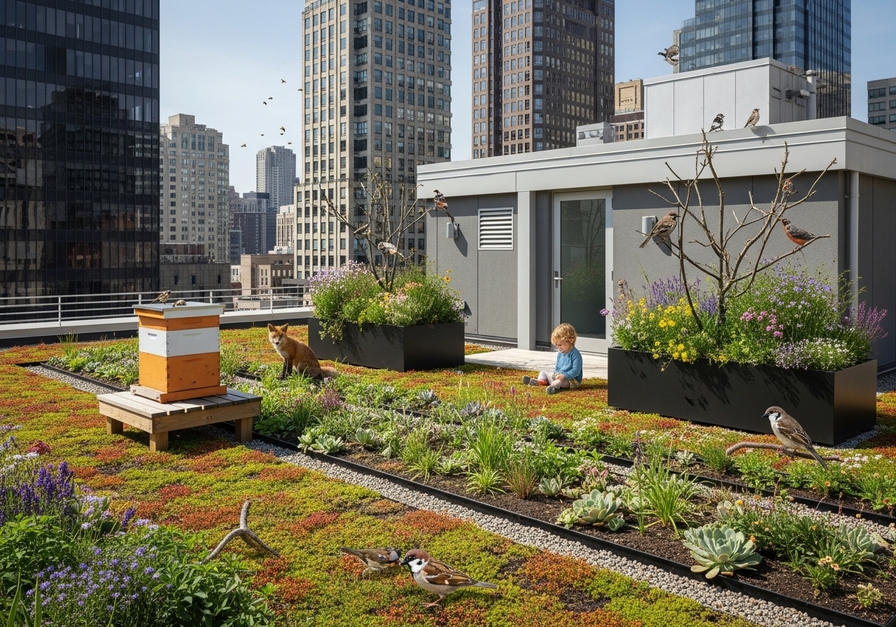
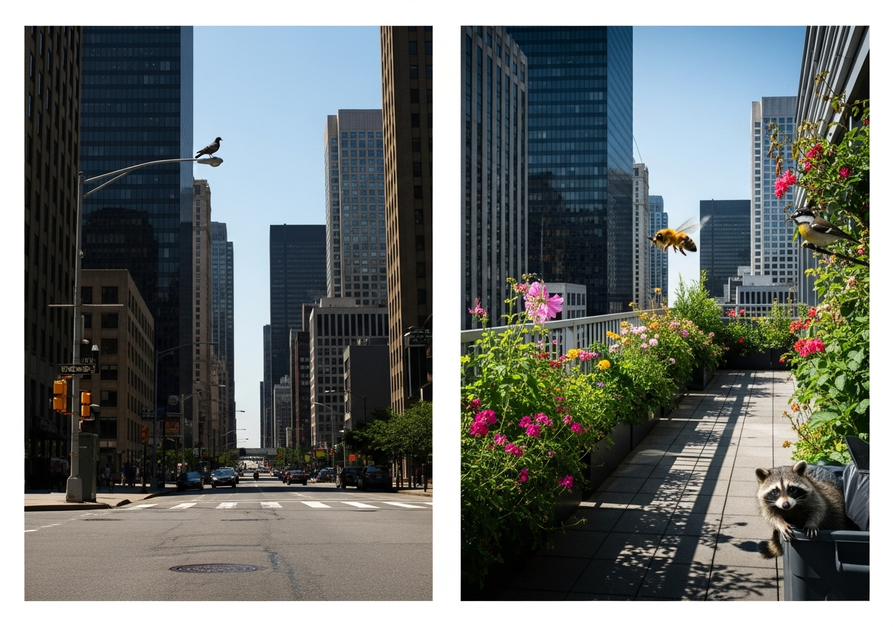
Parks, community gardens, street trees, and even private yards form a network of green spaces that are vital for urban biodiversity. These areas provide food, shelter, and breeding grounds, acting as ecological stepping stones throughout the city. Green roofs, in particular, are emerging as powerful examples of how innovative design can create new habitats.
These elevated oases can host a surprising variety of life, from insects and birds to small mammals, creating complex micro-ecosystems high above the street level. They demonstrate that even in the densest urban environments, nature finds a way to flourish, enriching the city’s ecological tapestry.
Mitigating Challenges: Urban Ecology’s Solutions
Urbanization presents significant environmental challenges, but urban ecology offers powerful solutions, leveraging natural processes to create healthier, more sustainable cities.
Tackling the Urban Heat Island Effect
One of the most pressing issues in many cities is the Urban Heat Island (UHI) effect. This phenomenon occurs when urban areas, with their abundance of heat-absorbing materials like asphalt and concrete, and lack of vegetation, become significantly warmer than surrounding rural areas. This increased heat can lead to higher energy consumption for cooling, poorer air quality, and increased heat-related illnesses.
Urban ecology provides effective mitigation strategies. Planting more trees provides shade and cools the air through evapotranspiration. Green roofs and walls reduce heat absorption by buildings. Replacing impervious surfaces with permeable, vegetated alternatives helps to cool the environment and manage stormwater.
Water Management and Air Quality
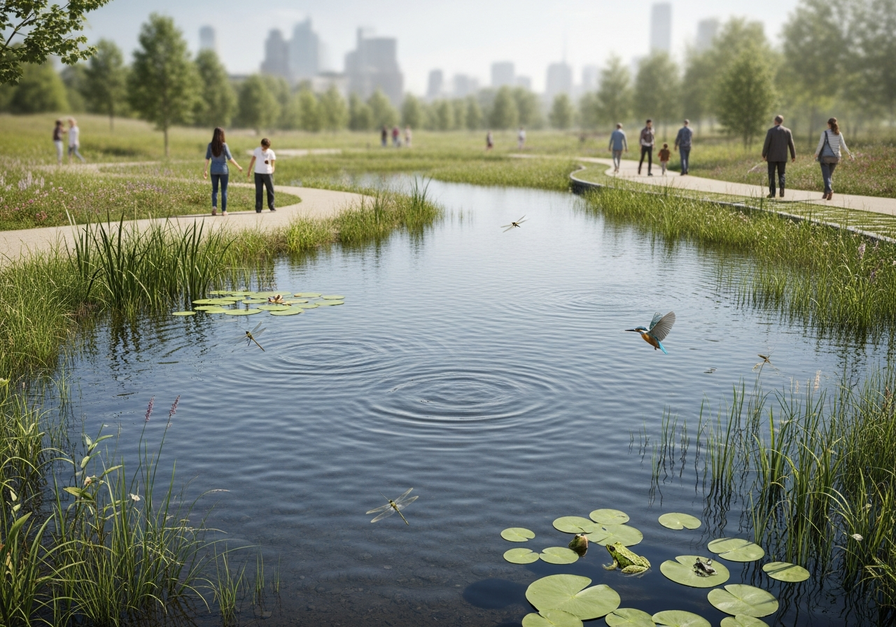
Cities often struggle with stormwater runoff, which can overwhelm drainage systems, cause flooding, and carry pollutants into waterways. Natural solutions, such as rain gardens, bioswales, and restored urban wetlands, can absorb and filter stormwater, reducing runoff and improving water quality. These natural systems also provide critical habitats for aquatic life and migratory birds.
Urban vegetation also plays a crucial role in improving air quality. Trees and plants absorb pollutants like carbon dioxide, nitrogen oxides, and particulate matter, releasing oxygen and making city air cleaner and healthier to breathe.
Connecting People with Nature
Beyond environmental benefits, urban ecology emphasizes the profound impact of nature on human well-being. Access to green spaces has been linked to reduced stress, improved mental health, increased physical activity, and stronger community ties. Urban parks, community gardens, and naturalized areas provide vital opportunities for recreation, relaxation, and connection with the natural world, enhancing the quality of life for city dwellers.
Designing for a Greener Future: Principles of Urban Ecological Planning
Integrating ecological principles into urban planning is essential for creating truly sustainable and resilient cities. This involves a shift from viewing nature as an amenity to recognizing it as critical infrastructure.
Green Infrastructure: Beyond Aesthetics
Green infrastructure refers to a strategically planned and managed network of natural and semi-natural areas that deliver a wide range of ecosystem services. It goes beyond individual parks to include interconnected systems like:
- Green Roofs and Walls: Reducing heat, managing stormwater, and providing habitat.
- Permeable Pavements: Allowing water to infiltrate the ground, reducing runoff.
- Bioswales and Rain Gardens: Capturing and filtering stormwater.
- Urban Forests: Providing shade, improving air quality, and supporting biodiversity.
- Wildlife Corridors: Connecting fragmented habitats, allowing species to move safely through the urban landscape.
These elements are designed to work together, mimicking natural processes to provide multiple benefits simultaneously.
The Role of Citizen Science and Community Engagement
Successful urban ecological initiatives often rely heavily on the active participation of city residents. Citizen science projects, where volunteers collect data on local wildlife, plant growth, or water quality, contribute valuable information to researchers and policymakers. Community gardens foster local food production and social cohesion. Tree planting initiatives and park stewardship programs empower residents to directly improve their local environment. This engagement builds a sense of ownership and responsibility, ensuring the long-term success of ecological projects.
Advanced Concepts in Urban Ecology
For those seeking a deeper dive, urban ecology also explores more nuanced and complex aspects of city nature.
Ecosystem Services Quantification
One area of growing importance is the quantification of ecosystem services. This involves assigning measurable values, sometimes economic, to the benefits that urban ecosystems provide. For example, calculating the monetary value of stormwater retention by a green roof, the air purification provided by an urban forest, or the health benefits derived from access to a city park. This helps urban planners and policymakers make informed decisions, demonstrating that investing in nature is not just an environmental luxury but a sound economic and social strategy.
Novel Ecosystems and Hybrid Habitats
Urban environments often create “novel ecosystems,” which are new combinations of species and environmental conditions that have not occurred historically. These can arise from human disturbances, species introductions, and altered ecological processes. Urban ecologists study how these novel ecosystems function, their stability, and their capacity to provide services. Similarly, “hybrid habitats” explore the blurring lines between natural and artificial, such as a wetland created within a wastewater treatment plant, or a vertical farm integrated into a building facade. Understanding these new ecological configurations is key to managing urban nature effectively.
Urban-Rural Gradients and Metapopulation Dynamics
Urban ecology also examines how ecological patterns and processes change along urban-rural gradients, from the dense city center to the exurban periphery. This helps understand how species richness, community composition, and ecological functions shift with increasing urbanization. Furthermore, the concept of metapopulation dynamics is crucial in fragmented urban landscapes. It studies how populations of species persist as a network of spatially separated subpopulations, connected by occasional dispersal. This understanding is vital for designing effective conservation strategies that maintain genetic diversity and population viability in fragmented urban habitats.
Urban ecology reveals that cities are not just places where humans live, but vibrant, evolving ecosystems. By understanding the intricate relationships between people, plants, and animals within the urban fabric, we can design and manage our cities to be more resilient, biodiverse, and ultimately, more livable for all inhabitants. Embracing urban ecology means recognizing that nature is not something separate from the city, but an integral part of its past, present, and future.