In the intricate dance of nature, where every organism plays a vital role, the balance can sometimes be disrupted. Pests, from tiny aphids to voracious caterpillars, can wreak havoc on crops, gardens, and even urban environments. For centuries, humanity has sought ways to protect its resources, often turning to chemical solutions. However, a more elegant, sustainable, and ecologically sound approach exists: biological control.
Biological control is a pest management strategy that utilizes living organisms, often referred to as natural enemies, to suppress pest populations. Instead of relying on synthetic chemicals, this method harnesses the power of nature itself, employing predators, parasites, and pathogens to keep unwanted species in check. It is a testament to the interconnectedness of ecosystems, offering a powerful alternative that benefits both the environment and human endeavors.
Understanding the Pillars of Biological Control
At its heart, biological control operates on fundamental ecological principles: the predator-prey relationship, parasitism, and disease. These natural interactions are constantly occurring in healthy ecosystems, maintaining equilibrium. Biological control simply amplifies or introduces these natural processes to address specific pest problems.
Predators: Nature’s Hunters
Predators are organisms that hunt, kill, and consume other organisms, known as prey. In the context of pest control, these beneficial predators target pest species, reducing their numbers. Many familiar garden inhabitants are actually diligent pest controllers.
- Ladybugs (Ladybird Beetles): These iconic insects are voracious eaters of soft-bodied pests, particularly aphids and scale insects. A single ladybug larva can consume hundreds of aphids during its development.
- Lacewings: Both adult and larval lacewings are significant predators. Their larvae, often called “aphid lions,” have formidable jaws capable of devouring aphids, mites, and other small insects.
- Hoverflies: While adult hoverflies are pollinators, their larvae are effective predators of aphids and other sap-sucking insects.
- Spiders: Most spiders are generalist predators, capturing a wide array of insects, including many common garden pests.
The presence of these natural hunters can significantly reduce the need for chemical interventions, creating a healthier environment for all organisms.
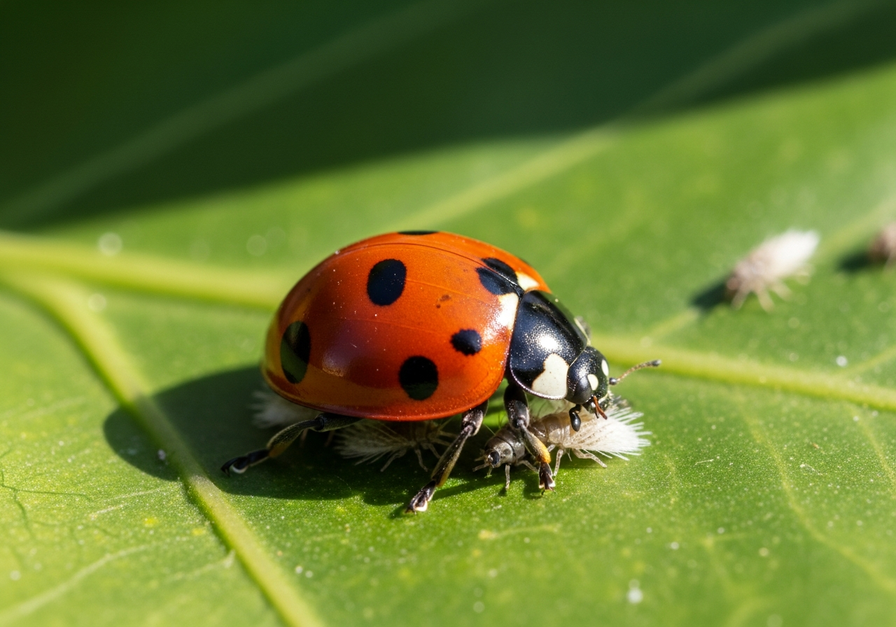
This image illustrates the predation strategy used in citrus groves, where ladybugs suppress pest populations without chemical intervention. Here, a Ladybug Guardian diligently consumes cottony cushion scale, a common citrus pest.
Parasitoids: The Subtle Controllers
Parasitoids are organisms that spend a significant portion of their life cycle intimately associated with a single host organism, eventually killing it. Unlike true parasites, which typically do not kill their host, parasitoids are lethal. Many wasps and flies fall into this category, playing a crucial, albeit often unseen, role in pest management.
- Parasitic Wasps: These tiny wasps lay their eggs either on or inside the body of a host insect, such as a caterpillar, aphid, or whitefly. The wasp larvae then hatch and consume the host from the inside out, eventually emerging as adult wasps.
- Tachinid Flies: Similar to parasitic wasps, tachinid flies lay their eggs on or near host insects, often caterpillars or beetles. The fly larvae then develop within the host, leading to its demise.
The precision of parasitoids makes them highly effective biological control agents, as they often target very specific pest species, minimizing impact on non-target organisms.
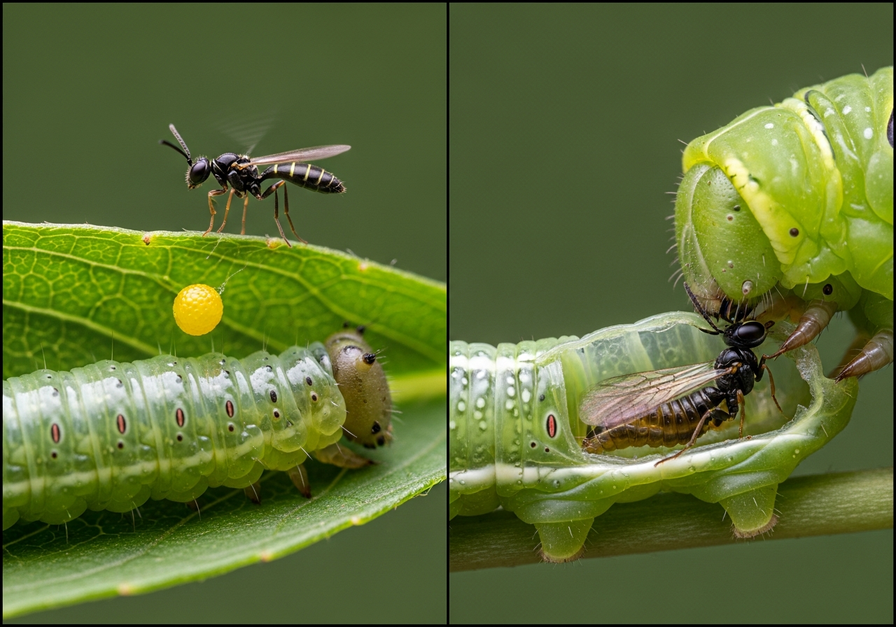
This image depicts how parasitic wasps operate within pest control, emphasizing the internal lifecycle that ultimately reduces pest populations. The Parasitic Wasp Paradox reveals both the external egg-laying and the internal development of the wasp larva.
Pathogens: Microbial Allies
Biological control can also involve the use of naturally occurring diseases that affect pest populations. These pathogens, including bacteria, fungi, and viruses, can be highly effective in suppressing outbreaks.
- Bacteria: One of the most well-known bacterial agents is Bacillus thuringiensis (Bt). Different strains of Bt produce toxins that are specific to certain insect groups, such as caterpillars or mosquito larvae. When ingested by susceptible pests, these toxins disrupt their digestive systems, leading to their death.
- Fungi: Entomopathogenic fungi infect insects by growing on their external surface and penetrating their cuticle. Once inside, the fungus proliferates, eventually killing the host. Examples include species of Beauveria and Metarhizium.
- Viruses: Certain insect-specific viruses, such as baculoviruses, can be highly effective in controlling pest outbreaks. These viruses are often very host-specific, making them safe for non-target organisms.
The application of microbial agents can be particularly useful for widespread pest problems, offering a targeted and environmentally friendly solution.
Strategies for Implementing Biological Control
Biological control is not a one-size-fits-all solution. Ecologists and pest managers employ different strategies depending on the pest, the environment, and the desired outcome.
1. Conservation Biological Control
This strategy focuses on protecting and enhancing existing populations of natural enemies. It involves modifying the environment to make it more hospitable for beneficial insects and other organisms. This can include:
- Providing Habitat: Planting diverse flowering plants that offer nectar and pollen for adult predators and parasitoids.
- Reducing Pesticide Use: Minimizing or eliminating broad-spectrum pesticides that can harm beneficial insects.
- Creating Overwintering Sites: Leaving undisturbed areas, such as brush piles or perennial grasses, where natural enemies can shelter during colder months.
- Diversifying Cropping Systems: Implementing polyculture instead of monoculture to create a more complex and stable ecosystem.
Conservation biological control is often the most sustainable and cost-effective approach, as it leverages the natural processes already present in an ecosystem.
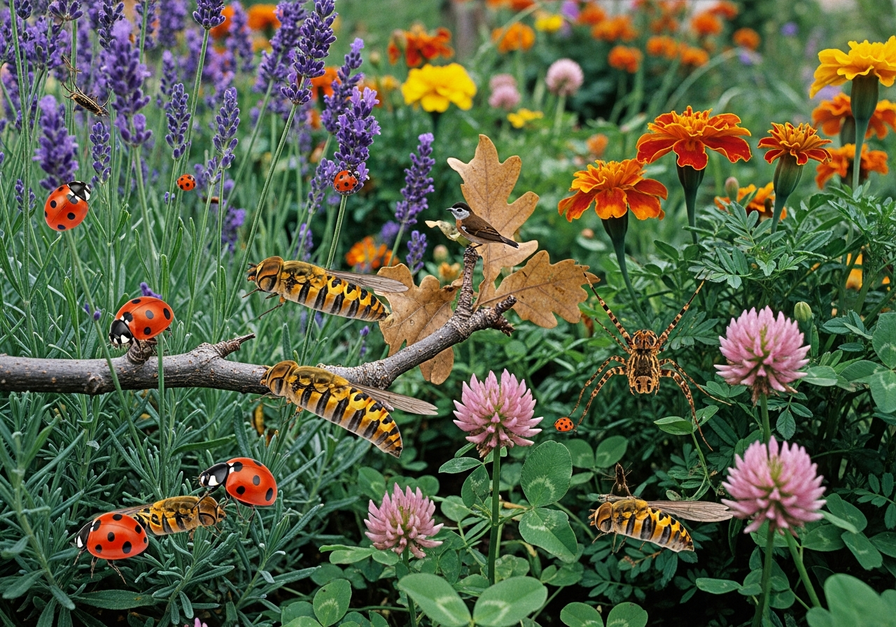
This image shows a real-world example of conservation, where planting flowering species supports natural predators and enhances integrated pest management. The Natural Garden Ecosystem thrives with beneficial insects and a bird, all contributing to ecological balance.
2. Augmentation Biological Control
Augmentation involves the release of commercially reared natural enemies into an area to supplement existing populations or to introduce them where they are absent. This can be done in two main ways:
- Inoculative Releases: A relatively small number of natural enemies are released early in the season, with the expectation that they will reproduce and provide control for an extended period. This is often used in greenhouses or orchards.
- Inundative Releases: A large number of natural enemies are released to provide immediate, short-term pest control. This is akin to a “biological pesticide” application, where the released organisms are expected to die off after controlling the pest. An example is releasing thousands of ladybugs to combat a severe aphid infestation.
3. Classical Biological Control (Importation)
This strategy involves the intentional introduction of a natural enemy from its native range into a new area where a non-native pest has become problematic. This is typically undertaken when a pest has been introduced to a new region without its natural enemies, leading to unchecked population growth.
Classical biological control is a highly regulated and carefully researched process. Before any release, extensive studies are conducted to ensure that the introduced natural enemy will target only the pest and not harm native species or disrupt the ecosystem. A classic success story is the control of the cottony cushion scale in California citrus groves in the late 19th century using the vedalia beetle, imported from Australia.
Benefits and Considerations
The advantages of biological control are numerous and far-reaching:
- Environmental Safety: Reduces reliance on chemical pesticides, protecting water quality, soil health, and biodiversity.
- Reduced Pest Resistance: Pests are less likely to develop resistance to biological control agents compared to chemical pesticides.
- Long-Term Solutions: Classical and conservation biological control can provide self-sustaining, long-term pest management.
- Economic Savings: Can reduce costs associated with pesticide purchases and applications over time.
- Human Health: Minimizes exposure to harmful chemicals for agricultural workers and consumers.
However, biological control also presents certain considerations:
- Specificity: Finding a natural enemy that is highly specific to the target pest can be challenging.
- Time Lag: Biological control often takes longer to show results compared to fast-acting chemical pesticides.
- Environmental Factors: The effectiveness of natural enemies can be influenced by temperature, humidity, and other environmental conditions.
- Non-Target Effects: Although rare with careful research, there is a potential for introduced biological control agents to impact non-target species.
Biological Control in Integrated Pest Management (IPM)
Biological control is a cornerstone of Integrated Pest Management (IPM), a holistic approach that combines various pest control tactics to manage pest populations while minimizing economic, health, and environmental risks. IPM emphasizes understanding the pest’s biology and ecology, monitoring pest populations, and using a combination of methods, including:
- Cultural Controls: Practices like crop rotation, resistant varieties, and proper sanitation.
- Physical/Mechanical Controls: Traps, barriers, and hand-picking.
- Biological Controls: Utilizing natural enemies.
- Chemical Controls: Using pesticides only when necessary and in a targeted manner, often as a last resort.
By integrating biological control into an IPM program, growers and land managers can achieve effective and sustainable pest management, fostering healthier ecosystems and more resilient agricultural systems.
The Future of Biological Control
As ecological understanding deepens and technology advances, the field of biological control continues to evolve. Research into new natural enemies, improved rearing techniques, and better methods for integrating biological control into complex agricultural systems is ongoing. Genetic tools are also being explored to enhance the efficacy and specificity of biological control agents, always with a strong emphasis on ecological safety.
Biological control represents a sophisticated and sustainable approach to managing pests, one that aligns with the principles of ecological harmony. By understanding and harnessing the power of nature’s own mechanisms, it offers a path towards more resilient ecosystems, healthier food systems, and a reduced environmental footprint. Embracing these natural solutions is not just good science, it is a commitment to a more balanced and sustainable future for our planet.