
The Ocean’s Hidden Engine: Unveiling the Power of Upwelling
Beneath the vast, shimmering surface of our oceans lies a powerful, unseen engine that drives marine productivity and sustains some of the planet’s most vibrant ecosystems. This engine is known as upwelling, a fundamental oceanographic process where cold, nutrient-rich water from the deep ocean rises to replace warmer, nutrient-depleted surface water. It is a phenomenon that transforms barren stretches of ocean into bustling havens of life, fueling everything from microscopic plankton to massive whales. Understanding upwelling is key to appreciating the intricate web of marine life and the delicate balance of our global climate.
What is Upwelling? The Ocean’s Natural Fertilization System
At its core, upwelling is a vertical movement of water. Imagine the ocean as a giant, layered cake. The top layer, warmed by the sun, is often low in essential nutrients because surface organisms consume them rapidly. Below this, in the colder, darker depths, lie vast reservoirs of dissolved nutrients like nitrates, phosphates, and silicates, accumulated from decaying organic matter. Upwelling acts as a natural conveyor belt, bringing these vital nutrients from the deep to the sunlit surface where photosynthesis can occur.
The primary driver for most upwelling events is wind. When persistent winds blow parallel to a coastline, or across certain oceanic regions, they push surface water away. As this surface water moves offshore, the deeper, colder water is drawn upwards to fill the void, much like water being sucked up a straw. The Earth’s rotation, through a force called the Coriolis effect, also plays a crucial role, deflecting the moving water and influencing the direction of upwelling currents.
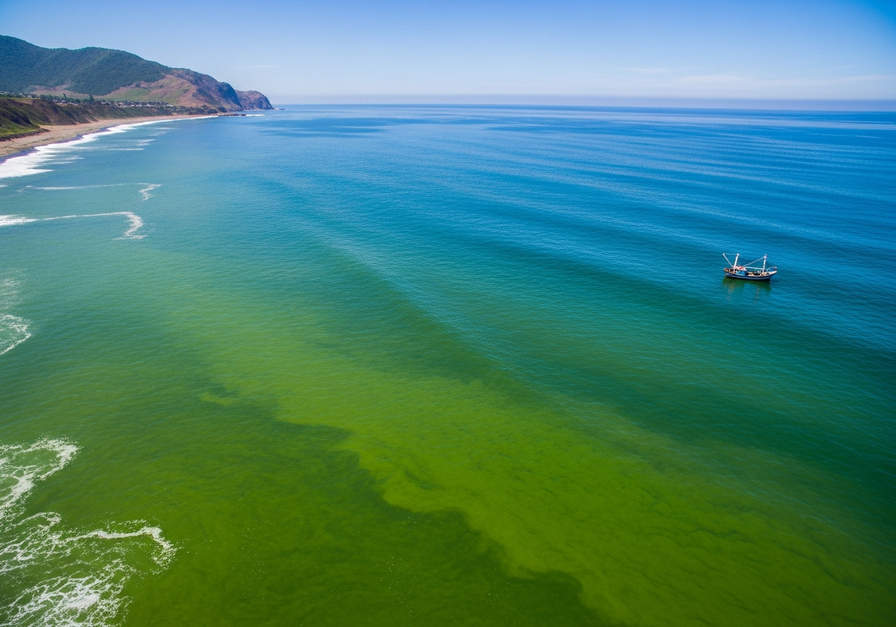
This drone-captured aerial photograph illustrates the dramatic visual impact of upwelling: a vivid green plume of phytoplankton thriving in the nutrient-rich surface waters off the Peruvian coast.
The Visible Transformation: A Green Plume of Life
One of the most striking visual indicators of a strong upwelling event is the sudden appearance of vibrant green or brownish patches on the ocean surface. These are not pollution, but rather massive blooms of phytoplankton, microscopic marine plants that form the base of the ocean’s food web. Just like plants on land need sunlight and nutrients to grow, phytoplankton require sunlight and dissolved nutrients. Upwelling provides the latter in abundance, turning the sunlit surface waters into a fertile garden.
These phytoplankton blooms are incredibly productive. They absorb vast amounts of carbon dioxide from the atmosphere during photosynthesis, playing a significant role in the global carbon cycle. Without upwelling, many coastal regions would be far less productive, resembling the nutrient-poor “blue deserts” of the open ocean.
The Mechanics Beneath the Waves: Cold Water Rising
While the surface bloom is the most obvious sign, the actual process of upwelling occurs beneath the surface. As winds push surface water away from the coast, the water column becomes unstable. The deeper, colder water, which is also denser, begins its ascent. This rising water is typically several degrees cooler than the surrounding surface water, and its journey from the depths brings with it the accumulated nutrients.

This underwater photograph captures the physical process of upwelling, showing a distinct plume of cold, dark water rising from the deep, illustrating the temperature and density differences that drive this phenomenon.
The ascent of this cold water can be quite dramatic, creating distinct temperature fronts and influencing local weather patterns, often leading to cooler, foggier conditions along upwelling coasts. The energy required to lift such vast quantities of water is immense, a testament to the persistent power of wind and ocean dynamics.
A Feast for the Oceans: Ecological Riches
The ecological impact of upwelling is profound and far-reaching. The explosion of phytoplankton growth provides an abundant food source for zooplankton, tiny marine animals that graze on the phytoplankton. These zooplankton, in turn, become food for small fish like anchovies, sardines, and mackerel. The abundance of these small fish then attracts larger predators: tuna, sharks, marine mammals such as seals and dolphins, and numerous species of seabirds.
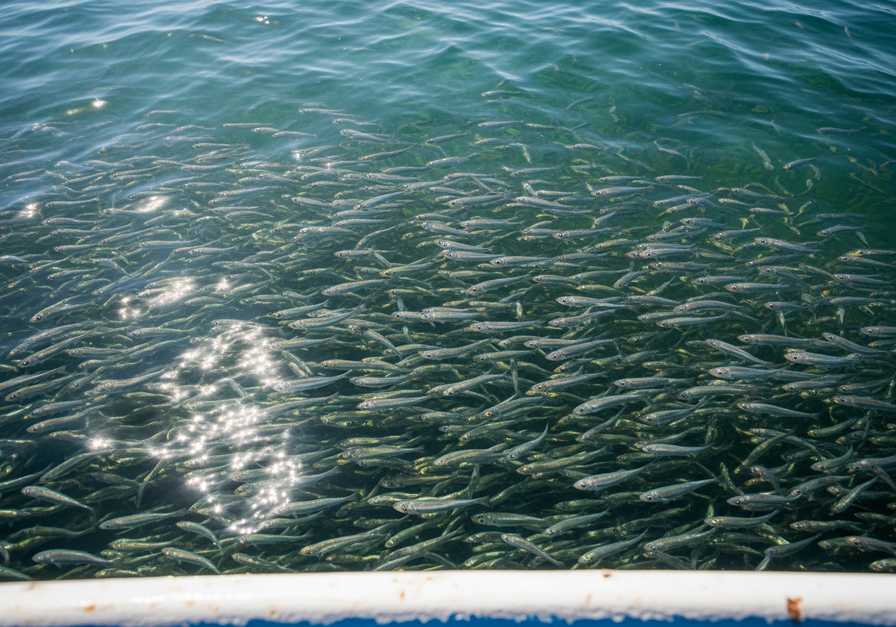
This close-up image from a fishing vessel’s deck reveals a dense school of silver anchovies, a clear demonstration of how nutrient-rich upwelling waters support massive fish populations and vibrant marine ecosystems.
Many of the world’s most productive fisheries are located in regions of strong, consistent upwelling. For example, the Humboldt Current off the coast of Peru and Chile, driven by powerful upwelling, supports one of the largest fisheries for anchovies and sardines globally. Similarly, the Benguela Current off southwestern Africa, the California Current, and the Canary Current off Northwest Africa are all renowned for their rich marine biodiversity and significant fishing industries, all thanks to the fertilizing effect of upwelling.
Global Hotspots: Where Upwelling Reigns Supreme
Upwelling is not uniform across the globe; it occurs in specific regions where conditions are favorable. The most prominent upwelling zones include:
- Eastern Boundary Current Systems: These are found along the western coasts of continents, where prevailing winds and the Coriolis effect combine to push surface water offshore. Key examples include:
- The Humboldt Current (Peru and Chile)
- The California Current (western North America)
- The Canary Current (northwest Africa)
- The Benguela Current (southwestern Africa)
- Equatorial Upwelling: Along the equator, trade winds blow from east to west. The Coriolis effect deflects water to the right in the Northern Hemisphere and to the left in the Southern Hemisphere, causing surface water to diverge away from the equator. This divergence draws deep water upwards, creating a band of high productivity.
- Southern Ocean Upwelling: In the Antarctic, strong westerly winds drive the Antarctic Circumpolar Current. This current, combined with the absence of continental landmasses to block water movement, leads to significant upwelling of deep, nutrient-rich water, fueling the incredibly productive Southern Ocean ecosystem.
- Coastal Upwelling in Other Regions: While less extensive, upwelling can also occur in other coastal areas due to local wind patterns, particularly during certain seasons.
Types of Upwelling: A Deeper Dive
Beyond the general concept, oceanographers categorize upwelling based on its specific mechanisms:
- Coastal Upwelling: This is the most common and well-understood type, driven by winds blowing parallel to a coastline, as described earlier. It is responsible for the rich fisheries along many continental margins.
- Equatorial Upwelling: Caused by the divergence of surface waters at the equator due to the Coriolis effect acting on trade winds.
- Open Ocean Upwelling (Divergence Upwelling): Can occur in the open ocean where currents diverge or where eddies create areas of suction, drawing deep water upwards. This is less intense than coastal upwelling but still contributes to localized productivity.
- Topographic Upwelling: Occurs when deep currents encounter underwater obstacles like seamounts, ridges, or continental shelves. As the water is forced upwards to flow over these features, it brings nutrients to shallower depths.
The Delicate Balance: Upwelling in a Changing Climate
Upwelling systems are incredibly productive, but they are also sensitive to environmental changes. Climate change poses several challenges to these vital ocean processes:
- Ocean Warming: As surface waters warm, the density difference between surface and deep water can increase, potentially making it harder for upwelling to occur. A stronger stratification of the water column could reduce the efficiency of nutrient delivery.
- Wind Pattern Shifts: Changes in global wind patterns, driven by climate change, could alter the strength, frequency, or location of upwelling events. Some regions might experience stronger upwelling, while others might see a decline.
- Ocean Acidification: Upwelled waters are naturally more acidic due to the higher concentration of dissolved carbon dioxide at depth. As the ocean absorbs more atmospheric CO2, these upwelled waters become even more acidic, posing a significant threat to shell-forming organisms like pteropods, which are a crucial food source in many upwelling ecosystems.
- Oxygen Minimum Zones: Upwelled waters are often naturally low in oxygen. As ocean temperatures rise, the solubility of oxygen in water decreases, and respiration rates of marine organisms increase, potentially expanding and intensifying these oxygen minimum zones, creating “dead zones” where most marine life cannot survive.
The future of upwelling systems is a critical area of research. Monitoring these changes is essential for predicting impacts on marine ecosystems, global fisheries, and the planet’s overall carbon balance.
Conclusion: The Unseen Force Sustaining Our Blue Planet
Upwelling is far more than just a scientific curiosity; it is a fundamental process that underpins the health and productivity of our oceans. From the microscopic phytoplankton that form the base of the food web to the massive schools of fish that feed millions of people, life in many parts of the ocean thrives because of the cold, nutrient-rich waters brought to the surface. It is a powerful reminder of the ocean’s dynamic nature and its intricate connections to all life on Earth. As we face the challenges of a changing climate, understanding and protecting these vital upwelling systems becomes ever more crucial for the future of our blue planet.