Every living organism, from the smallest bacterium to the largest whale, occupies a specific role and space within its environment. This concept, central to ecology, is known as an organism’s ecological niche. But what exactly defines this niche, and how do ecologists differentiate between where a species could live and where it actually lives? The answer lies in understanding the fundamental niche.
Unveiling the Fundamental Niche: A Species’ Full Potential
At its core, the fundamental niche represents the broadest possible range of environmental conditions and resources that a species can theoretically tolerate and utilize in the absence of any negative interactions with other species. Imagine a species living in a perfect world, free from predators, competitors, or diseases. The habitat it would occupy and the resources it would consume in such an ideal scenario define its fundamental niche.
This theoretical space is determined purely by the species’ physiological tolerances and resource requirements. Consider a plant species: its fundamental niche would be dictated by factors such as:
- Temperature range: The minimum and maximum temperatures it can survive.
- Light availability: The amount of sunlight it needs for photosynthesis.
- Water availability: The necessary soil moisture or humidity levels.
- Nutrient availability: The specific soil composition and mineral requirements.
- pH levels: The acidity or alkalinity of the soil or water it inhabits.
- Salinity: Its tolerance to salt concentrations.
For an animal, additional factors might include oxygen levels, specific food types, and the availability of suitable breeding sites. The fundamental niche is essentially a blueprint of a species’ optimal living conditions, based solely on its biological capabilities.
From Potential to Reality: The Realized Niche
While the fundamental niche describes a species’ potential, the real world is rarely free of challenges. In nature, species constantly interact with each other. These interactions, known as biotic factors, often prevent a species from occupying its entire fundamental niche. This leads us to the concept of the realized niche.
The realized niche is the actual set of environmental conditions and resources that a species occupies and utilizes in the presence of other species and their interactions. It is a subset of the fundamental niche, constrained by factors such as:
- Competition: When two or more species require the same limited resources.
- Predation: The act of one organism hunting and killing another for food.
- Parasitism: When one organism lives on or in another, benefiting at the host’s expense.
- Disease: Pathogens that can limit a population’s health and distribution.
These biotic interactions effectively shrink the fundamental niche, forcing species into smaller, less ideal, but survivable spaces.
Barnacles and Mussels: A Classic Example of Niche Limitation
One of the most compelling illustrations of the difference between fundamental and realized niches comes from the intertidal zone, where marine life faces constant environmental fluctuations.
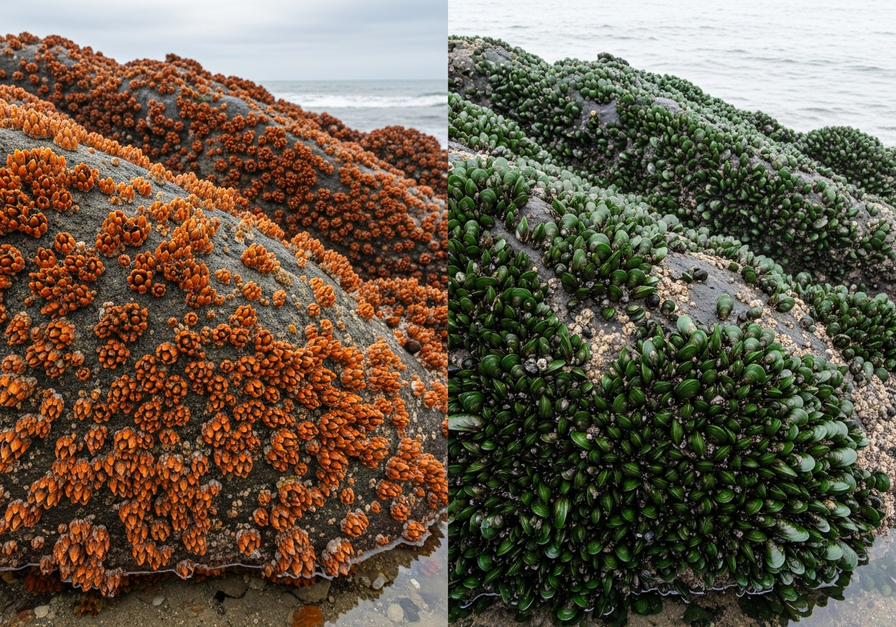
Consider barnacles, small crustaceans that attach themselves to rocks. Physiologically, barnacles can survive across a wide range of the intertidal zone, from the upper reaches frequently exposed to air to the lower zones almost always submerged. This broad range represents their fundamental niche.
However, in many areas, barnacles are found predominantly in the upper intertidal zone. Why? Because in the lower intertidal, they face intense competition from mussels. Mussels are superior competitors for space, growing faster and often outcompeting or even overgrowing barnacles. While barnacles can physiologically tolerate the lower zone, the presence of mussels restricts them to the upper zone where mussels are less tolerant of desiccation and exposure. Thus, the upper intertidal becomes the barnacle’s realized niche, a much narrower slice of its potential habitat.
Cacti in the Desert: Competition for Scarce Resources
Even in seemingly vast and open environments like deserts, competition plays a significant role in shaping realized niches.
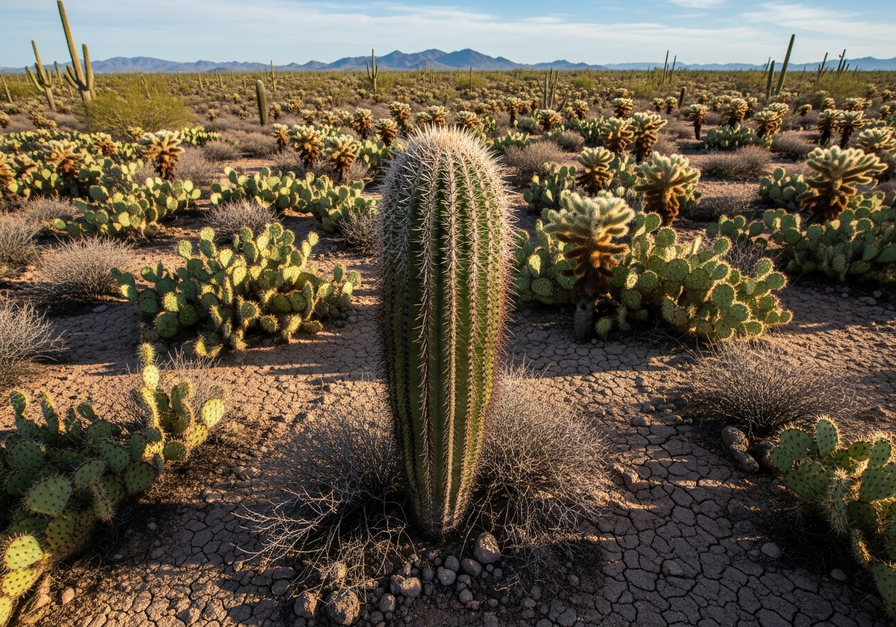
A Saguaro cactus, for example, possesses the physiological adaptations to potentially thrive across a very wide expanse of desert, tolerating extreme temperatures and requiring minimal water. This broad potential range defines its fundamental niche.
However, in reality, Saguaros are often found in specific microhabitats, sometimes clustered with other cactus species like Prickly Pear or Cholla. While they can survive in many areas, the presence of these other cacti creates competition for scarce water and soil nutrients. This competition, along with specific soil conditions and other localized factors, limits the Saguaro’s actual distribution, narrowing its realized niche to areas where it can successfully outcompete or coexist with other desert flora.
The Importance of Understanding the Fundamental Niche
Ecologists do not study the fundamental niche merely as a theoretical exercise. It has profound practical implications for conservation, resource management, and predicting ecological changes.
- Conservation Efforts: Knowing a species’ fundamental niche helps identify all potential habitats that could support a population, even if those areas are currently unoccupied due to biotic factors. This is crucial for reintroduction programs or establishing protected areas.
- Predicting Species Distribution: By understanding the abiotic limits of a species, scientists can model where it might be able to survive under different climate scenarios, helping to predict the impacts of climate change on biodiversity.
- Invasive Species Management: Identifying the fundamental niche of an invasive species can help predict where it might spread and establish itself, allowing for proactive management strategies to prevent its introduction or control its expansion.
- Resource Management: For agricultural or forestry purposes, understanding the fundamental niche of crops or timber species helps in selecting appropriate growing regions and optimizing yields.
Beyond Passive Adaptation: Niche Construction
While the concepts of fundamental and realized niches often portray species as passively fitting into existing environmental conditions, some organisms actively modify their surroundings, thereby altering their own niche and even the niches of other species. This dynamic process is known as niche construction.
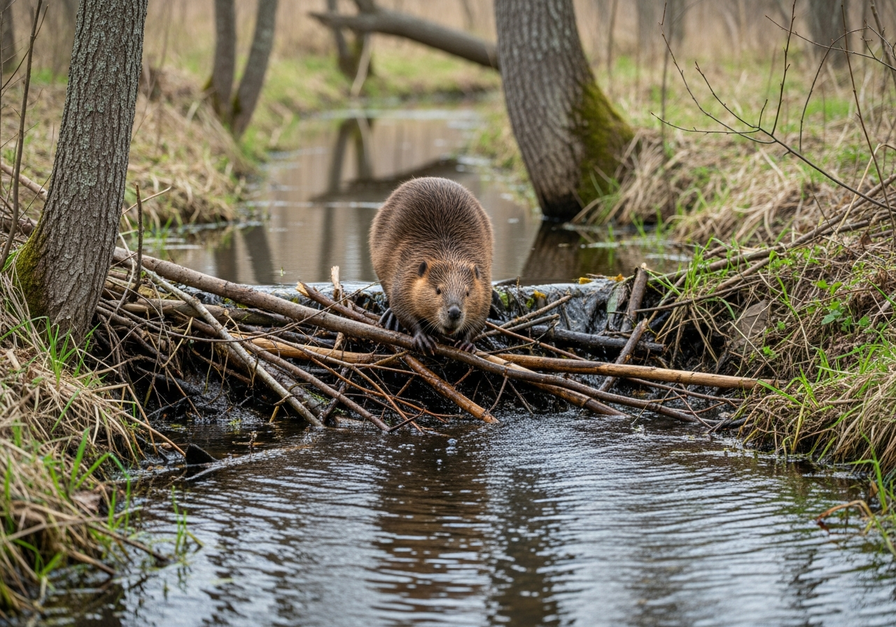
Beavers are a prime example of niche constructors. By felling trees and building dams, they transform flowing streams into ponds and wetlands. This dramatic alteration of the landscape changes water levels, creates new habitats, and influences nutrient cycling. The beaver’s actions not only create a more favorable environment for themselves, expanding their own realized niche, but also create new fundamental and realized niches for a host of other species, including fish, amphibians, insects, and aquatic plants.
Niche construction highlights that the relationship between an organism and its environment is not always one-way. Organisms can be architects of their own ecological spaces, demonstrating a complex interplay between biology and environment.
Conclusion: The Dynamic World of Ecological Niches
The fundamental niche provides a powerful theoretical framework for understanding the full potential of a species, defined by its physiological limits and resource needs. It serves as a baseline against which we can measure the impact of biotic interactions, which inevitably narrow this potential into the realized niche we observe in nature. From the competitive struggles of barnacles and mussels to the resource battles among desert cacti, the interplay between abiotic and biotic factors constantly shapes the distribution and abundance of life.
Furthermore, the concept of niche construction reminds us that organisms are not merely passive inhabitants but active participants in shaping their ecological destinies. By grasping these intricate concepts, we gain a deeper appreciation for the complexity and interconnectedness of ecosystems, empowering us to better understand, protect, and manage the natural world.