
The ocean, a vast and mysterious realm, plays an indispensable role in regulating Earth’s climate. For decades, it has silently absorbed a significant portion of the carbon dioxide released into the atmosphere by human activities. While this has helped mitigate global warming on land, it has come at a profound cost to marine ecosystems: a phenomenon known as ocean acidification.
Often dubbed the “other CO₂ problem,” ocean acidification refers to the ongoing decrease in the pH of the Earth’s oceans, caused by the uptake of anthropogenic carbon dioxide from the atmosphere. This subtle yet relentless chemical shift is altering the very fabric of marine life, with far-reaching consequences for biodiversity, food security, and the health of our planet.
Understanding the Chemistry of Ocean Acidification
At its core, ocean acidification is a straightforward chemical reaction. When carbon dioxide (CO₂) dissolves in seawater, it forms carbonic acid (H₂CO₃). This carbonic acid then dissociates, releasing hydrogen ions (H⁺) and bicarbonate ions (HCO₃⁻). It is the increase in these hydrogen ions that makes the water more acidic, lowering its pH.
The pH scale measures how acidic or basic a substance is, ranging from 0 (highly acidic) to 14 (highly basic), with 7 being neutral. While the ocean remains alkaline (with a pH typically between 7.5 and 8.4), the term “acidification” refers to the shift towards a lower, more acidic pH. Since the start of the Industrial Revolution, the average pH of the ocean’s surface waters has dropped by approximately 0.1 pH units, representing a roughly 30 percent increase in acidity. This change, though seemingly small, is rapid and unprecedented in Earth’s recent geological history.
The Unseen Threat: Impacts on Marine Life
The primary concern with ocean acidification lies in its impact on calcifying organisms. These are creatures that build shells, skeletons, or other hard structures from calcium carbonate. As the ocean becomes more acidic, the concentration of carbonate ions (CO₃²⁻), which are essential building blocks for these structures, decreases. This makes it harder for organisms to form and maintain their shells and skeletons, and in severe cases, can even cause existing structures to dissolve.
Coral Reefs: The Ocean’s Architects Under Siege
Coral reefs are among the most iconic and biodiverse ecosystems on Earth, often called the “rainforests of the sea.” They are built by tiny polyps that extract calcium carbonate from seawater to construct their intricate stony skeletons. Ocean acidification directly threatens this process, making it more difficult for corals to grow and repair themselves.
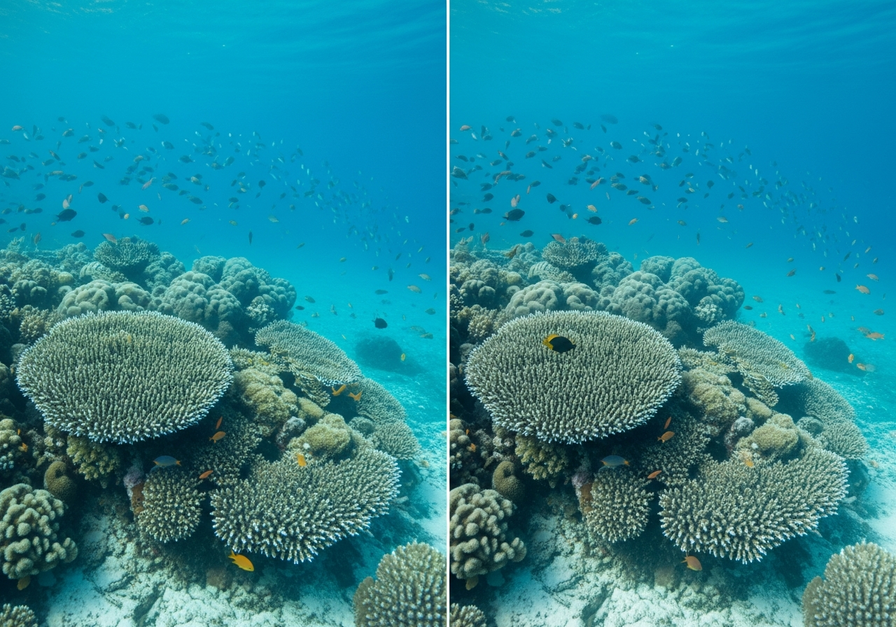
The illustration above starkly visualizes the battle beneath the waves. On one side, a thriving reef teems with life, its corals robust and colorful. On the other, the same location reveals a stark contrast: bleached, eroded corals with reduced surface area, and a sparser fish presence. This dramatic decline is a direct consequence of diminished carbonate ions, which weaken the very foundations of these vital ecosystems.
Shellfish and Pteropods: Fragile Foundations of the Food Web
Beyond corals, a vast array of other calcifying organisms faces similar challenges. Oysters, clams, mussels, and crabs all rely on carbonate ions to form their protective shells. Reduced shell strength makes them more vulnerable to predators and environmental stressors, impacting aquaculture and wild fisheries alike.
Perhaps one of the most concerning impacts is on pteropods, often called “sea butterflies.” These tiny, free-swimming snails are a crucial component of marine food webs, serving as a primary food source for everything from krill and fish to whales. Their delicate, translucent shells are particularly susceptible to dissolution in acidified waters.
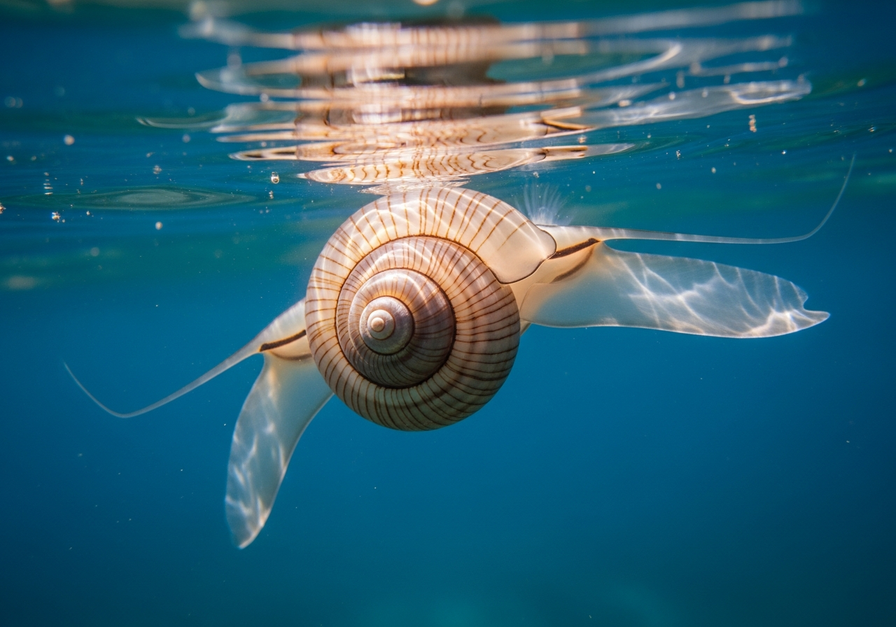
This close-up photograph of a pteropod underscores its fragility. Its visibly thin and slightly translucent shell is a testament to its vulnerability. As their shells weaken, pteropods struggle to survive, potentially leading to cascading effects throughout the entire marine food web.
Impacts Beyond Calcification
While calcification is a major concern, ocean acidification also affects marine life in other, more subtle ways:
- Fish Behavior: Studies have shown that increased acidity can impair the neurological functions of some fish species, affecting their sense of smell, hearing, and even their ability to avoid predators. For example, clownfish have been observed to lose their ability to detect predator cues in more acidic waters.
- Reproduction and Growth: Many species experience reduced reproductive success and slower growth rates in acidified conditions, further threatening population stability.
- Food Web Dynamics: Changes to foundational species like pteropods can disrupt entire food webs, impacting the availability of food for higher trophic levels, including commercially important fish species.
Polar Frontiers: A Hotspot for Acidification
While ocean acidification is a global phenomenon, its effects are not uniformly distributed. Polar regions, particularly the Arctic and Antarctic, are experiencing acidification at a much faster rate than temperate or tropical waters. There are several reasons for this heightened vulnerability:
- Colder Water Absorbs More CO₂: Cold water has a greater capacity to absorb gases, including CO₂, than warmer water. This means polar oceans are taking up more atmospheric carbon dioxide.
- Melting Ice: The melting of sea ice exposes more surface water to the atmosphere, allowing for greater CO₂ absorption. Additionally, freshwater from melting ice can reduce the buffering capacity of seawater, making it more susceptible to pH changes.
- Unique Ecosystems: Polar marine ecosystems are often characterized by simpler food webs and species that are highly adapted to stable, cold conditions. These organisms may have a lower tolerance for rapid environmental change.
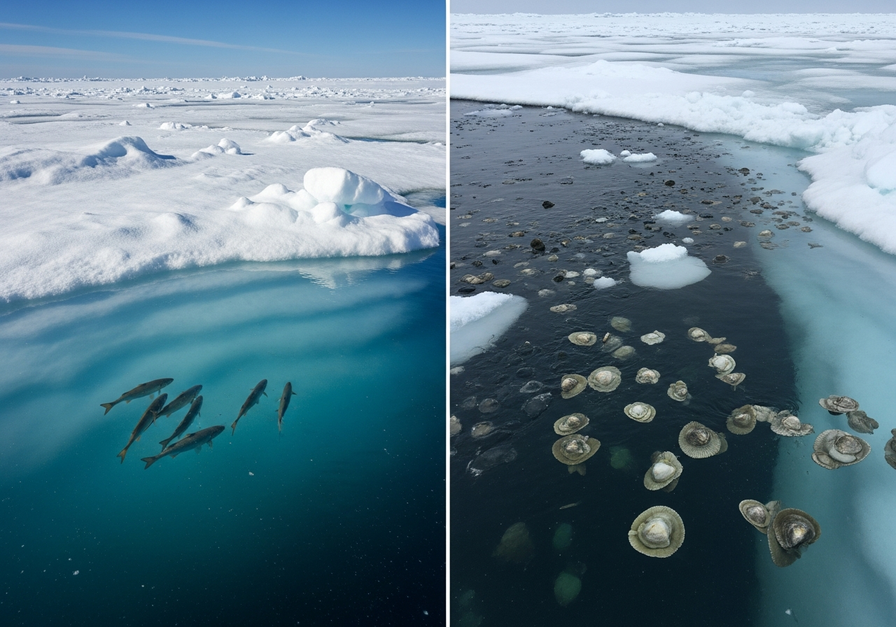
This compelling image illustrates the stark reality in polar waters. The left panel shows a pristine Arctic scene, healthy and vibrant. The right panel, however, reveals the same area after rapid ice melt, with darker water, floating debris, and a sparse population of weaker, thinner-shelled shellfish struggling to survive. This visual evidence underscores how polar waters absorb more CO₂ and experience faster acidification, profoundly impacting local marine ecosystems and their delicate food webs.
Broader Consequences and Human Connection
The impacts of ocean acidification extend far beyond the marine environment, directly affecting human societies:
- Fisheries and Aquaculture: Many coastal communities rely on shellfish and fish for their livelihoods and food security. Declines in these populations due to acidification can lead to significant economic losses and threaten traditional ways of life. Oyster farms, for instance, have already experienced direct impacts from acidified waters.
- Coastal Protection: Healthy coral reefs and shellfish beds provide natural coastal protection against storms and erosion. Their degradation due to acidification can leave coastlines more vulnerable to extreme weather events.
- Biodiversity Loss: The potential loss of species and entire ecosystems represents an irreversible blow to global biodiversity and the intricate web of life on Earth.
Addressing the Challenge: A Path Forward
The most effective way to combat ocean acidification is to reduce global carbon dioxide emissions. This requires a concerted effort to transition away from fossil fuels towards renewable energy sources, improve energy efficiency, and implement sustainable land use practices. International cooperation and policy frameworks are crucial for achieving these large-scale reductions.
While global emission reductions are paramount, local actions can also play a role in building resilience:
- Reducing Local Pollution: Minimizing nutrient runoff from agriculture and wastewater treatment can help reduce local acidification stressors and improve the overall health of coastal ecosystems.
- Protecting Coastal Habitats: Conserving and restoring coastal habitats like seagrass beds and mangroves can help absorb CO₂ and provide refuge for marine life.
- Research and Monitoring: Continued scientific research is essential to better understand the complex impacts of acidification and develop effective adaptation strategies.
Conclusion
Ocean acidification is a silent crisis unfolding beneath the waves, a direct consequence of our carbon emissions. It threatens the very foundation of marine life, from the smallest pteropod to the grandest coral reef, with profound implications for our planet and our future. Understanding this complex issue is the first step towards addressing it. By recognizing the urgency and working collectively to reduce our carbon footprint, we can strive to protect the health and vitality of our oceans for generations to come.