Unveiling the Climax Community: Nature’s Grand Finale
Imagine a forest so ancient, so perfectly balanced, that it seems to exist in a state of perpetual harmony. Trees reach towering heights, a rich tapestry of life thrives beneath their canopy, and every organism plays a vital role in a complex, self-sustaining dance. This remarkable state of ecological equilibrium is known as a climax community, a cornerstone concept in understanding how ecosystems develop and endure.
A climax community represents the final, stable stage of ecological succession in a particular region. It is a biological community that has reached a steady state, where the species composition remains relatively unchanged over long periods, assuming no major environmental disturbances. This stability arises because the community is in balance with its environment, efficiently cycling nutrients and energy, and successfully reproducing its constituent species.
What Defines a Climax Community?
Several key characteristics distinguish a climax community from earlier successional stages:
- Stability and Resilience: These communities are remarkably stable, resistant to minor fluctuations in environmental conditions, and possess a high degree of resilience, meaning they can recover from disturbances.
- High Biodiversity: Climax communities typically boast a rich variety of plant and animal species, occupying numerous ecological niches. This diversity contributes to the community’s overall health and stability.
- Complex Structure: Vegetation often displays a layered structure, from the canopy down to the understory, shrub layer, and forest floor. This stratification provides diverse habitats for various organisms.
- Efficient Nutrient Cycling: Nutrients are efficiently recycled within the ecosystem, with little loss. Decomposers play a crucial role in breaking down organic matter and returning essential elements to the soil.
- Self-Perpetuating: The dominant species in a climax community are capable of reproducing and replacing themselves, ensuring the long-term persistence of the community’s structure and composition.
Consider a mature temperate forest, a classic example of a climax community. Here, towering oak and maple trees form a dense canopy, filtering sunlight to create a unique microclimate below. The forest floor is a mosaic of ferns, mosses, and wildflowers, providing habitat for a diverse array of insects, small mammals, and birds. This intricate web of life illustrates the stability and complexity inherent in a climax state.
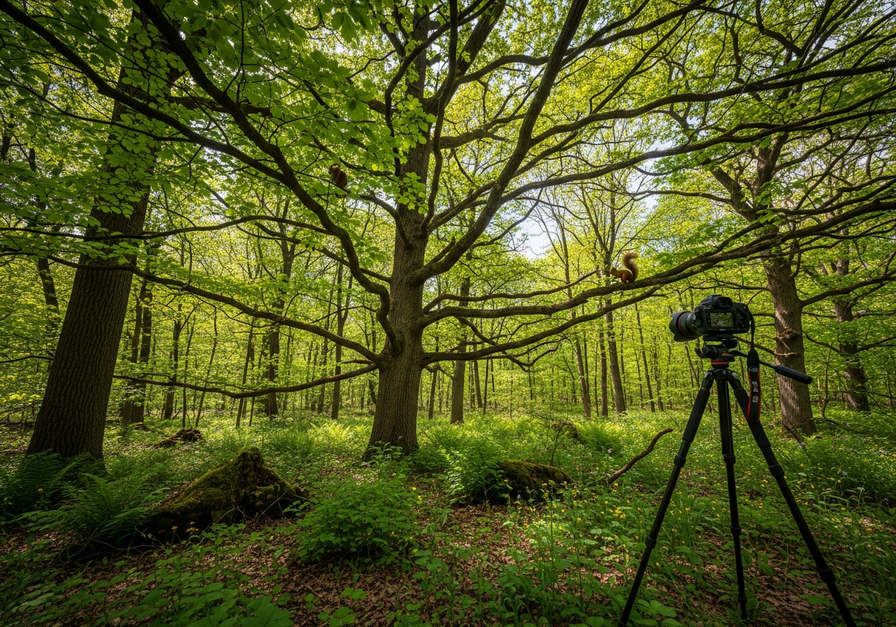
This image visually embodies the article’s description of a climax community’s stable, self-perpetuating state, illustrating the layered structure, biodiversity, and nutrient-cycling features highlighted in the text.
The Journey to Stability: Ecological Succession
Climax communities do not simply appear; they are the culmination of a dynamic process called ecological succession. This is the gradual process by which ecosystems change and develop over time, often following a disturbance or in newly formed habitats.
- Primary Succession: This occurs in environments devoid of life and soil, such as newly formed volcanic islands, bare rock exposed by retreating glaciers, or sand dunes. Pioneer species, like lichens and mosses, are the first to colonize, slowly breaking down rock and creating rudimentary soil. Over centuries, this paves the way for grasses, shrubs, and eventually trees.
- Secondary Succession: This is far more common and occurs in areas where a pre-existing community has been removed by a disturbance, but the soil remains intact. Examples include abandoned agricultural fields, areas cleared by logging, or forests recovering from wildfires. The process is typically faster than primary succession because of the presence of soil and residual seeds.
In both types of succession, a predictable sequence of plant and animal communities replaces one another. Each stage modifies the environment, making it more suitable for the next set of species, until the climax community is established. For instance, pioneer grasses might stabilize soil, allowing shrubs to take root, which in turn provide shade and moisture for tree saplings to grow.
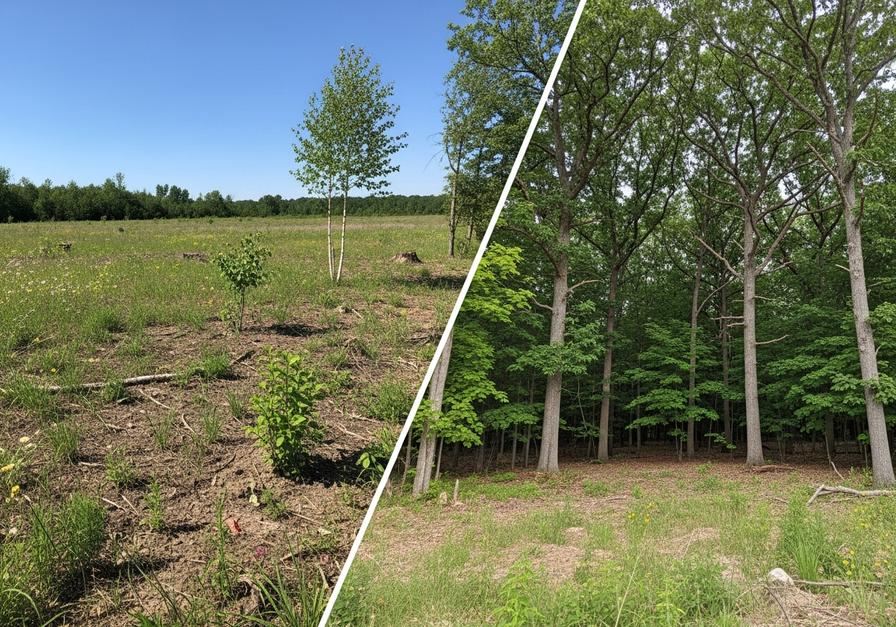
This split-screen demonstrates the article’s explanation of ecological succession stages, providing a clear visual contrast between pioneer species and a mature, stable climax community.
Factors Shaping Climax Communities
While the concept of a climax community implies stability, its specific characteristics are profoundly influenced by various environmental factors:
- Climate: This is arguably the most significant factor. Temperature and precipitation patterns determine the broad biome type that can develop. For example, consistent rainfall and warm temperatures lead to tropical rainforests, while cold temperatures and low precipitation result in tundra.
- Soil Type: The composition, depth, and nutrient content of the soil dictate which plant species can thrive, thereby influencing the entire community structure.
- Topography: Features like elevation, slope, and aspect (the direction a slope faces) affect sunlight exposure, drainage, and temperature, creating microclimates that can lead to variations within a broader climax region.
- Disturbances: Natural events such as wildfires, floods, hurricanes, and insect outbreaks, as well as human activities like logging or agriculture, can reset the successional clock. However, many climax communities are adapted to specific disturbance regimes, and these events can even be essential for maintaining their long-term health and diversity.
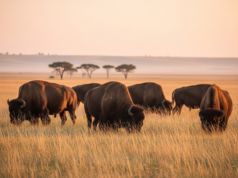
Consider a grassland climax community. Periodic fires, often ignited by lightning, are a natural disturbance that prevents woody plants from encroaching, thus maintaining the dominance of grasses and fire-adapted wildflowers. This demonstrates how disturbances are not always destructive but can be integral to the dynamic equilibrium of an ecosystem.
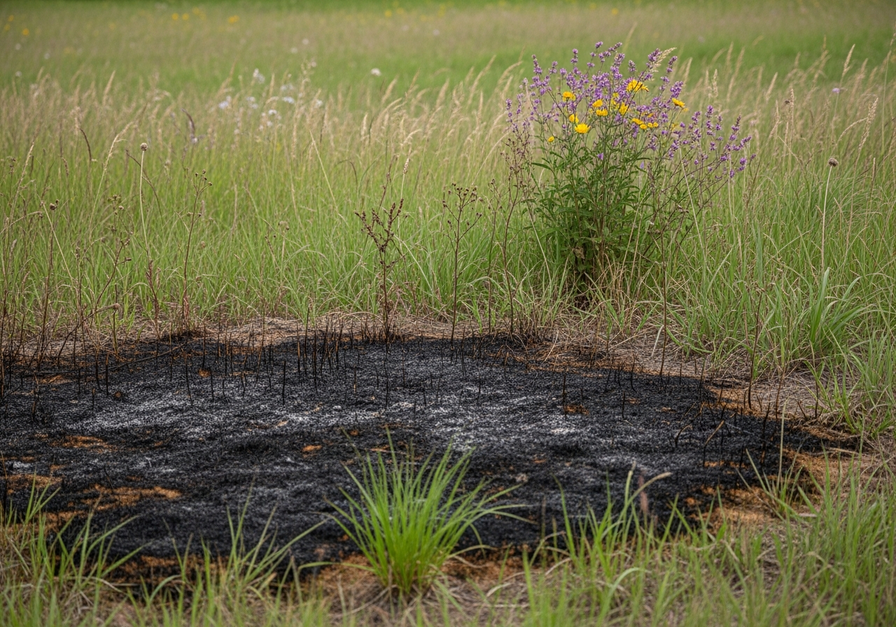
This illustration exemplifies the article’s discussion of disturbances as natural drivers of resilience and patch dynamics, showing how a climax community can recover and maintain stability after a disturbance.
Diverse Faces of Climax: Global Examples
Climax communities manifest in various forms across the globe, each uniquely adapted to its regional climate:
- Temperate Deciduous Forests: Found in regions with distinct seasons, these forests are dominated by trees that shed their leaves in autumn, such as oaks, maples, and beeches.
- Tropical Rainforests: Characterized by high biodiversity, year-round warm temperatures, and abundant rainfall, these forests feature multiple canopy layers and an incredible array of life.
- Grasslands (Prairies, Steppes, Savannas): Dominated by grasses and herbaceous plants, these communities are often maintained by grazing animals and periodic fires.
- Deserts: Despite harsh conditions, desert climax communities are stable, featuring drought-adapted plants like cacti and succulents, and specialized animal life.
- Tundra: Found in polar and high-mountain regions, tundra climax communities are characterized by permafrost, low-growing shrubs, mosses, lichens, and cold-adapted animals.
Beyond the Static Ideal: Modern Perspectives on Climax
While the concept of a climax community provides a valuable framework, ecological understanding has evolved. Early ecologists, notably Frederic Clements, viewed the climax community as a “superorganism,” a highly integrated and predictable endpoint for succession in a given climate. This perspective suggested a single, stable climax state for each region.
However, later ecologists, like Henry Gleason, proposed an “individualistic concept.” This view suggests that communities are simply collections of species that happen to coexist because they have similar environmental tolerances and dispersal abilities. From this perspective, a truly static, single climax might be rare or even non-existent.
Modern ecology often embraces a more nuanced understanding, recognizing the concept of dynamic equilibrium or patch dynamics. This perspective acknowledges that ecosystems are constantly in flux, even at their most stable. Disturbances, whether large or small, are natural and create a mosaic of successional stages across a landscape. What appears as a climax community on a broad scale might actually be a patchwork of areas in different stages of recovery from various disturbances.
The idea of a “climax pattern hypothesis” suggests that while climate sets the broad potential, local variations in soil, topography, and disturbance history create a complex pattern of stable communities, rather than a single, uniform climax.
Furthermore, human activities have profoundly altered many ecosystems, often preventing them from reaching their natural climax state or shifting the climax to an entirely different composition. Deforestation, urbanization, pollution, and climate change are all powerful forces that influence successional trajectories and the long-term stability of communities.
The Enduring Importance of Climax Communities
Despite the ongoing scientific discourse, the concept of a climax community remains incredibly valuable. It helps ecologists understand the potential natural vegetation of a region, provides a benchmark for restoration efforts, and highlights the incredible complexity and resilience of mature ecosystems.
Climax communities are vital for numerous reasons:
- They provide essential ecosystem services, such as clean air and water, soil stabilization, and climate regulation.
- They are reservoirs of biodiversity, harboring a vast array of species that contribute to the health of the planet.
- Their stability and resilience make them crucial for maintaining ecological balance in the face of environmental change.
Understanding the principles of climax communities and ecological succession is fundamental to effective conservation and land management. By recognizing the natural processes that shape ecosystems, humanity can better protect and restore these invaluable natural treasures.
Conclusion: A Dynamic Harmony
The climax community is not merely a static endpoint but a dynamic state of relative stability, a testament to nature’s intricate design. It represents an ecosystem in harmony with its environment, a culmination of countless interactions over time. While the journey to climax is shaped by succession and influenced by a myriad of factors, the resulting community offers a powerful illustration of ecological resilience, biodiversity, and the enduring power of natural processes. Appreciating these complex systems allows for a deeper understanding of the living world and inspires greater efforts to safeguard its delicate balance.