Imagine a world where life thrives, from the smallest blade of grass to the mightiest whale. Every living thing needs energy to survive, to grow, to reproduce. But where does this energy come from, and how does it move through the intricate tapestry of an ecosystem? The answer lies in one of ecology’s most fundamental and visually intuitive concepts: the energy pyramid.
This powerful model helps us visualize the flow of energy, revealing a universal truth about life on Earth. It is a story of capture, transfer, and inevitable loss, shaping everything from the length of a food chain to the very number of individuals an environment can support. Prepare to embark on a journey from the sun’s raw power to the apex predators, understanding the energetic rules that govern all life.
The Foundation: What is an Energy Pyramid?
At its core, an energy pyramid is a graphical representation illustrating the flow of energy from one feeding level to the next within an ecosystem. It is typically depicted as a pyramid shape, with the widest base representing the greatest amount of energy, and each subsequent level narrowing significantly as energy is transferred upwards.
This structure is not arbitrary, it reflects a fundamental principle of ecology: energy is lost at each step of its journey through an ecosystem. Think of it as a series of energy transactions, where a significant portion of the initial capital is spent or dissipated with every exchange. This concept is crucial for understanding the limits and dynamics of all life forms.
Building Blocks: Trophic Levels Explained
To understand the energy pyramid, we must first grasp the concept of trophic levels. These are the positions organisms occupy in a food chain, based on what they eat and what eats them. Each level represents a different stage in the energy transfer process.
Producers (The Base of Abundance)
At the very bottom, forming the broad base of the energy pyramid, are the producers. These remarkable organisms, also known as autotrophs, are the primary capturers of energy. Most producers harness energy from the sun through a process called photosynthesis, converting light energy into chemical energy stored in organic compounds.
- Examples:
- On land: Grasses, trees, shrubs, flowers, and all other plants.
- In water: Algae, phytoplankton (microscopic marine plants), and aquatic plants.
Without producers, there would be no energy to fuel the rest of the ecosystem. They are the ultimate source of sustenance for nearly all other life forms.
Primary Consumers (Herbivores)
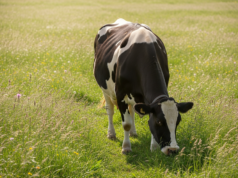
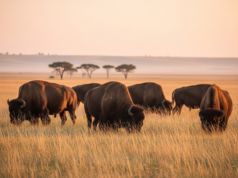
Moving up one level, we find the primary consumers. These are organisms that feed directly on producers. They are also known as herbivores.
- Examples:
These creatures convert the plant energy into their own body mass, making it available to the next trophic level.
Secondary Consumers (Carnivores and Omnivores)
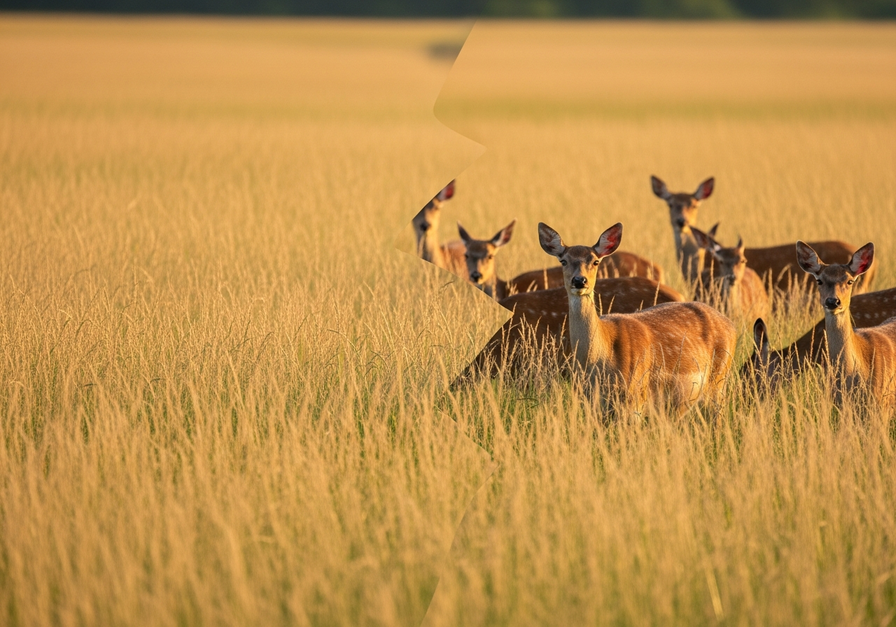
The next level consists of secondary consumers. These organisms obtain their energy by eating primary consumers. They can be carnivores (meat-eaters) or omnivores (eating both plants and animals).
- Examples:
- Carnivores: Foxes hunting rabbits, snakes eating mice, small birds consuming caterpillars, spiders catching insects.
- Omnivores: Humans eating beef, bears eating berries and fish.
The energy they acquire has already passed through two previous trophic levels.
Tertiary Consumers (Top Carnivores)
Above the secondary consumers are the tertiary consumers. These are typically carnivores that feed on secondary consumers.
- Examples:
- Land animals: Eagles preying on snakes, lions hunting zebras (which eat grass), wolves eating deer.
- Aquatic animals: Sharks eating smaller fish that ate zooplankton, large tuna eating mackerel.
- Humans can also be tertiary consumers when they eat fish that consumed other fish.
These organisms are often considered apex predators within their immediate food chains.

Quaternary Consumers (Rare Apex Predators)
In some complex ecosystems, a rare fifth trophic level exists, occupied by quaternary consumers. These are apex predators that feed on tertiary consumers.
- Example: An orca (killer whale) eating a seal, where the seal ate a large fish, which ate a smaller fish, which ate zooplankton, which ate phytoplankton.
Such long food chains are uncommon due to the significant energy loss at each step.
Important Note: Decomposers: While not typically depicted as a distinct trophic level within the pyramid structure, decomposers like bacteria and fungi play an absolutely vital role. They break down dead organic matter from all trophic levels, recycling nutrients back into the ecosystem, making them available for producers once more. They are the cleanup crew, ensuring that energy and matter do not simply disappear but are continuously cycled.
The Golden rule: The 10 Percent Law
The most critical concept explaining the pyramid’s shape is the “10 percent law” of energy transfer. This ecological rule of thumb states that, on average, only about 10 percent of the energy from one trophic level is transferred to the next trophic level. The remaining 90 percent is lost, primarily as heat during metabolic processes, or is simply not consumed or assimilated.
Think about it this way: when a rabbit eats grass, it does not convert all the energy from the grass into its own body mass. A large portion of that energy is used for the rabbit’s own life processes: breathing, moving, maintaining body temperature, and waste production. Only a fraction of the original energy becomes new rabbit tissue, which is then available to a fox that might prey on the rabbit.
“Energy flows, but it diminishes with every step.”
This dramatic reduction in available energy at each successive level is why food chains are relatively short and why the pyramid narrows so sharply. Consider this simplified example:
- If producers (e.g., grass) capture 10,000 units of energy.
- Primary consumers (e.g., deer) that eat the grass will only assimilate about 1,000 units of energy.
- Secondary consumers (e.g., wolves) that eat the deer will only assimilate about 100 units of energy.
- Tertiary consumers (e.g., a rare predator of wolves) would only get about 10 units of energy.
This exponential decrease in energy explains why there are far fewer top predators than herbivores, and far fewer herbivores than plants.
Visualizing the Decline: The Pyramid’s Shape
The term “pyramid” is used because these ecological models are typically wider at the base and progressively narrower towards the top. However, it is important to distinguish between different types of ecological pyramids, as not all of them are always upright.
Pyramid of Energy
The pyramid of energy is the most fundamental and always upright. It depicts the total amount of energy at each trophic level, usually measured in units like kilocalories per square meter per year (kcal/m²/year). Because energy is lost at each transfer, the energy content always decreases as you move up the trophic levels. This pyramid perfectly illustrates the 10 percent law.
| Trophic Level | Approximate Energy (kcal/m²/year) |
| Tertiary Consumers | 10 |
| Secondary Consumers | 100 |
| Primary Consumers | 1,000 |
| Producers | 10,000 |
Pyramid of Biomass
A pyramid of biomass represents the total mass of living organisms (biomass) at each trophic level, typically measured in grams per square meter (g/m²). In most terrestrial ecosystems, the pyramid of biomass is upright, mirroring the energy pyramid. For example, a vast amount of grass biomass supports a smaller biomass of deer, which in turn supports an even smaller biomass of wolves.
However, pyramids of biomass can sometimes be inverted, particularly in aquatic ecosystems. Consider a marine environment:
- The biomass of phytoplankton (producers) might be relatively small at any given moment.
- Yet, these rapidly reproducing phytoplankton support a much larger biomass of zooplankton (primary consumers).
- This is possible because phytoplankton have a very high turnover rate, meaning they reproduce and are consumed very quickly, constantly replenishing their numbers even with a small standing crop biomass.
So, while the instantaneous biomass of producers might be less than consumers, the total energy flow over time still dictates an upright energy pyramid.
Pyramid of Numbers
A pyramid of numbers illustrates the number of individual organisms at each trophic level. This type of pyramid can take various shapes:
- Upright: In a grassland, many individual grasses support fewer individual rabbits, which support even fewer individual foxes.
- Inverted: A single large tree (producer) can support thousands of insects (primary consumers). In this case, the base is very narrow, and the next level is much wider.
- …
Because the size of organisms varies greatly, the pyramid of numbers is often the least reliable representation of energy.
Conclusion: A Universal Law of Life
The energy pyramid stands as a testament to a fundamental law of nature: energy is finite and diminishes as it moves through an ecosystem. From the sun’s initial spark captured by producers to the apex predators at the top, every organism plays a role in this grand energetic drama. This elegant model helps us comprehend the interconnectedness of life, the limits of food chains, the perils of environmental toxins, and even the sustainability of our own dietary choices.
By appreciating the intricate balance and the energetic constraints imposed by the energy pyramid, we gain a deeper respect for the natural world. It is a powerful reminder that every bite, every breath, and every living thing is part of a vast, dynamic system governed by universal laws of energy flow. Understanding this pyramid is not just academic; it is a key to understanding life itself.