Understanding Birth Rate: A Key to Our Planet’s Future
The pulse of humanity, the rhythm of life itself, is often measured in the most fundamental way: through birth. The concept of “birth rate” might sound like a dry statistical term, but it is, in fact, a vibrant indicator of a society’s health, its aspirations, and its trajectory. As an ecologist, observing the intricate dance between populations and their environments, the birth rate stands out as a critical variable, shaping everything from resource consumption to cultural evolution. It is a powerful lens through which we can understand the past, interpret the present, and anticipate the future of human civilization on Earth.
Far from being a simple number, the birth rate is a complex tapestry woven from economic conditions, social norms, healthcare access, educational opportunities, and even environmental factors. Understanding this crucial demographic metric allows us to grasp the dynamics of population change, predict future challenges, and plan for a sustainable coexistence with our planet. Let us embark on a journey to unravel the fascinating world of birth rates.
What Exactly is a Birth Rate?
At its most basic, the birth rate refers to the number of live births per 1,000 people in a given population over a specific period, usually one year. This is often called the Crude Birth Rate (CBR) because it considers the entire population, not just women of childbearing age. For example, if a country with a population of 10 million experiences 100,000 live births in a year, its Crude Birth Rate would be 10 births per 1,000 people.
Why is this number so important? Because it is one of the primary drivers of population change. Along with the death rate and migration, the birth rate dictates whether a population grows, shrinks, or remains stable. A high birth rate can lead to rapid population expansion, while a low birth rate can result in population decline and an aging society.
The Pillars of Fertility: Factors Influencing Birth Rates
Birth rates are not static; they are dynamic and influenced by a myriad of interconnected factors. These factors often reflect the overall development and cultural landscape of a region.
- Healthcare Access and Quality: The availability of maternal and infant healthcare services significantly impacts birth rates. In regions with robust healthcare systems, mothers and newborns receive better care, leading to lower infant mortality rates and often, paradoxically, a decline in overall birth rates as families feel more confident in the survival of their children and may choose to have fewer.
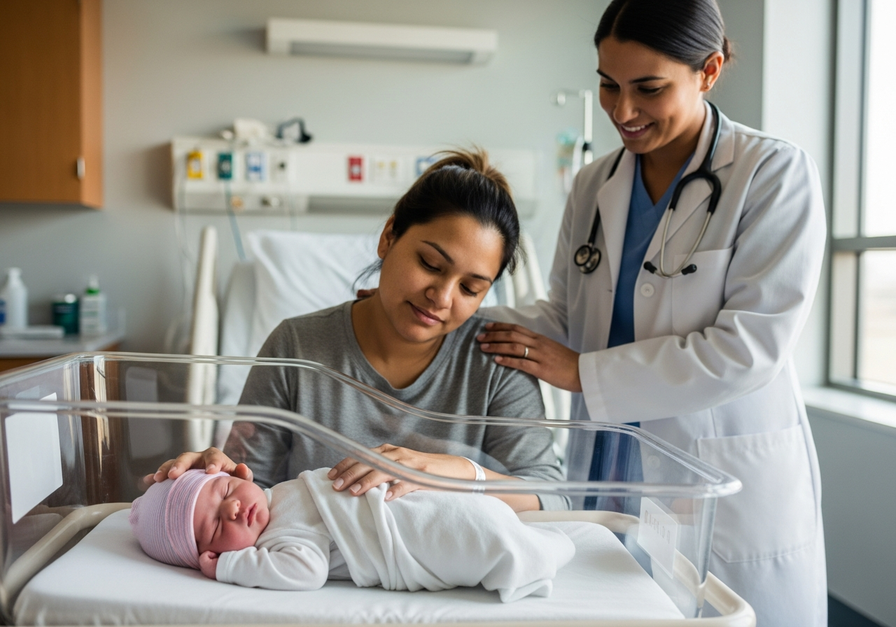
The image above, “Births in Action,” beautifully illustrates the role of modern healthcare in supporting childbirth. In such environments, where immediate care is available for newborns and mothers, families often have greater control over their reproductive choices, which can influence birth rate trends.
- Education and Economic Development: As societies develop, access to education, particularly for women, tends to increase. Educated women often pursue careers, marry later, and choose to have fewer children. Economic prosperity also plays a role; in wealthier nations, the cost of raising children can be higher, and families may opt for smaller sizes. Conversely, in agrarian societies, children might be seen as an economic asset, contributing to family labor, which can correlate with higher birth rates.
- Family Planning and Reproductive Health Services: The availability and accessibility of contraception, family planning education, and reproductive health services empower individuals to make informed decisions about family size and spacing. Where these services are scarce, birth rates tend to be higher due as unintended pregnancies are more common.
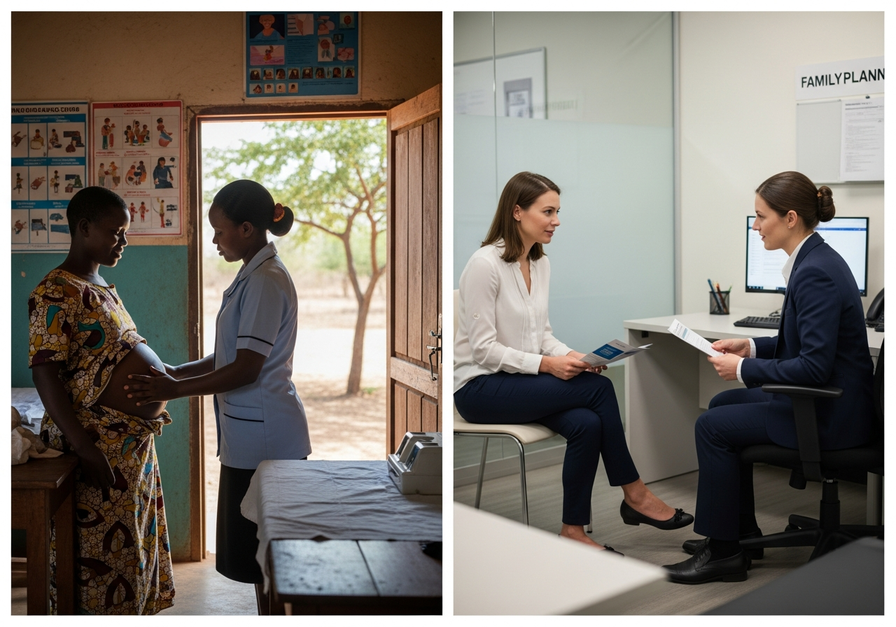
“Contrasting Care” vividly depicts the global disparities in healthcare and family planning. On one side, a rural clinic offers essential prenatal care, while on the other, an urban center provides family planning consultations. These differing levels of access profoundly influence reproductive choices and, consequently, birth rates across various regions.
- Cultural and Religious Norms: Societal expectations, religious beliefs, and cultural values can strongly influence family size preferences. Some cultures may encourage large families, while others may emphasize smaller family units.
- Government Policies: Governments can influence birth rates through various policies, such as childcare subsidies, parental leave, tax incentives for families, or, conversely, policies that restrict access to family planning. China’s former one child policy is a historical example of a direct government intervention aimed at controlling birth rates.
Beyond the Crude: Deeper Measures of Fertility
While the Crude Birth Rate provides a general overview, demographers use more refined measures to gain a nuanced understanding of fertility patterns.
- General Fertility Rate (GFR): This rate is more specific than CBR because it calculates the number of live births per 1,000 women of childbearing age (typically defined as 15 to 49 years old). This removes the influence of age and sex structure of the population, providing a clearer picture of actual fertility.
- Age Specific Fertility Rate (ASFR): This measure breaks down fertility by specific age groups of women (e.g., 15 to 19, 20 to 24, etc.). ASFRs reveal at which ages women are most likely to give birth, offering insights into societal trends like delayed childbearing.
- Total Fertility Rate (TFR): Perhaps the most widely used and informative measure, the TFR represents the average number of children a woman is expected to have over her lifetime, assuming she experiences the current age specific fertility rates. It is a hypothetical number but provides an excellent snapshot of family size trends.
- Replacement Level Fertility: This is the TFR required for a population to replace itself from one generation to the next, without migration. Globally, it is generally considered to be about 2.1 children per woman. The extra 0.1 accounts for children who may not survive to reproductive age and for the slight imbalance in the birth sex ratio (more boys are born than girls). If a country’s TFR falls below 2.1 for an extended period, its population will eventually begin to decline, barring significant immigration.
Ecological and Societal Ripples: The Impact of Birth Rates
The birth rate is not merely a statistical curiosity; its fluctuations send profound ripples through ecosystems, economies, and societies.
- Population Structure and Ageing: A sustained low birth rate, especially when combined with increasing life expectancy, leads to a phenomenon known as demographic transition. This results in an aging population, where the proportion of elderly individuals significantly outweighs that of younger generations.

The image “Generational Shift” visually captures the essence of demographic transition. One side shows a vibrant classroom full of young learners, representing a younger population, while the other side depicts older adults engaged in activities, symbolizing an aging society. This shift, driven by changing birth rates, has significant implications for social structures and resource allocation.
- Economic Implications: An aging population can strain social security systems, healthcare services, and pension funds, as a smaller working age population supports a larger retired population. Conversely, a rapidly growing population due to high birth rates can lead to a large youth dependency ratio, requiring significant investment in education, healthcare, and job creation.
- Resource Consumption and Environmental Impact: From an ecological perspective, population size, heavily influenced by birth rates, directly correlates with resource consumption and environmental footprint. More people generally mean greater demand for food, water, energy, and land, leading to increased pollution, habitat loss, and climate change pressures. Sustainable development becomes a greater challenge with unchecked population growth.
- Social and Cultural Shifts: Changes in birth rates can alter family structures, community dynamics, and even national identity. For instance, declining birth rates can lead to concerns about cultural preservation or the future workforce.
Global Trends and the Future Landscape
Globally, birth rates have been declining in many regions, particularly in developed nations and increasingly in some developing countries. Factors like urbanization, increased education for women, access to contraception, and changing societal values have contributed to this trend. Countries like Japan, South Korea, and many European nations face significant challenges from extremely low birth rates, grappling with shrinking workforces and an aging populace.
However, some regions, particularly in sub Saharan Africa, still experience high birth rates. Here, factors such as limited access to education and healthcare, high infant mortality, and cultural norms often contribute to larger family sizes. These regions face different challenges, including providing adequate resources and infrastructure for a rapidly expanding young population.
The future of birth rates is a complex interplay of these forces. While global population growth is projected to slow down, the distribution of this growth will be uneven. Understanding these dynamics is crucial for international development, environmental conservation, and ensuring a stable future for all.
Conclusion: The Enduring Significance of Birth Rates
The birth rate is far more than a simple statistic; it is a profound indicator of human progress, societal values, and our collective relationship with the planet. From the intimate decisions of individual families to the grand sweep of global demographics, birth rates shape our world in countless ways. As ecologists, we recognize that human population dynamics are inextricably linked to the health of our ecosystems. By understanding the intricate factors that influence birth rates and their far reaching consequences, we can better navigate the challenges and opportunities of our shared future, striving for a balance that supports both human well being and ecological integrity.