Imagine a world where every living creature is confined to a tiny island, unable to reach new food sources, find mates, or escape danger. This is the grim reality many species face when their habitats become fragmented and isolated. Fortunately, ecologists have a powerful concept to combat this challenge: landscape connectivity. It is the ecological glue that holds natural systems together, allowing life to flow freely across the land.
Landscape connectivity is more than just a scientific term; it is a fundamental principle for understanding how species survive and thrive in an increasingly human-dominated world. It describes the degree to which the landscape facilitates or impedes the movement of organisms among resource patches. In essence, it is about ensuring that nature is not a collection of isolated islands, but a vibrant, interconnected web.
The ABCs of Landscape Connectivity: Patches, Corridors, and Matrix
To grasp landscape connectivity, it is helpful to visualize a landscape as a mosaic of different elements. Think of it like a puzzle, where each piece plays a crucial role.
- Patches: These are discrete areas of suitable habitat, like a forest stand, a wetland, or a grassland. They are the “islands” where species live and find their essential resources.
- Corridors: These are linear features that connect patches, acting as pathways for movement. They can be natural, such as a river, or man-made, like a strip of restored vegetation. Corridors are the bridges that allow species to travel between their habitat islands.
- Matrix: This is the surrounding landscape that is not suitable habitat, but through which organisms may still move, albeit with varying degrees of difficulty or risk. It is the “ocean” between the islands, which can be easy to cross or a perilous journey depending on its nature.
Consider a solitary forest patch surrounded by vast agricultural fields. Without a connection, the wildlife within that patch is trapped. A narrow strip of trees, however, can provide a lifeline, allowing animals to move to other forest patches, access new resources, or find new mates.
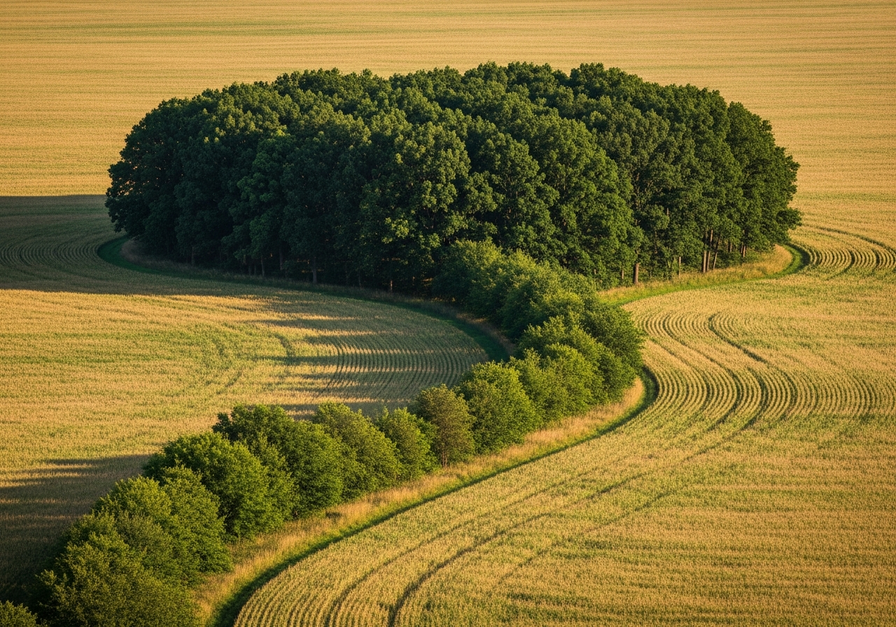
This image illustrates the core concept of landscape connectivity by visually separating patches, corridors, and matrix, and showing how a narrow corridor can link otherwise isolated habitats.
Why Connectivity is a Lifeline for Wildlife
The ability to move freely across a landscape is not a luxury for wildlife; it is a necessity for survival. Here is why landscape connectivity is so critically important:
Ensuring Access to Vital Resources
Animals need to move to find food, water, and shelter. A deer might need to travel from a forest patch to a meadow to graze, or a bird might fly between different wetlands for nesting and foraging. When these pathways are blocked, species can starve or dehydrate, even if resources exist nearby but are inaccessible.
Facilitating Genetic Exchange
Movement allows individuals from different populations to interbreed. This genetic exchange is vital for maintaining genetic diversity within a species. Without it, populations can become inbred, leading to reduced fitness, increased susceptibility to disease, and a diminished ability to adapt to environmental changes. Connectivity helps keep gene pools healthy and robust.
Adapting to Environmental Change
Our planet is constantly changing, with shifts in climate and habitat. Connectivity provides species with the pathways they need to migrate to more suitable environments. For example, as temperatures rise, species may need to move to higher elevations or latitudes. If their path is blocked, they face extinction.
Responding to Disturbances
Natural disturbances like wildfires, floods, or disease outbreaks can devastate local populations. Connectivity allows individuals to escape affected areas and recolonize them once conditions improve, or to find refuge in unaffected patches. It builds resilience into ecosystems.
The Barriers We Create: Threats to Connectivity
While nature often provides its own pathways, human development frequently creates formidable obstacles. These barriers are a primary driver of habitat fragmentation and a major threat to biodiversity.
- Roads and Highways: These are some of the most impactful barriers. They not only physically divide habitats but also pose a direct threat through vehicle collisions. The noise and light pollution associated with roads can also deter animals from crossing.
- Urban and Suburban Development: Cities and towns replace natural habitats with buildings, pavement, and manicured lawns, creating vast, impermeable landscapes for many species.
- Agricultural Lands: While some agricultural areas can offer limited permeability, vast monocultures or intensively farmed areas often lack the cover and resources necessary for wildlife movement.
- Fences and Walls: Physical barriers, even seemingly innocuous ones, can prevent the movement of ground-dwelling animals.
The good news is that we can design solutions to mitigate these human-made barriers. Wildlife crossings, such as overpasses and underpasses, are prime examples of how engineering can restore vital connections.
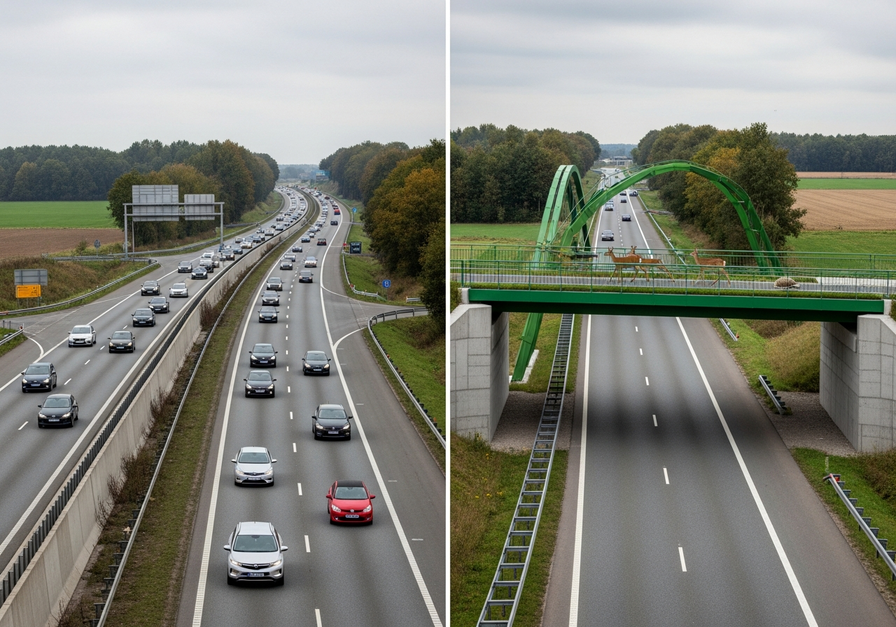
This image demonstrates restoration strategies such as wildlife overpasses that mitigate barriers like highways, reinforcing the article’s discussion on reducing barriers to movement.
Understanding Different Kinds of Connectivity
Connectivity is not a one-size-fits-all concept. Ecologists often distinguish between two main types:
- Structural Connectivity: This refers to the physical connection between habitat patches. If you can draw a continuous line of suitable habitat from one patch to another on a map, then there is structural connectivity. Corridors are key elements of structural connectivity.
- Functional Connectivity: This is about whether organisms actually use the connections. A landscape might be structurally connected, but if a species avoids a corridor due to predation risk, human disturbance, or lack of resources, then functional connectivity for that species is low. Functional connectivity is species-specific; what works for a deer might not work for a frog.
Nature’s Highways: Natural Corridors
Long before humans began to fragment landscapes, nature itself provided intricate networks of corridors. These natural pathways are often the most effective and resilient forms of connectivity.
- Riparian Zones: The vegetated areas along rivers and streams are classic examples of natural corridors. They provide water, food, and cover, allowing a wide array of species to move through otherwise inhospitable landscapes.
- Mountain Ranges and Valleys: These geological features can act as natural highways, guiding species movement over vast distances, particularly for animals adapted to specific elevations or climates.
- Coastlines: For marine and coastal species, the continuous stretch of a coastline can serve as a corridor for migration and dispersal.
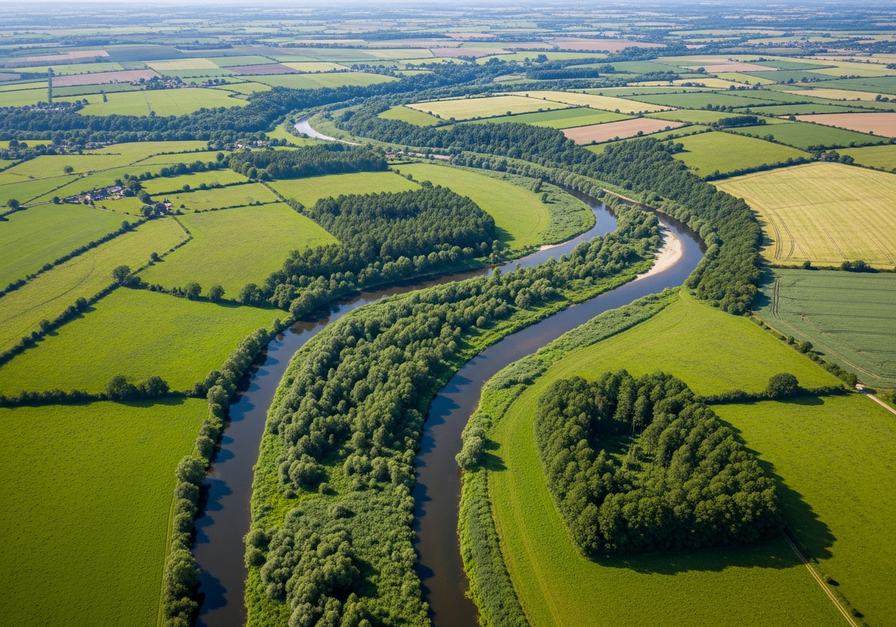
This image visualizes natural corridors and matrix permeability, supporting the article’s explanation of how natural features like rivers provide essential pathways for wildlife.
Measuring the Unseen: Assessing Connectivity
For conservationists and land managers, understanding the degree of connectivity in a landscape is crucial. This often involves sophisticated tools and techniques:
- Graph Theory: This mathematical approach treats habitat patches as “nodes” and the connections between them as “links.” By analyzing the network, researchers can identify critical patches and corridors, and assess the overall robustness of the system.
- Least Cost Path Analysis: This method uses geographical information systems (GIS) to model the “cost” of movement across a landscape for a particular species. Areas that are difficult or dangerous to cross are assigned a high cost, while easy routes have a low cost. The analysis then identifies the most energetically efficient or safest pathways.
- Genetic Studies: By analyzing the genetic makeup of populations in different patches, scientists can infer the extent of gene flow and, by extension, functional connectivity. High genetic similarity between distant populations suggests effective movement.
- Movement Ecology: Tracking individual animals using GPS collars or other telemetry devices provides direct evidence of how species use the landscape and which pathways they prefer or avoid.
Building Bridges for Nature: Conservation Strategies
Armed with an understanding of landscape connectivity, conservation efforts can be strategically designed to restore and maintain these vital links:
- Establishing Protected Area Networks: Creating a system of interconnected protected areas, rather than isolated reserves, significantly enhances their effectiveness.
- Designing Wildlife Corridors: This involves identifying and protecting existing natural corridors or creating new ones through habitat restoration. These can range from small hedgerows to vast transboundary corridors.
- Mitigating Barriers: Implementing wildlife crossings, such as overpasses and underpasses, is a direct way to reduce the impact of roads and other infrastructure.
- Restoring Degraded Habitats: Replanting native vegetation along riverbanks or in fragmented forest areas can create new corridors or enhance existing ones.
- Land-Use Planning: Integrating connectivity principles into regional and urban planning ensures that future development considers the needs of wildlife movement. This can involve zoning regulations, conservation easements, and incentive programs for landowners.
Beyond Wildlife: The Broader Benefits of Connectivity
The advantages of landscape connectivity extend far beyond the direct benefits to wildlife. Healthy, connected ecosystems provide numerous services that are essential for human well-being:
- Ecosystem Services: Connected landscapes support biodiversity, which in turn underpins vital services like pollination of crops, natural pest control, water purification, and nutrient cycling.
- Climate Change Resilience: By allowing species to adapt and shift their ranges, connectivity helps ecosystems remain functional in the face of a changing climate.
- Recreation and Aesthetic Value: Green corridors and connected natural areas provide opportunities for hiking, birdwatching, and simply enjoying nature, enhancing quality of life for communities.
Conclusion: An Interconnected Future
Landscape connectivity is a cornerstone of modern conservation. It reminds us that nature does not exist in isolated pockets; it is a dynamic, interconnected system. By understanding and actively promoting connectivity, we can move beyond simply protecting fragments of habitat to fostering resilient, thriving ecosystems where life can move, adapt, and flourish.
Supporting initiatives that protect and restore natural corridors, advocating for wildlife-friendly infrastructure, and making informed land-use decisions are all ways to contribute to a more connected and biologically rich future. The health of our planet, and indeed our own well-being, depends on these vital connections.