
Unmasking the Ocean’s Silent Killers: Understanding Dead Zones
Beneath the shimmering surface of our oceans and estuaries, a silent crisis is unfolding. Vast stretches of water, once teeming with life, are becoming desolate, oxygen-deprived environments known as “dead zones.” These ecological deserts represent a profound imbalance in marine ecosystems, threatening biodiversity, fisheries, and the very health of our planet’s aquatic environments. Understanding dead zones is crucial for anyone concerned about the future of our precious water bodies.
What Exactly is a Dead Zone? The Basics of Hypoxia
At its core, a dead zone is an area of water with extremely low or no dissolved oxygen. Scientists refer to this condition as
Imagine a vibrant coastal bay, alive with the darting movements of fish and the gentle sway of healthy aquatic plants. Now, picture a stark contrast: the same bay, but one side is murky, green, and eerily still. This visual dichotomy perfectly illustrates the devastating impact of a dead zone.
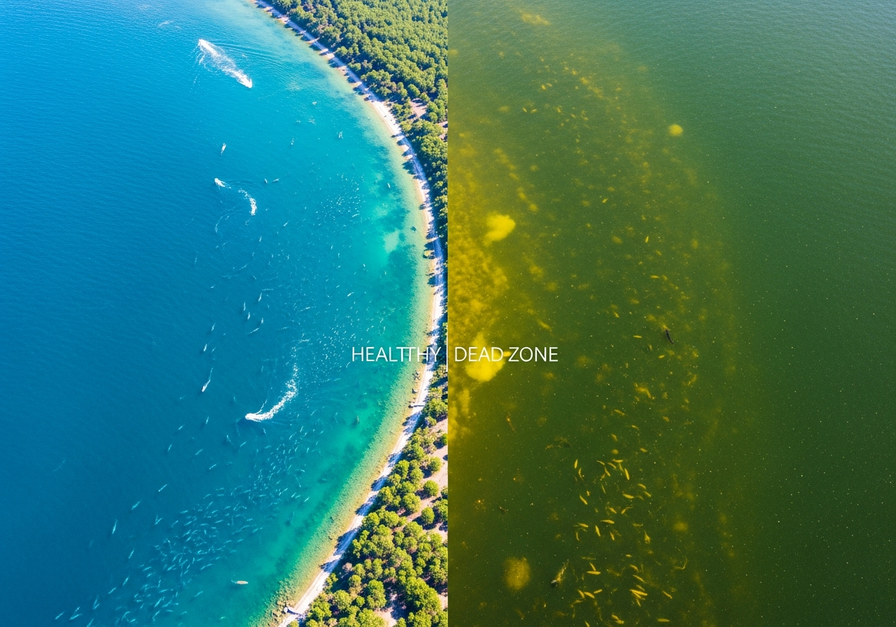
This split-screen illustration visually demonstrates how nutrient-rich runoff leads to algal blooms that deplete oxygen, creating a dead zone, a central concept explained in the article.
The Unseen Threat: How Dead Zones Form
The primary culprit behind the formation of most dead zones is a process called
Here is a breakdown of the process:
- Nutrient Overload: The journey often begins on land. Agricultural runoff carrying fertilizers, wastewater from treatment plants, and urban stormwater all contribute a heavy load of nitrogen and phosphorus into rivers and streams.
- Algal Bloom: These nutrient-rich waters flow into estuaries and coastal areas, providing an ideal environment for algae to multiply rapidly. The water turns green or brown, sometimes forming thick mats on the surface.
- Decomposition and Oxygen Depletion: While alive, algae produce oxygen. However, when these massive blooms eventually die, they sink to the bottom. Here, bacteria begin the process of decomposition, consuming vast amounts of dissolved oxygen in the water.
- Stratification: In many coastal areas, layers of water with different temperatures or salinities form, preventing the oxygen-rich surface water from mixing with the oxygen-depleted bottom water. This stratification traps the low-oxygen water, exacerbating the problem.
The result is a bottom layer of water where oxygen levels are too low to support most marine life, effectively creating a dead zone.
Life on the Brink: Impacts on Marine Ecosystems
The consequences of dead zones are far-reaching and devastating for marine ecosystems. Mobile creatures like fish and shrimp may attempt to escape the hypoxic waters, often congregating in smaller, oxygenated areas where they become more vulnerable to predators and fishing pressure. However, organisms that are sessile or slow-moving, such as oysters, clams, crabs, and many bottom-dwelling invertebrates, are trapped. They suffocate and die, leading to massive die-offs.
Consider the vital role of oyster reefs. These natural structures provide habitat for countless species, filter water, and protect coastlines. When a dead zone forms, these essential ecosystems are decimated.
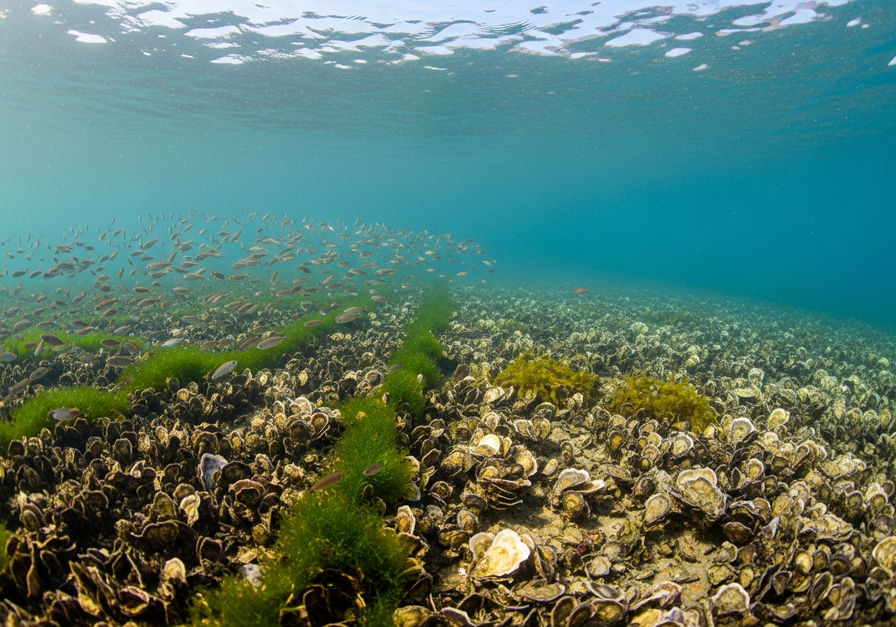
This image illustrates the ecological consequence of hypoxia: the loss of benthic habitats such as oyster reefs, which the article discusses as part of the cascading effects on the food web.
The loss of these foundational species can ripple throughout the entire food web, impacting larger fish, birds, and even marine mammals that rely on these organisms for sustenance. Biodiversity plummets, and the ecological balance of the entire region is thrown into disarray.
Beyond the Ocean: Economic and Social Repercussions
Dead zones are not just an ecological problem; they have significant economic and social impacts. Coastal communities that depend on fishing and tourism suffer immensely. Fisheries collapse when fish stocks are depleted or forced to migrate. The aesthetic appeal of murky, foul-smelling waters deters tourists, affecting local economies that rely on recreational activities like swimming, boating, and diving. The cost of cleaning up affected areas and restoring ecosystems can be astronomical.
Turning the Tide: Solutions and Mitigation Strategies
Addressing dead zones requires a multi-faceted approach, focusing on reducing nutrient pollution at its source. Fortunately, many effective strategies are being implemented and developed:
- Agricultural Best Management Practices:
- Precision Fertilization: Applying fertilizers more efficiently, only when and where needed, reduces runoff.
- Cover Crops: Planting non-cash crops during off-seasons helps absorb excess nutrients from the soil, preventing them from washing into waterways.
- Conservation Tillage: Reducing soil disturbance helps keep nutrients in the soil.
- Wastewater Treatment Upgrades: Modernizing sewage treatment plants to remove more nitrogen and phosphorus before discharge significantly reduces nutrient loads.
- Stormwater Management: Implementing green infrastructure in urban areas, such as rain gardens and permeable pavements, helps filter pollutants from stormwater runoff.
- Wetland Restoration: Wetlands are natural filters. Restoring and creating wetland buffer strips along rivers and coastlines can effectively absorb excess nutrients before they reach larger water bodies.
The success of wetland restoration is a powerful example of how ecological solutions can combat dead zones.
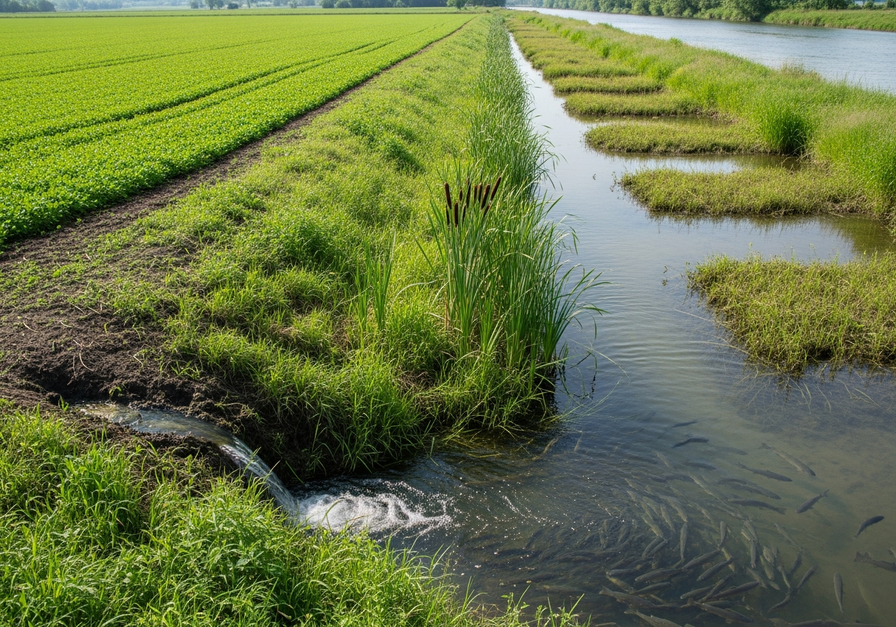
This photo visualizes one of the mitigation strategies highlighted in the article, restoring wetlands to filter nutrients and improve water quality, thereby reducing the formation of dead zones.
A Deeper Dive: The Science of Hypoxia
While nutrient pollution is the primary driver, several other factors can influence the severity and persistence of dead zones, making their study a complex scientific endeavor.
- Water Column Stratification: The stability of the water column plays a critical role. In many estuaries and coastal areas, freshwater runoff creates a less dense layer that floats atop denser, saltier ocean water. This stratification prevents vertical mixing, trapping oxygen-depleted water at the bottom. Thermal stratification, where warmer surface water sits above cooler bottom water, can have a similar effect, particularly in warmer months.
- Climate Change and Warming Waters: Warmer water holds less dissolved oxygen than cooler water. As global temperatures rise, the capacity of water bodies to retain oxygen decreases, potentially expanding existing dead zones and creating new ones. Increased temperatures also accelerate the metabolic rates of bacteria, leading to faster oxygen consumption during decomposition.
- Ocean Currents and Topography: The physical characteristics of a bay or coastal region, including its depth, shape, and prevailing currents, can influence how dead zones form and persist. Enclosed bays with limited water exchange are often more susceptible.
- Natural Hypoxia: It is important to note that some degree of hypoxia can occur naturally in certain deep ocean basins or upwelling zones due to specific geological or oceanographic conditions. However, the vast majority of dead zones observed today are directly linked to human activities.
Scientists use a variety of tools to monitor dead zones, including satellite imagery to track algal blooms, underwater sensors to measure oxygen levels, and sophisticated models to predict their formation and extent. This research is vital for understanding the dynamics of these zones and for evaluating the effectiveness of mitigation efforts.
A Call to Action for Healthy Waters
Dead zones are a stark reminder of the interconnectedness of our land and water systems. While the problem is significant, it is not insurmountable. Through informed agricultural practices, improved wastewater management, and the restoration of natural buffers like wetlands, we can reduce nutrient pollution and help our coastal ecosystems breathe again. Protecting our waters from dead zones is not just an environmental imperative; it is an investment in healthy ecosystems, thriving economies, and a sustainable future for all.