The Invisible Threat: Unmasking Air Pollution and Its Profound Impact
Imagine a world where the air you breathe is a silent enemy, constantly working against your health and the well-being of the planet. This isn’t a dystopian fantasy, but a stark reality for billions across the globe. Air pollution, often unseen and underestimated, is a complex challenge with far-reaching consequences. From the hazy skies of bustling metropolises to the hidden dangers within our own homes, understanding this pervasive issue is the first step toward breathing easier.
What Exactly IS Air Pollution? A Breath of Understanding
At its core, air pollution refers to the presence of harmful substances in the atmosphere. These substances, known as pollutants, can be solid particles, liquid droplets, or gases. They aren’t naturally occurring in significant quantities and can cause adverse effects on human health, animal life, vegetation, and even structures.
Pollutants are broadly categorized into two types:
- Primary Pollutants: These are emitted directly into the atmosphere from a source. Think of the exhaust fumes from a car or smoke from a factory chimney.
- Secondary Pollutants: These form in the atmosphere when primary pollutants react with other substances, often under sunlight. Ground-level ozone, a major component of smog, is a prime example.
Some of the most common and concerning air pollutants include:
- Particulate Matter (PM): Tiny solid or liquid particles suspended in the air. PM2.5 (particles smaller than 2.5 micrometers) and PM10 (particles smaller than 10 micrometers) are particularly dangerous because they can penetrate deep into the lungs. Sources include combustion from vehicles, power plants, and industrial processes.
- Ground-level Ozone (O3): Unlike the beneficial ozone layer in the stratosphere, ground-level ozone is a harmful pollutant formed when nitrogen oxides (NOx) and volatile organic compounds (VOCs) react in the presence of sunlight. It’s a key ingredient in smog.
- Nitrogen Oxides (NOx): A group of highly reactive gases, including nitrogen dioxide (NO2) and nitric oxide (NO). They are primarily produced from the burning of fossil fuels in vehicles and power plants.
- Sulfur Dioxide (SO2): A pungent, colorless gas released mainly from the burning of fossil fuels, especially coal, in power generation and industrial processes.
- Carbon Monoxide (CO): A colorless, odorless, and poisonous gas produced by the incomplete combustion of carbon-containing fuels. Vehicle exhaust is a major source.
- Volatile Organic Compounds (VOCs): A diverse group of organic chemicals that can evaporate easily at room temperature. They are emitted from paints, solvents, gasoline, and some industrial processes, and contribute to ground-level ozone formation.
Where Does It Come From? Tracing the Sources of Our Air
Air pollution isn’t a singular phenomenon; it’s a complex tapestry woven from countless sources, both natural and human-made.
Natural Contributors: When Nature Pollutes
Even without human intervention, nature itself can release pollutants into the atmosphere:
- Volcanic Eruptions: Release ash, sulfur dioxide, and other gases.
- Wildfires: Emit vast amounts of smoke, particulate matter, carbon monoxide, and VOCs.
- Dust Storms: Carry fine soil particles over vast distances.
- Pollen and Spores: While natural, these can act as allergens and contribute to respiratory issues for sensitive individuals.
Human Activities: The Dominant Drivers
However, the vast majority of air pollution impacting human health and the environment today stems from human activities:
- Transportation: Cars, trucks, buses, airplanes, and ships burn fossil fuels, releasing NOx, CO, VOCs, and particulate matter. The sheer volume of vehicles in urban areas makes this a significant contributor.
- Industrial Activities and Energy Production: Power plants, especially those burning coal and other fossil fuels, are major sources of SO2, NOx, and particulate matter. Factories and manufacturing processes also release a variety of specific pollutants depending on their operations.
- Agriculture: Livestock farming produces methane and ammonia, while the use of fertilizers can release ammonia into the atmosphere, contributing to particulate matter formation.
- Residential and Commercial Heating: Burning wood, coal, or other fuels for heating in homes and businesses, particularly in areas with less efficient systems, can release significant particulate matter and other pollutants.
- Waste Management: Landfills release methane, a potent greenhouse gas, and the incineration of waste can produce various air toxins if not properly controlled.
The Invisible Threat: How Air Pollution Impacts Us and Our Planet
The consequences of breathing polluted air extend far beyond a simple cough. They permeate our health, our ecosystems, and even the global climate.
A Toll on Human Health
The human body is remarkably resilient, but continuous exposure to air pollutants can lead to a cascade of health problems, ranging from mild irritation to life-threatening diseases.
- Respiratory Illnesses: Pollutants like particulate matter and ozone can irritate the airways, leading to asthma attacks, bronchitis, emphysema, and chronic obstructive pulmonary disease (COPD). Long-term exposure can permanently damage lung tissue.
- Cardiovascular Diseases: Fine particulate matter can enter the bloodstream, contributing to inflammation, hardening of the arteries, heart attacks, and strokes.
- Neurological Effects: Emerging research suggests links between air pollution exposure and cognitive decline, dementia, and even developmental issues in children.
- Cancer: Certain air pollutants, such as benzene and some particulate matter components, are known carcinogens, increasing the risk of lung cancer and other forms of the disease.
- Impact on Vulnerable Populations: Children, the elderly, and individuals with pre-existing health conditions are disproportionately affected. Children’s developing lungs and immune systems make them particularly susceptible to damage from polluted air.
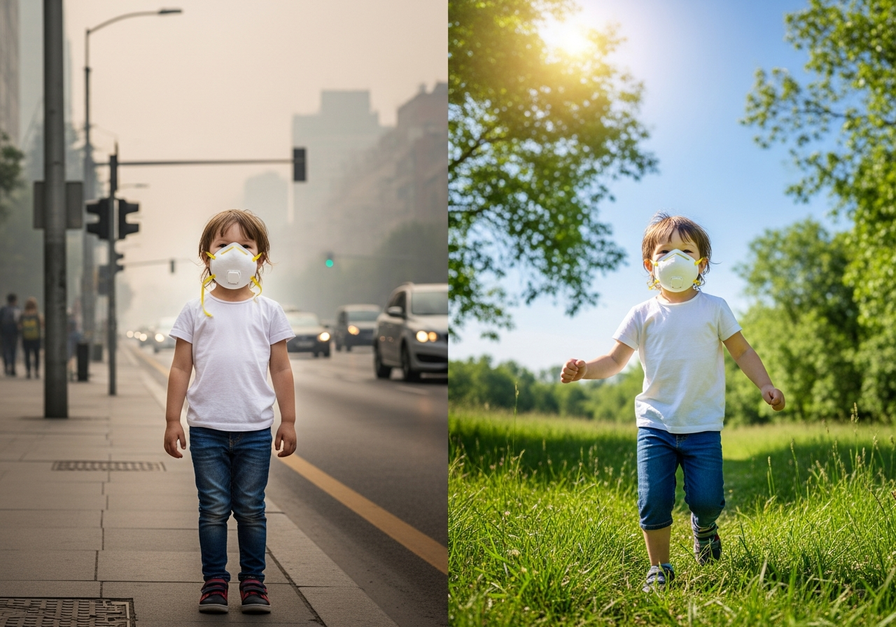
The stark contrast between a child navigating a smog-filled city with a protective mask and the same child freely enjoying a pristine natural environment powerfully illustrates the profound difference clean air makes for our most vulnerable populations. Protecting children from the invisible dangers of air pollution is a critical public health imperative.
Environmental Degradation: A Planet Under Siege
Air pollution doesn’t just harm people; it damages the very fabric of our planet.
- Smog Formation: The hazy, brownish layer often seen over cities is smog, a mixture of ground-level ozone, particulate matter, and other pollutants. It reduces visibility and contributes to respiratory problems.
- Acid Rain: Sulfur dioxide and nitrogen oxides react with water, oxygen, and other chemicals in the atmosphere to form sulfuric and nitric acids. These fall to Earth as acid rain, damaging forests, acidifying lakes and streams (harming aquatic life), and corroding buildings and infrastructure.
- Climate Change: Many air pollutants, such as carbon dioxide, methane, and black carbon (a component of particulate matter), are potent greenhouse gases that trap heat in the atmosphere, contributing to global warming and climate change.
- Damage to Vegetation and Ecosystems: Ozone can damage plant leaves, reducing crop yields and harming sensitive ecosystems. Acid rain can strip nutrients from soil and make trees more susceptible to disease.
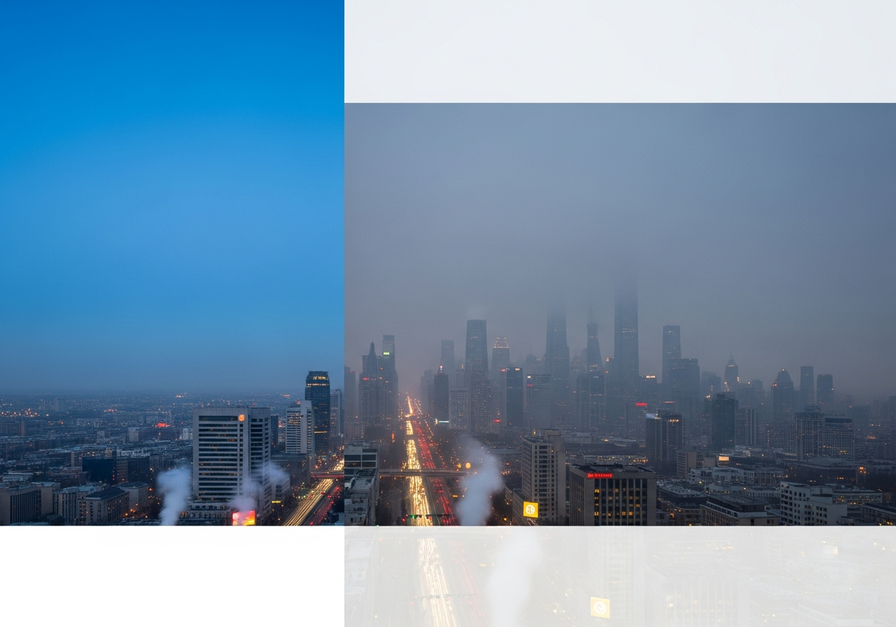
This striking image visually captures the stark reality of urban air pollution. On one side, a clear sky offers a glimpse of what could be, while on the other, a thick blanket of smog chokes the city, reducing visibility and serving as a constant reminder of the environmental and health challenges posed by particulate matter and other atmospheric pollutants.
A Closer Look: The Hidden Dangers of Indoor Air Pollution
While much attention is given to outdoor air quality, the air inside our homes, schools, and workplaces can often be even more polluted. Given that most people spend a significant portion of their lives indoors, understanding and mitigating indoor air pollution is crucial.
Common sources of indoor air pollution include:
- Cooking and Heating: Traditional cooking methods, especially those using solid fuels like wood, charcoal, or kerosene, can release high levels of particulate matter, carbon monoxide, and other harmful gases. Even modern gas stoves can emit nitrogen dioxide.
- Building Materials and Furnishings: Many common household items, including paints, varnishes, adhesives, carpeting, and pressed wood products, can off-gas VOCs like formaldehyde.
- Cleaning Products: Aerosol sprays, disinfectants, and air fresheners often contain VOCs and other chemicals that can irritate the respiratory system.
- Tobacco Smoke: Secondhand smoke is a major indoor air pollutant, containing thousands of chemicals, many of which are toxic or carcinogenic.
- Mold and Mildew: Grow in damp environments and release spores that can trigger allergic reactions and respiratory problems.
- Pesticides: Residues from pest control products can linger in indoor air.
The health impacts of indoor air pollution mirror many of those from outdoor pollution, including respiratory issues, headaches, dizziness, and long-term risks of cancer and cardiovascular disease. Children and the elderly are particularly vulnerable.

This visual comparison powerfully demonstrates how household cooking practices directly impact indoor air quality. The left side, with its traditional wood stove producing dense smoke, highlights a common source of indoor pollution, while the right side showcases a modern, well-ventilated kitchen, illustrating effective solutions for cleaner, healthier indoor environments.
Measuring the Unseen: Air Quality Indices and Monitoring
How do we quantify something as invisible and complex as air pollution? Scientists and environmental agencies use sophisticated monitoring systems and tools like the Air Quality Index (AQI).
- Air Quality Index (AQI): The AQI is a color-coded scale used to communicate daily air quality to the public. It reports on the levels of five major air pollutants: ground-level ozone, particulate matter, carbon monoxide, sulfur dioxide, and nitrogen dioxide. A higher AQI value indicates poorer air quality and greater health concern.
- Monitoring Stations: Across the globe, networks of monitoring stations continuously collect data on pollutant concentrations. This data is crucial for understanding trends, identifying pollution hotspots, and informing policy decisions.
Understanding the AQI allows individuals to make informed decisions, such as limiting outdoor activities on high-pollution days, especially for sensitive groups.
Breathing Easier: Solutions and What We Can Do
Addressing air pollution requires a multi-faceted approach, combining technological innovation, policy changes, and individual actions.
Systemic Solutions: Policy and Technology
- Stricter Emission Standards: Governments can implement and enforce regulations that limit the amount of pollutants released by vehicles, industries, and power plants. This includes mandating catalytic converters for cars and scrubbers for industrial chimneys.
- Transition to Renewable Energy: Shifting away from fossil fuels towards cleaner energy sources like solar, wind, and hydropower significantly reduces emissions from electricity generation.
- Investment in Public Transportation: Robust and accessible public transport systems reduce the number of individual vehicles on the road, thereby lowering overall emissions.
- Urban Planning: Designing cities with green spaces, pedestrian-friendly zones, and efficient public transport can naturally reduce pollution.
- Industrial Upgrades: Encouraging industries to adopt cleaner production technologies and improve waste management practices.
Individual Actions: Our Role in Cleaner Air
While large-scale changes are essential, individual choices also contribute to the collective effort for cleaner air:
- Reduce Vehicle Use: Walk, bike, carpool, or use public transportation whenever possible. Combine errands to reduce driving trips.
- Energy Efficiency at Home: Use energy-efficient appliances, insulate your home, and turn off lights and electronics when not in use. This reduces demand on power plants.
- Support Clean Energy: Choose green energy providers if available, or advocate for renewable energy policies in your community.
- Maintain Your Vehicle: Regular car maintenance, including tire pressure checks and engine tune-ups, can improve fuel efficiency and reduce emissions.
- Improve Indoor Air Quality:
- Ensure good ventilation, especially when cooking or using cleaning products.
- Use exhaust fans in kitchens and bathrooms.
- Choose low-VOC paints and furnishings.
- Avoid smoking indoors.
- Address moisture issues promptly to prevent mold growth.
- Plant Trees: Trees absorb carbon dioxide and other pollutants, helping to clean the air.
- Advocate for Change: Support policies and organizations working to improve air quality and promote sustainable practices.
Breathing for a Better Future
Air pollution is a formidable challenge, but it is not insurmountable. By understanding its sources, impacts, and the solutions available, we can collectively work towards a future where clean, healthy air is a universal right, not a luxury. Every breath we take connects us to the atmosphere, and every action we make can contribute to its purity. Let us strive to leave a legacy of clear skies and healthy lungs for generations to come.